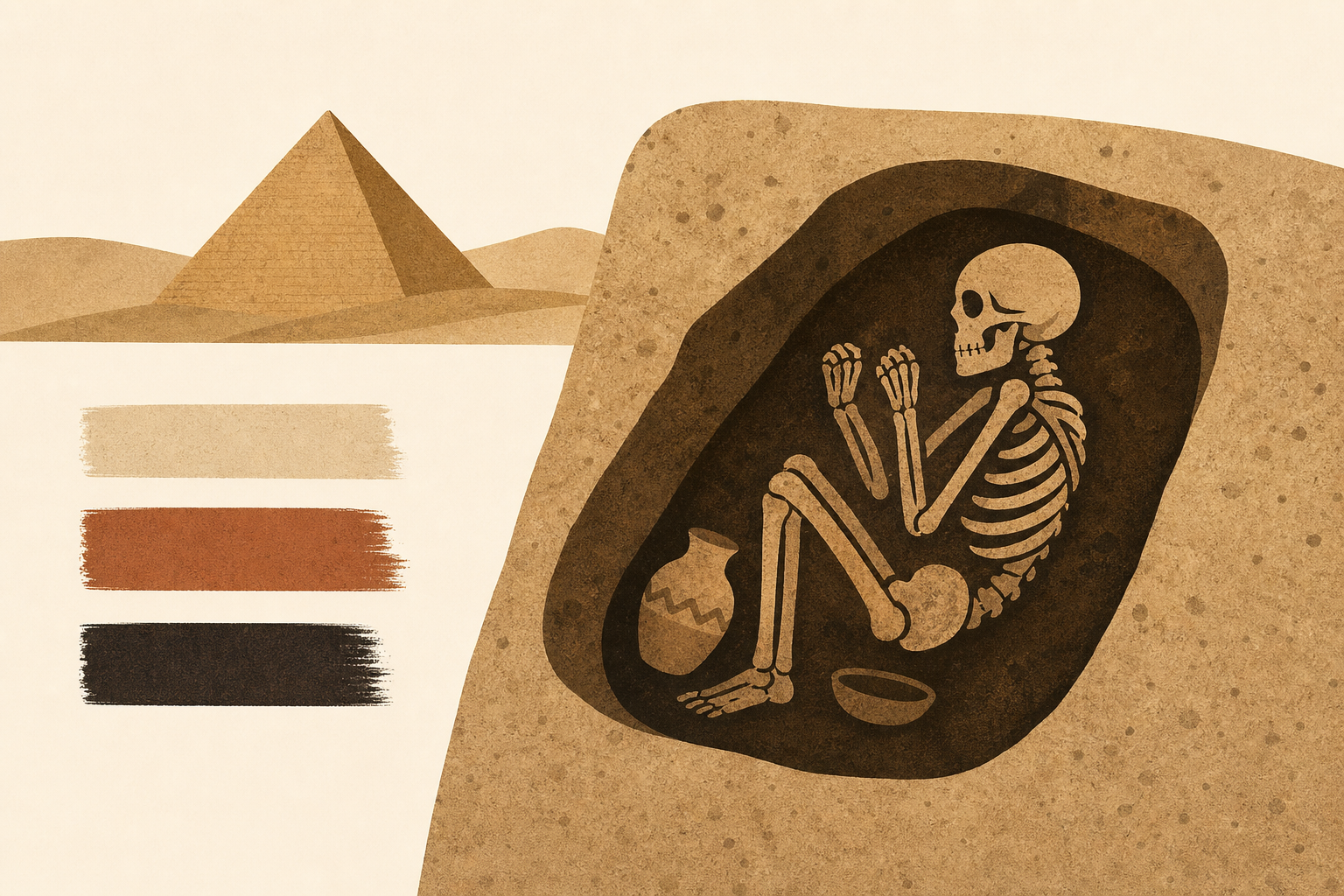
AI Generated Image
Remarkable photos show ancient human burials uncovered in Egypt, with clues to centuries of changing tradition
CBS News • • general
Key Points:
- Egyptian archaeologists have uncovered remains and artifacts at the Tell Kom Aziza site in the Nile Delta, revealing a Greco-Roman cemetery dating back over 2,300 years and showing the site's evolution from a settlement to a burial ground over six centuries.
- The burials exhibit diverse funerary practices, including simple pit graves, mudbrick-lined tombs, and painted plaster coffins, with varying orientations and hand positions, suggesting social differences or ritual variations among those interred.
- Notably, the discovery includes complete skeletal remains of two wild boars, which may hold cultural or religious significance linked to the ancient Egyptian deity Seth, though their exact role remains uncertain.
- Pottery fragments ranging from the Old Kingdom period (circa 2686–2181 B.C.) to the Greco-Roman era indicate the site's long-term domestic and ceremonial use spanning millennia.
- Excavations are ongoing to further understand the site's historical development and human activity patterns in the region.


