AI Image
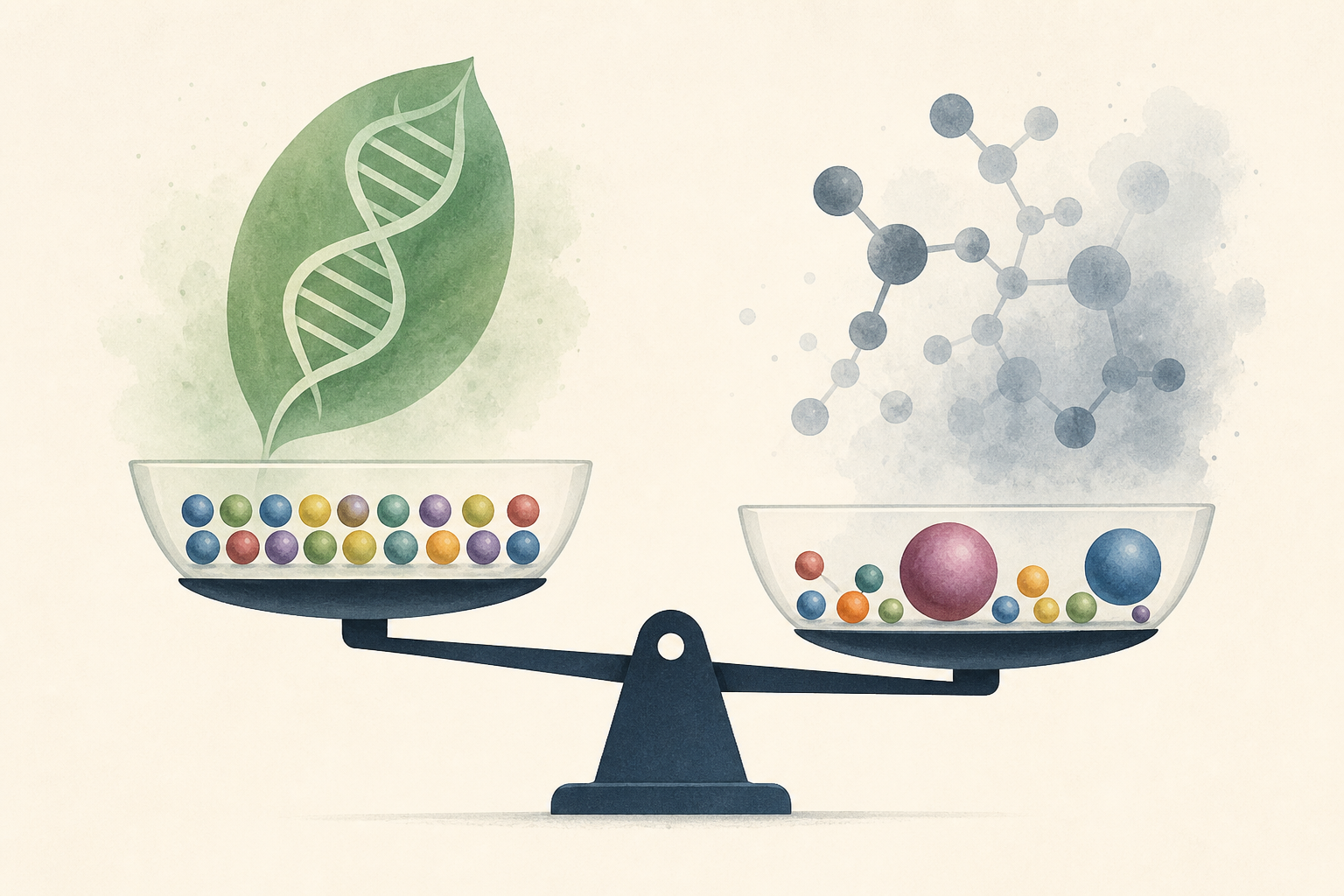
Researchers at the University of California Riverside found in May 2026 that living systems distribute their amino acids more evenly than non-living chemistry does — a statistical pattern subtle enoug
Space Daily • • science
Key Points:
- A study published in Nature Astronomy proposes using molecular diversity and evenness—borrowed from ecological measures of biodiversity—to distinguish biological from non-biological chemistry, focusing on how evenly molecules are distributed rather than their specific identities.
- The research analyzed about 100 existing datasets of amino acids and fatty acids from various sources, finding that amino acids from living organisms tend to be more diverse and evenly distributed than those from abiotic processes, while fatty acids show the opposite pattern.
- This approach does not require new instruments and could potentially be applied to data from current and future space missions, although it has so far only been tested on terrestrial and laboratory datasets, not on extraterrestrial samples.
- The method also appears sensitive to degrees of preservation, detecting biological signatures even in degraded samples like fossilized dinosaur eggshell, but it remains uncertain if it would apply to life forms with independent origins.
- The authors emphasize that this statistical measure is not definitive on its own but should be used alongside multiple lines of evidence within the geological and chemical context to infer the presence of life.


