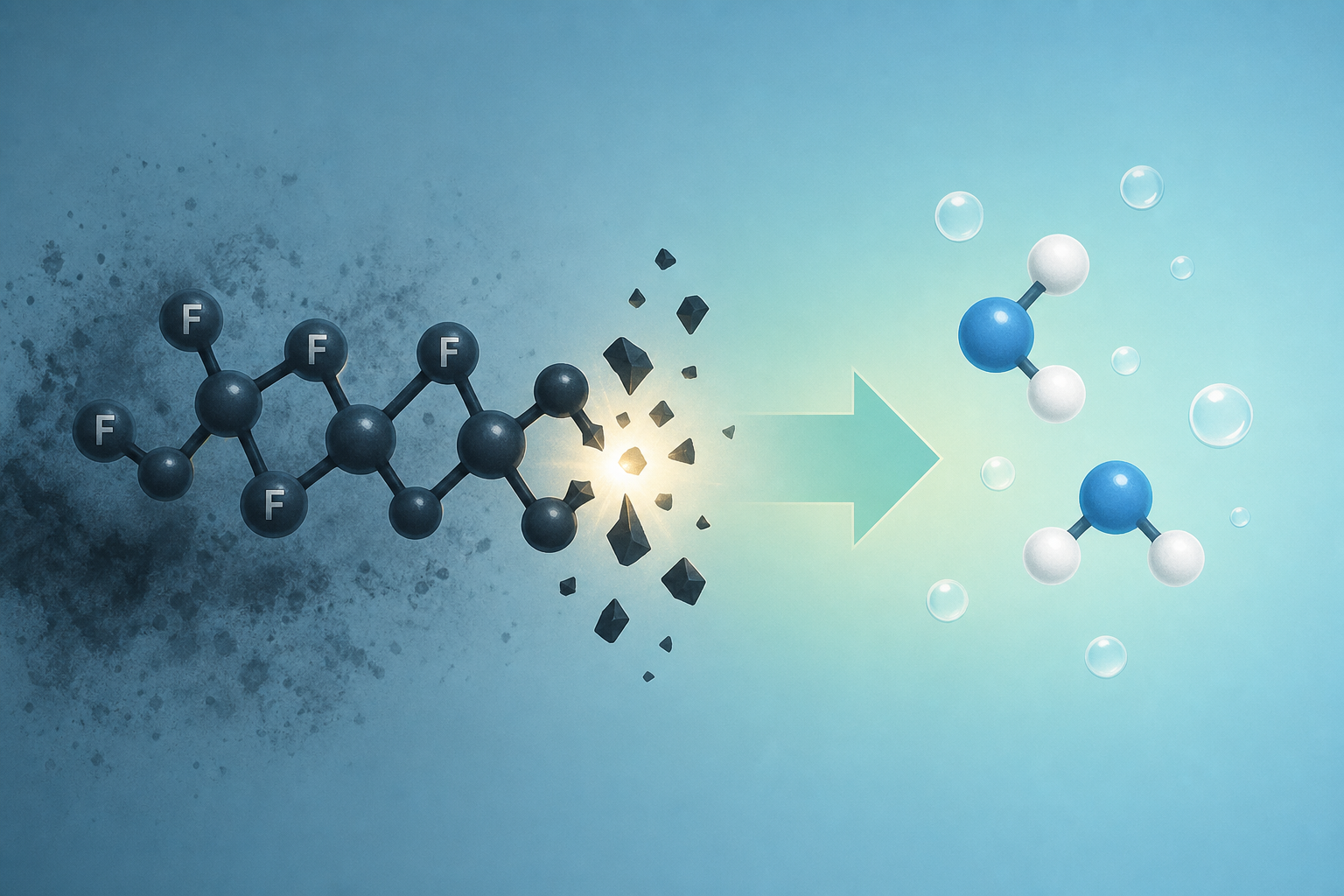
AI Generated Image
Researchers develop methods for breaking down forever chemicals
Phys.org • • world
Key Points:
- Researchers at Helmholtz-Zentrum Dresden-Rossendorf (HZDR) developed two innovative processes—hydrodynamic cavitation and cold atmospheric plasma with gas dispersion—to break down persistent PFAS chemicals in water, achieving significant degradation and fluoride release.
- Hydrodynamic cavitation involves passing PFAS-contaminated water through a constriction to create vapor bubbles that burst with high temperatures and reactive radicals, breaking down about 37% of PFOS in initial tests, with goals to exceed 80% degradation.
- Cold atmospheric plasma combined with gas dispersion degrades both long- and short-chain PFAS almost completely under ambient conditions without catalysts, releasing around 35% of fluorine as fluoride salts, though it consumes more energy and produces transformation byproducts still under investigation.
- Researchers aim to scale up and combine both methods to leverage plasma's reactive species and cavitation effects, potentially creating a highly efficient, commercially viable technology to reduce PFAS contamination in water bodies.
- These developments align with Germany's National Water Strategy to protect drinking water and ecosystems from PFAS pollution, which poses health risks due to the chemicals' persistence and potential toxicity.


