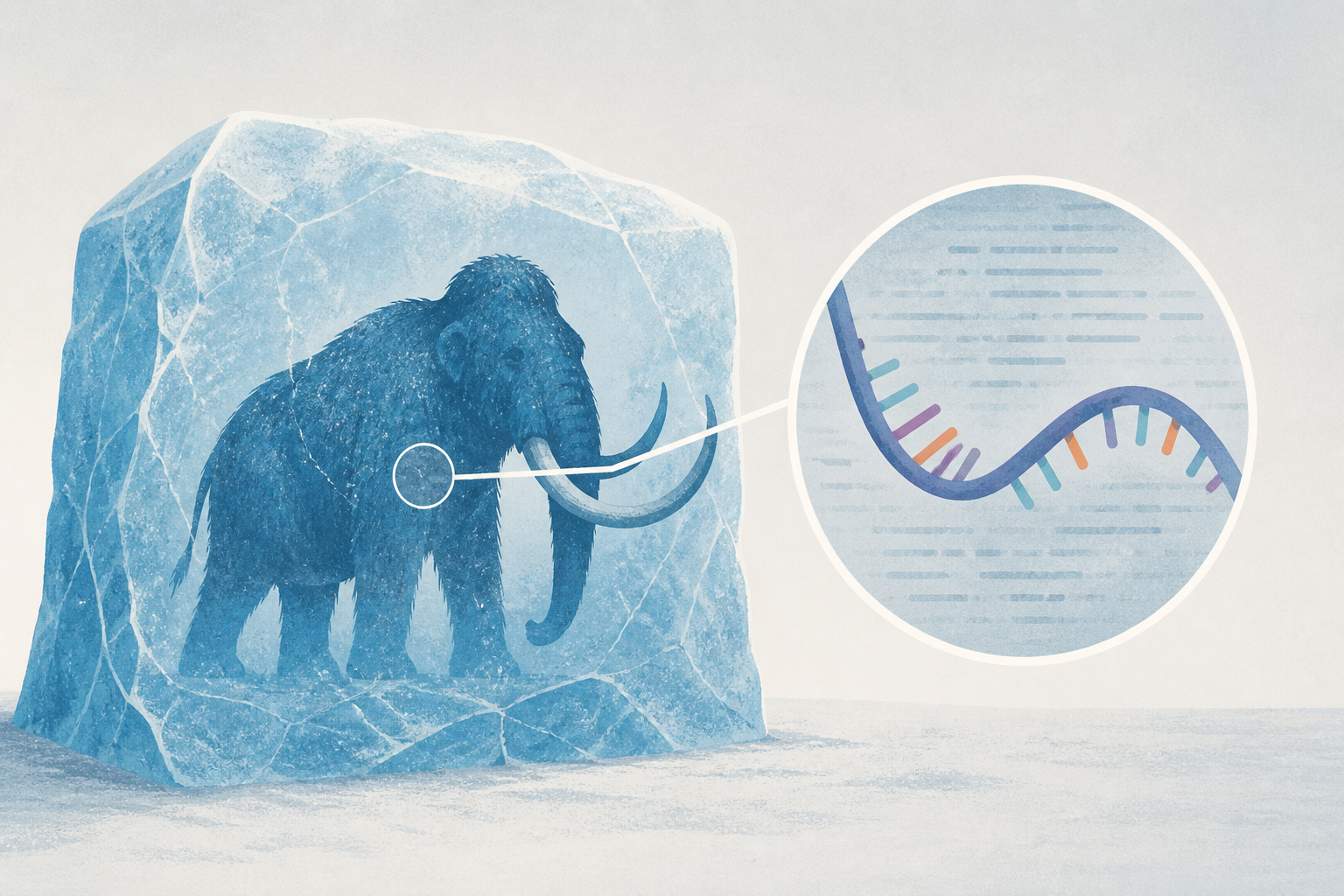
AI Generated Image
RNA is supposed to fall apart within hours, yet researchers have now read it from a mammoth frozen in Siberian permafrost 39,000 years ago — and the transcripts caught his muscle tissue in the middle
Space Daily • • general
Key Points:
- Researchers led by Emilio Mármol Sánchez have successfully recovered and sequenced RNA from muscle tissue of a woolly mammoth preserved in Siberian permafrost for approximately 39,000 years, demonstrating RNA can survive much longer than previously assumed under ideal conditions.
- The study, published in Cell in November 2025, analyzed RNA from a juvenile mammoth named Yuka, revealing active gene transcripts related to muscle contraction and stress responses, providing molecular evidence that Yuka was under acute physiological stress likely due to a cave lion attack shortly before death.
- To confirm the authenticity of the ancient RNA and rule out contamination, the team used microRNAs with rare mutations matching known mammoth genetic markers, offering strong proof that the RNA originated from the specimen itself.
- While the findings open new possibilities for studying ancient physiology and cellular processes near the time of death, the preservation conditions—Siberian permafrost—are exceptional, and RNA degradation in most other environments remains rapid, limiting broader applicability.
- This research establishes a lower bound for RNA survival over tens of thousands of years under specific conditions but does not yet extend to other species, tissues, or less optimal preservation environments, leaving many questions for future investigation.


