AI Generated Image
Robotaxis Don't Go Home at Night… and That's Creating a New Real Estate Gold Rush
Gadget Review • • business
Key Points:
- Tesla’s fully autonomous Cybercab robotaxis, currently operating in Austin, require centralized depots for charging, cleaning, software resets, and maintenance since they have no drivers to handle these tasks off-duty.
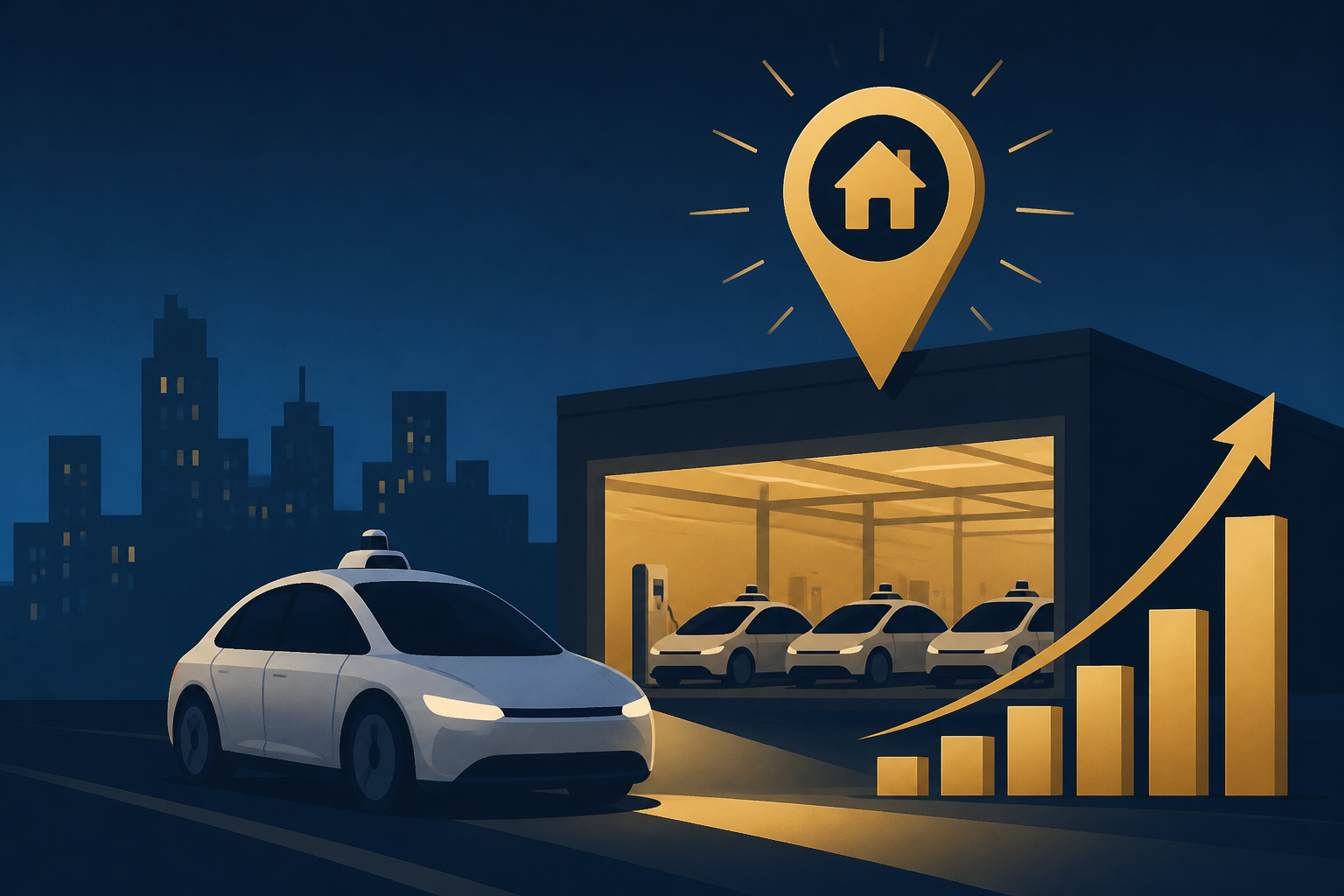
- This operational need is driving the emergence of a new commercial real estate category, with startups like Fleetport planning specialized hubs near airports to service large robotaxi fleets, targeting markets including Austin, Oakland, and Miami by 2027.
- Other major autonomous vehicle players such as Uber, Lyft, and Waymo are also investing in dedicated depots with extensive charging and maintenance facilities, signaling a broader industry trend toward specialized robotaxi infrastructure.
- Tesla is shifting operational responsibilities and capital risk to independent entrepreneurs who purchase Cybercab fleets, while third-party operators are converting underused parking assets into robotaxi service depots, accelerating infrastructure development.
- Although the timeline for widespread robotaxi deployment remains uncertain, the race to build the necessary charging and maintenance infrastructure is actively underway, reshaping the commercial real estate landscape around autonomous vehicle operations.


