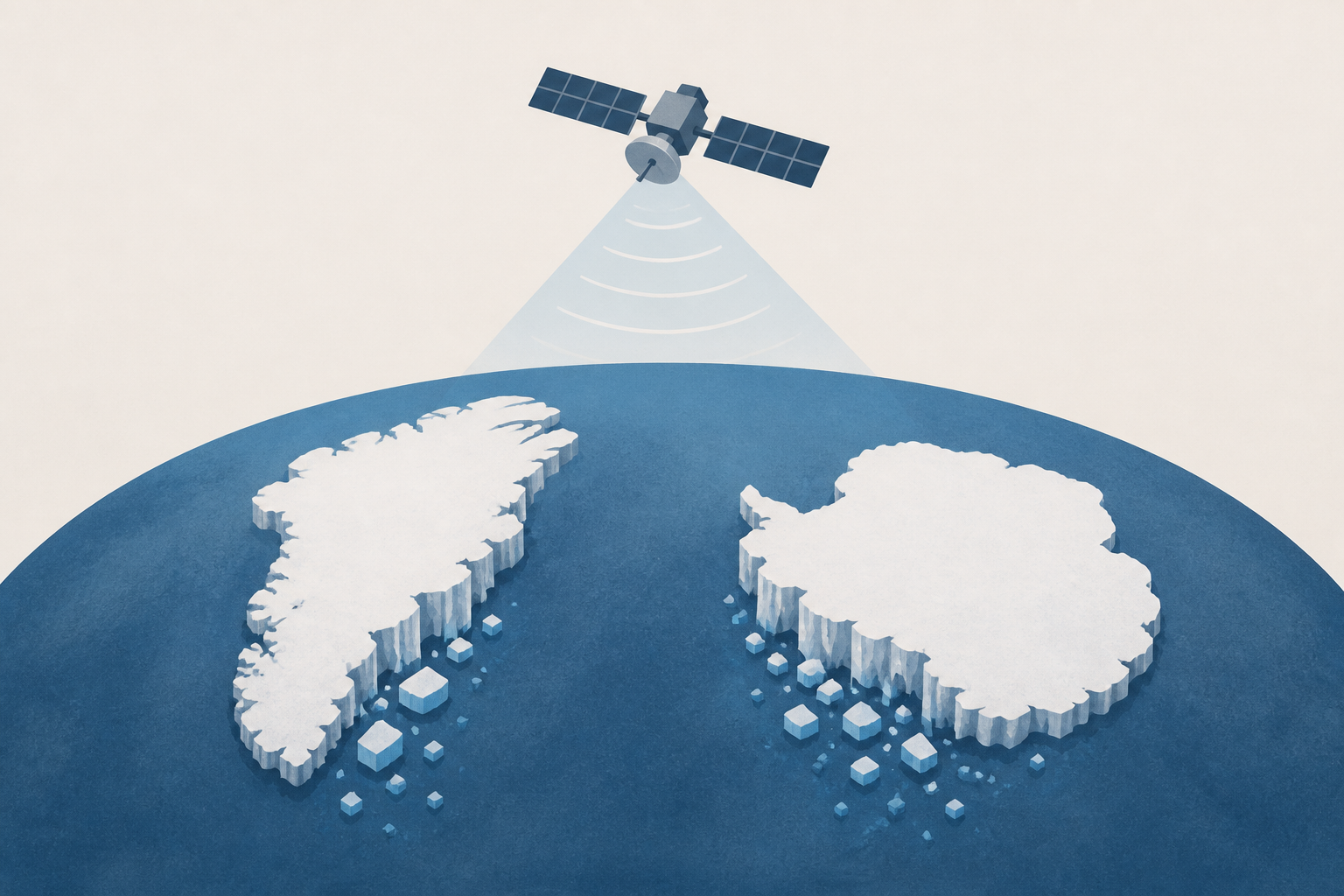
AI Generated Image
Satellites show Earth lost more than 12 trillion tons of ice from Greenland, Antarctica in 47 years
NBC News • • general
Key Points:
- Since 1979, approximately 12.5 trillion tons of ice have melted from Greenland and Antarctica, raising global sea levels by about one inch, which threatens coastal regions worldwide.
- The majority of ice melt is driven by warmer ocean waters eroding ice sheets from below and the sides, rather than just hotter air temperatures.
- Ice sheet melting has accelerated significantly since the 2010s, with glaciers like Greenland's Jakobshavn retreating up to 164 feet daily, and this trend is expected to continue for decades even if global warming is curbed.
- Short-term pauses in melting from 2020 to 2023 were due to weather variability, not a reversal of the long-term trend, which remains a clear indicator of climate change impact.
- Scientists warn that dynamic ice loss processes could trigger abrupt collapses of ice sheets, posing serious long-term risks, and emphasize the urgent need for prudent action despite knowing these future threats.


