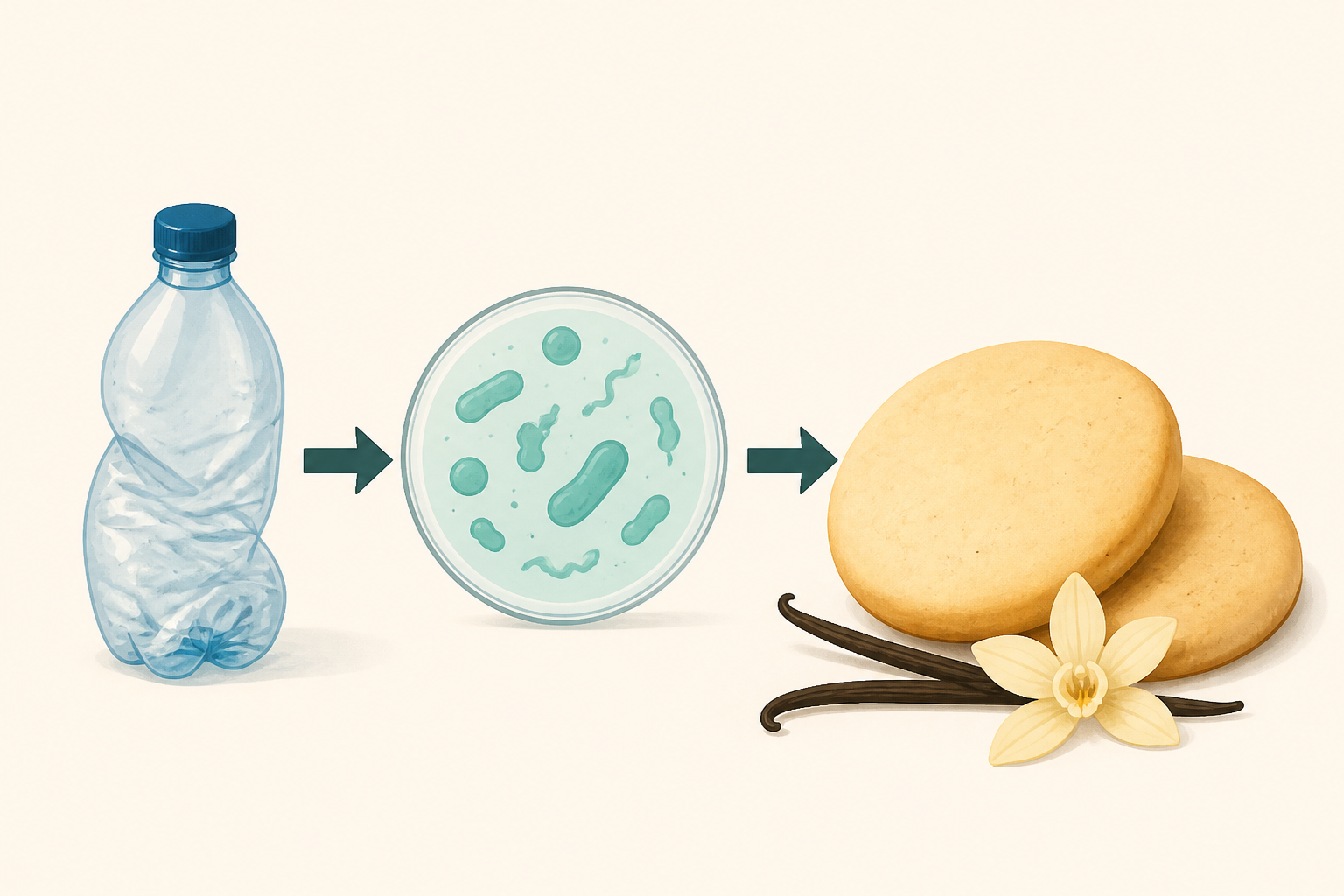
AI Generated Image
Scientists Develop Microbes That Make Vanilla Cookies Out of Plastic Bottles
Gizmodo • • general
Key Points:
- Researchers at Southern Illinois University created edible cookies called “µBites” using polyethylene terephthalate (PET), a plastic commonly found in soda and water bottles, by converting it into proteins and nutrients through engineered microbes and yeasts.
- The process involves breaking down PET mixed with plant biomass using hot, high-pressure water and oxygen, followed by microbial conversion into proteins, vitamins, and flavorings, which are then 3D-printed into cookie shapes.
- µBites originated from NASA’s Deep Space Food Challenge, aiming to develop sustainable food sources for environments with limited natural supplies, such as disaster zones or deep-space missions.
- Although µBites are safe for consumption, they have not yet undergone taste testing or gained institutional approval, and currently cost around $60 per kilogram to produce, making widespread commercial availability a future goal.
- The research team envisions µBites as a potential solution to rising global food demand and hunger risks by leveraging microbial technology to create sustainable and nutritious food alternatives.


