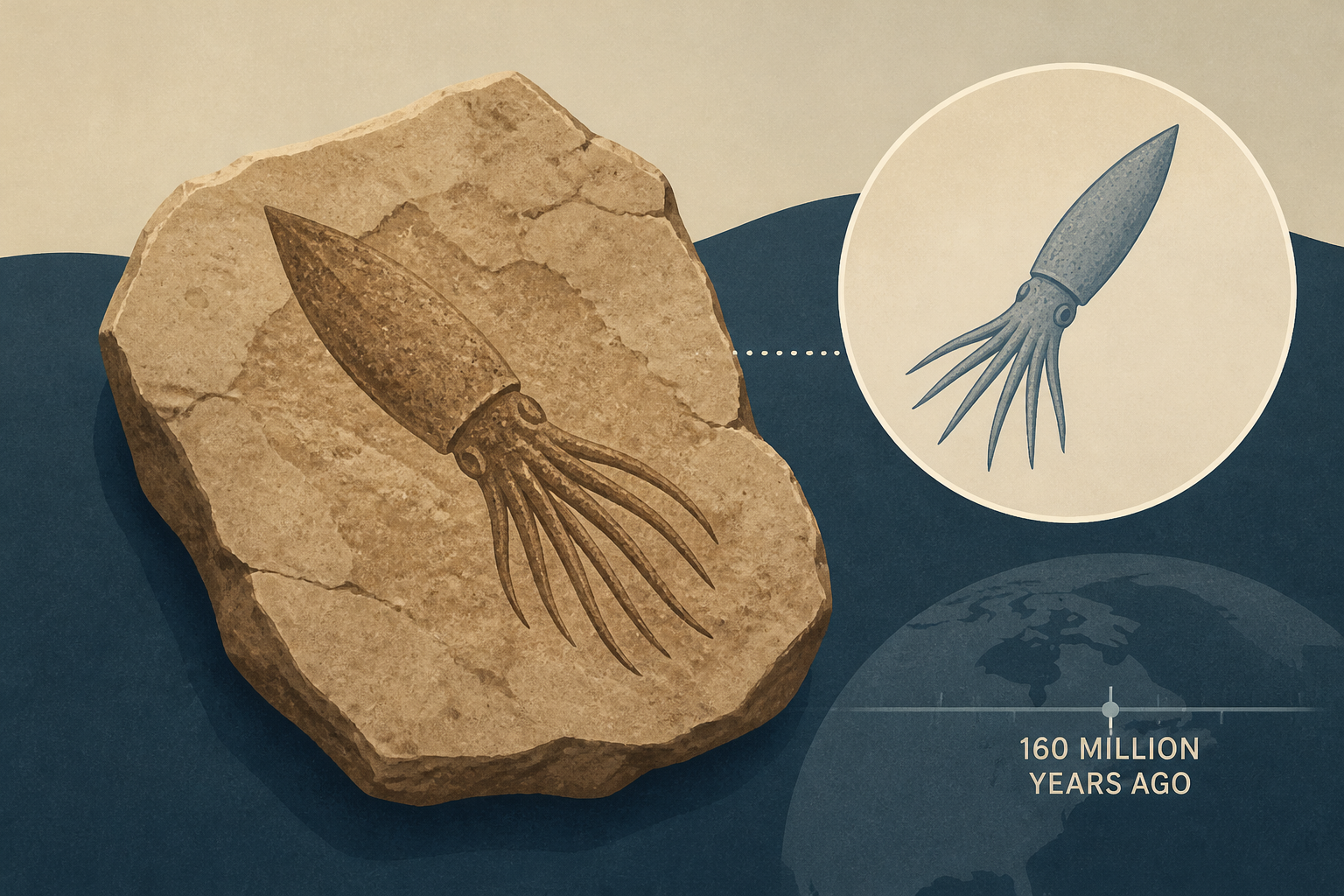
AI Image
Scientists discover new squid-like species in Wyoming that lived 160 million years ago
New York Post • • science
Key Points:
- Scientists have identified the "chunkiest" belemnite ever discovered, named Wyoteuthis linsterorum, based on two rare fossils from the Jurassic Period found in Wyoming's Sundance Formation.
- The fossils feature unusually thick, barrel-shaped internal skeletons measuring about 60 millimeters across, making them the largest known belemnite rostrum, with the animal estimated to have reached nearly 2 feet in length.
- Belemnites are extinct marine animals related to modern squid and octopuses, and W. linsterorum belongs to a rare family thought to have mostly disappeared millions of years earlier.
- The discovery indicates that this rare belemnite lineage survived in a previously unknown refuge in the northeastern Pacific, extending knowledge of their geographic and temporal range.
- This finding highlights that even well-studied fossil sites can yield significant new scientific insights about ancient marine life and evolutionary history.


