AI Image
Scientists discover quasar formed within 630 million years of the Big Bang
ABC News - Breaking News, Latest News and Videos • • science
Key Points:
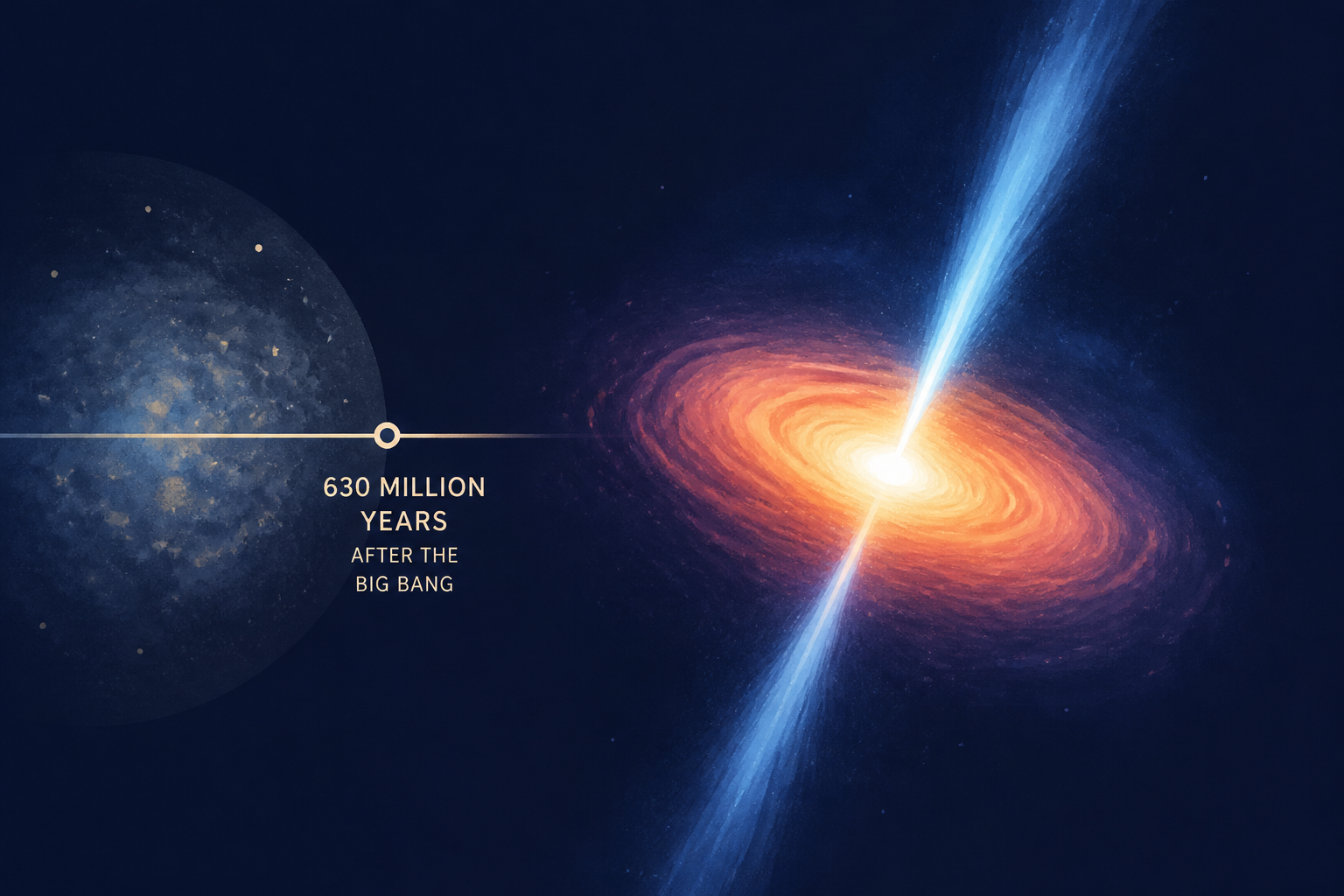
- Scientists have discovered the most distant quasar ever observed, dating back to just 630 million years after the Big Bang, significantly earlier than previous records by nearly 40 million years.
- The quasar, named Dun Aonghasa, contains a massive black hole with a mass equivalent to 360 million suns, despite its relatively slow consumption of surrounding matter.
- This discovery was made using data from the European Space Agency's Euclid telescope and confirmed by the Hubble and Webb space telescopes, highlighting the quasar's significance in understanding early universe development.
- The findings challenge current knowledge of black hole growth in the early universe and provide a new benchmark for studying cosmic evolution shortly after the Big Bang.
- Researchers continue to explore the cosmic dawn, with the possibility that an even more distant quasar could be discovered in the near future.


