AI Image
Scientists Find Signs of Renewed Rifting Beneath Southern Africa
Gizmodo • • general
Key Points:
- In April 2017, a magnitude 6.5 earthquake struck central Botswana within the stable Kalahari Craton, prompting scientists to investigate the region's tectonic activity.
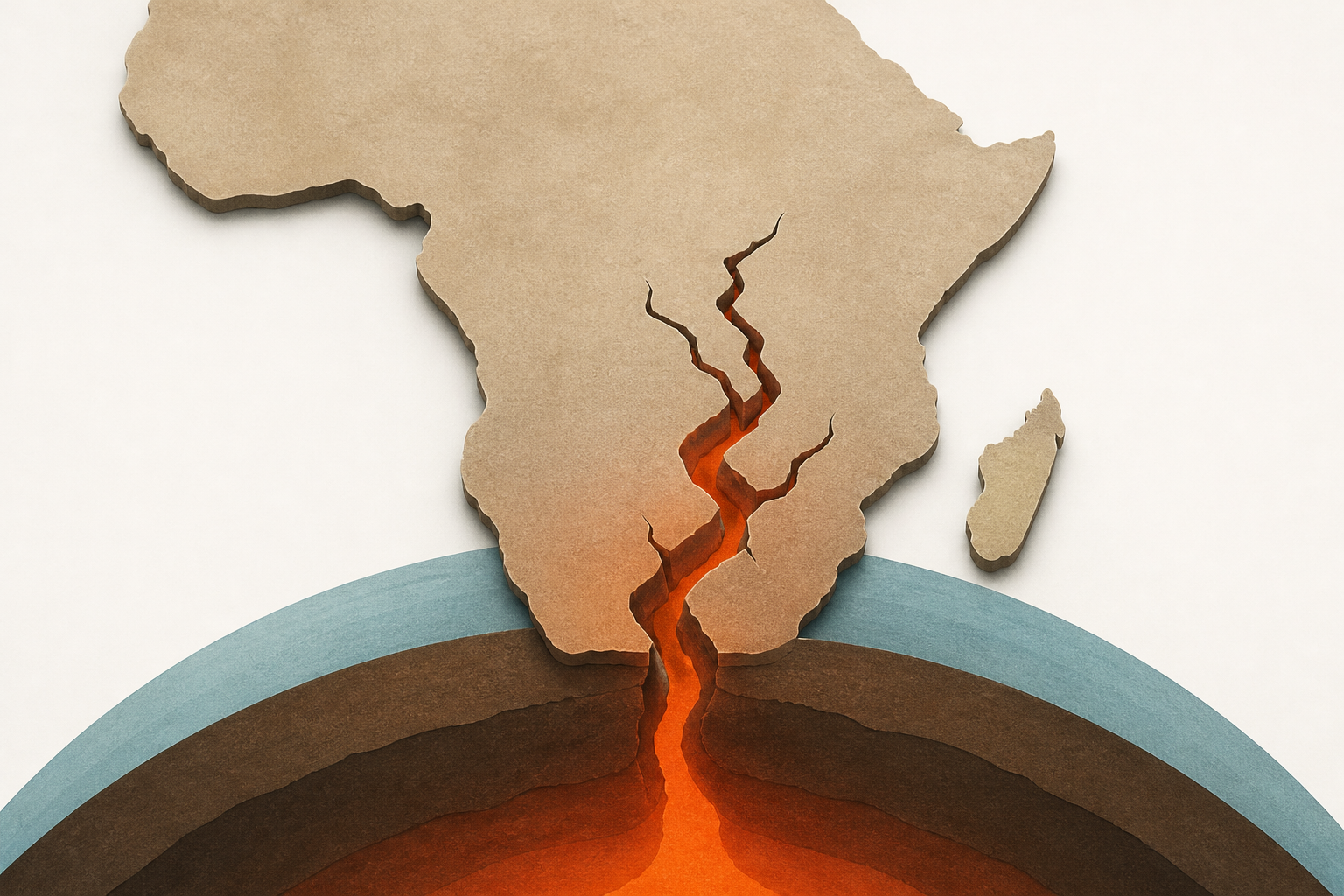
- A recent study reveals that an ancient rift system beneath Botswana, particularly the Khurutshe Fault, may be reactivating after millions of years of dormancy, indicating early stages of geological transformation.
- The fault system originated around 180 million years ago during Jurassic continental stretching but stalled; renewed fault movements within the past 2.6 million years suggest ongoing tectonic forces are reactivating ancient crustal weaknesses.
- Researchers propose that the rift exploited an ancient intra-cratonic suture zone—a geological seam of inherent weakness within the otherwise stable Kalahari Craton—facilitating fault reactivation.
- These findings challenge previous assumptions about the stability of southern Africa's San Plate, suggesting it may be fragmenting into smaller tectonic plates and contributing to the gradual continental breakup of Africa over millions of years.


