AI Image
Scientists in Japan get hamster cells to accept algae DNA despite a billion-year evolutionary gap
Yahoo • • science
Key Points:
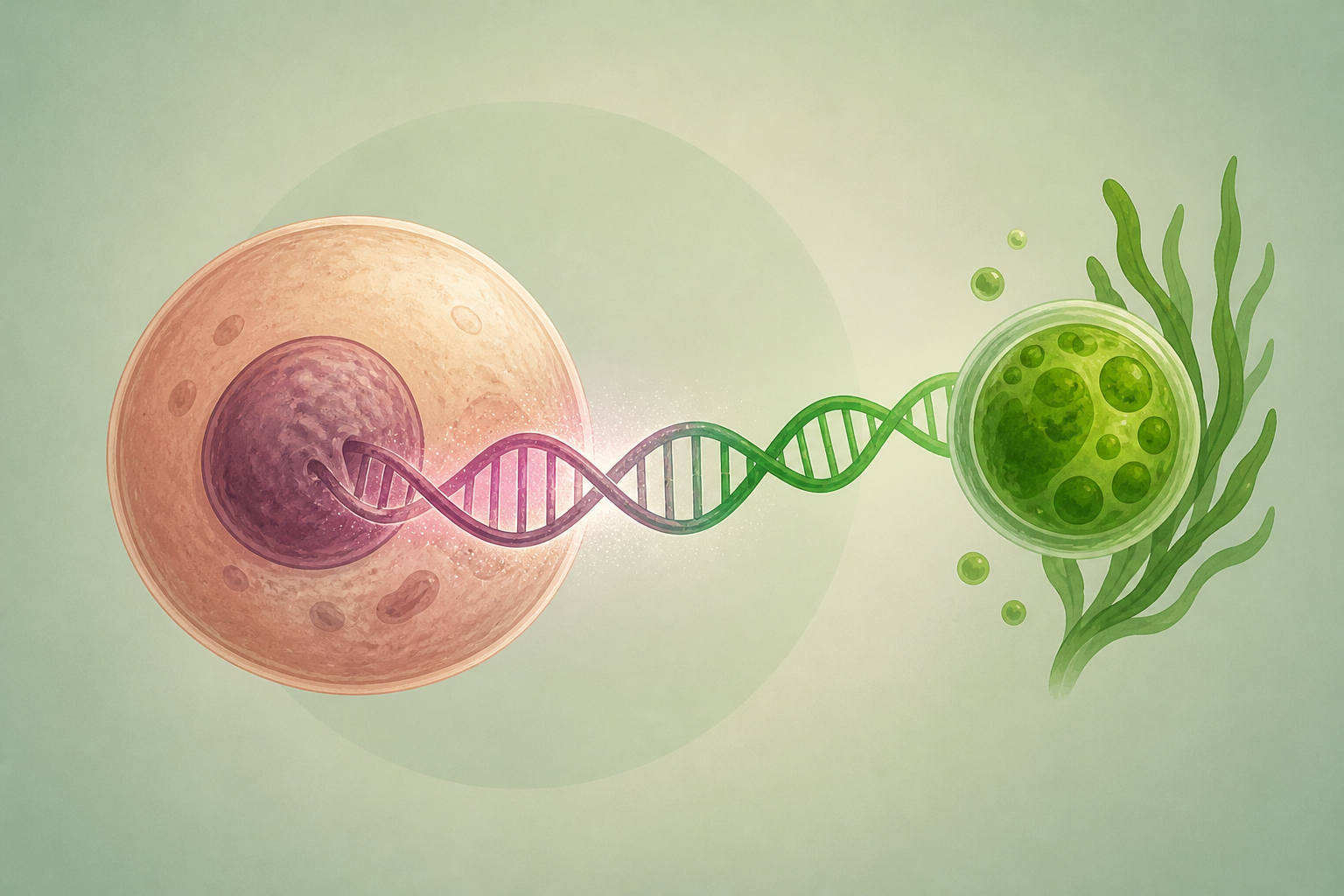
- Scientists at the University of Tokyo created hybrid "planimal" cells by combining red algae DNA with hamster mammalian cells, successfully retaining algal genetic material for 155 cell generations.
- The hybrid cells contained 16.3 million base pairs of algal DNA across all 20 chromosomes, demonstrating stable integration and inheritance during mammalian cell division.
- This research highlights horizontal gene transfer across a billion-year evolutionary divide between plants and animals, a process previously unachieved without reproduction.
- The mammalian cells silenced about 96% of the algal genes via epigenetic mechanisms, but researchers aim to activate these genes to potentially enable animal cells to perform photosynthesis and produce useful organic compounds.
- The study offers insights into combining genetic material from vastly different organisms, opening possibilities for novel biological functions in animal cells.


