AI Image
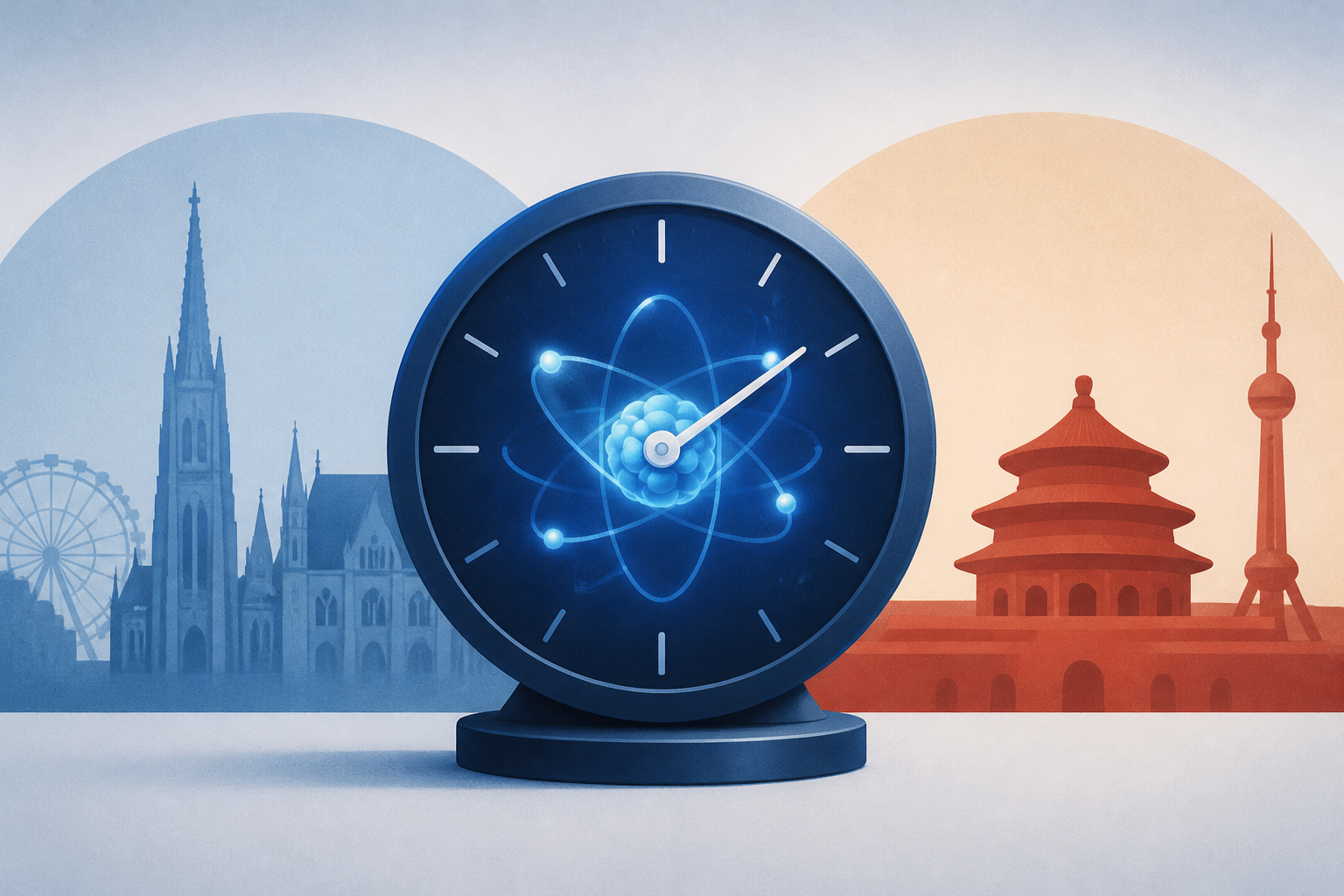
Scientists in Vienna and Beijing create world's first nuclear clocks
Reuters • • science
Key Points:
- Scientific teams in Vienna and Beijing have independently developed the world's first operating nuclear clocks, marking a significant advance in timekeeping technology with broad practical and scientific applications.
- Unlike conventional atomic clocks that measure electron transitions, nuclear clocks track transitions within the atomic nucleus of thorium-229, potentially offering greater accuracy due to the nucleus's smaller size.
- The Vienna and Beijing teams used different technical approaches, with Vienna having better thorium crystals and Beijing possessing a stronger laser, suggesting that combining these strengths could improve clock performance.
- While still in development, nuclear clocks promise enhanced precision for satellite navigation, data synchronization, surveying, and fundamental physics research, including experiments aimed at detecting dark matter.
- The new nuclear clocks performed at the level of the best atomic clocks, indicating their potential to revolutionize time measurement and open new avenues in physics.


