AI Image
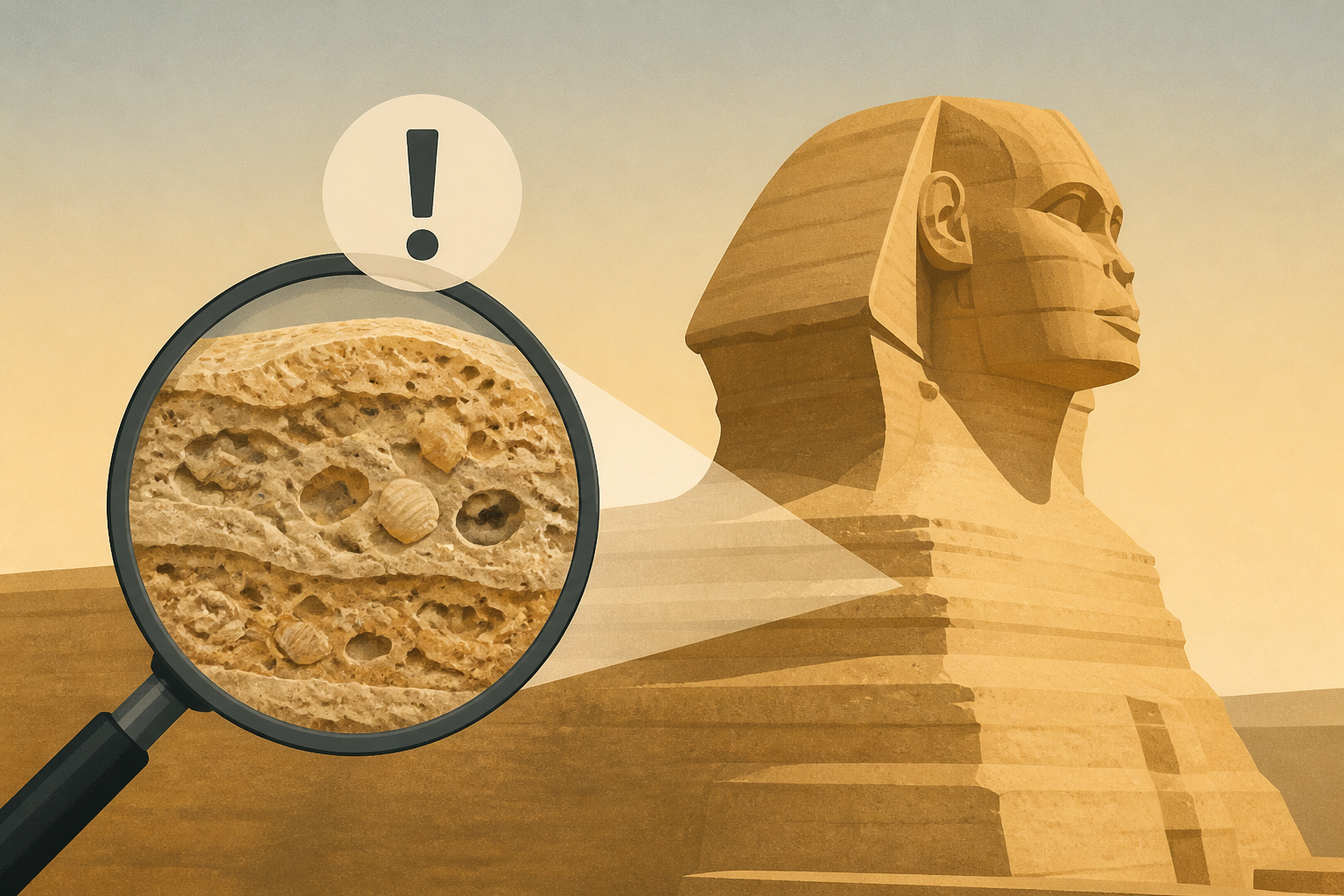
Scientists Make Jaw-Dropping Discovery in Rock Used to Build Sphinx
The Daily Beast • • world
Key Points:
- Scientists have identified a new prehistoric crocodile species, Herugavialis cairensis, from a 50-million-year-old fossil embedded in the limestone used to build the Sphinx of Giza.
- The fossil, originally misclassified as a false gharial relative, was reanalyzed using advanced CT scanning and over 300 skull measurements, revealing it as a unique evolutionary relative distinct from modern false gharials.
- Herugavialis cairensis lived during the Middle Eocene when the area now known as Cairo was underwater, and its discovery links Egypt’s deep natural history with its ancient human culture.
- The species features a sword-shaped snout similar to modern gharials, with a skull about 18 inches long, smaller than typical American crocodiles, indicating it was adapted for catching fish.
- The research highlights the importance of sophisticated morphological analysis in paleontology to accurately classify ancient species and understand their evolutionary relationships.


