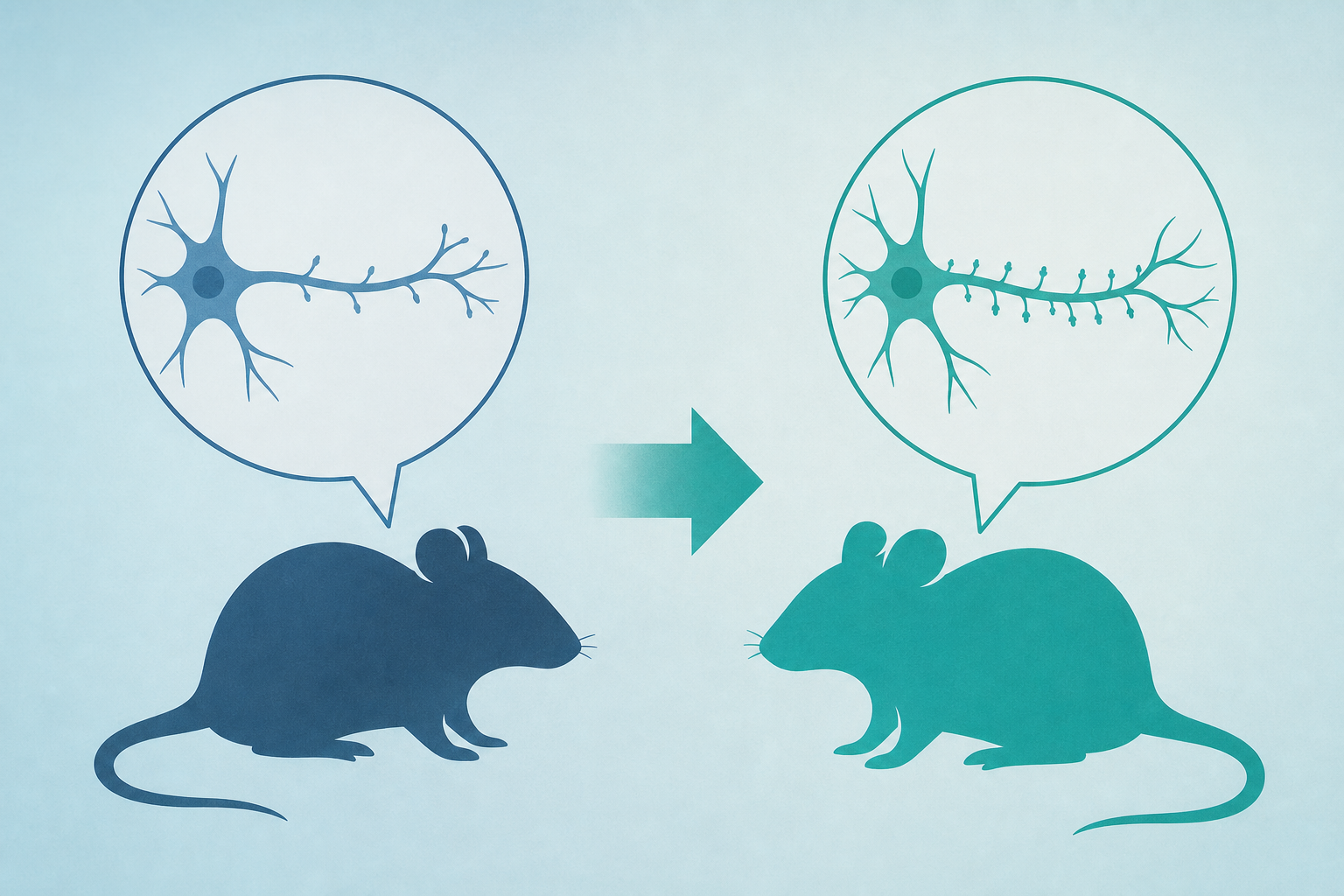
AI Generated Image
Scientists reverse autism-like symptoms in mice by repairing shortened nerve cell structures
PsyPost • • health
Key Points:
- A study published in Cell Death & Disease found that structural abnormalities in a specific neuron component (axon initial segment) associated with autism spectrum disorder (ASD) in a mouse model are reversible through targeted neural pathway activation.
- Researchers used chemogenetics to activate the medial prefrontal cortex to dorsal raphe nucleus circuit in ASD mice, restoring the axon initial segment length and normalizing neuronal excitability.
- Behavioral tests showed that treated ASD mice exhibited significant improvements in social interaction and reductions in repetitive behaviors, matching healthy control mice.
- The findings suggest that some core ASD symptoms arise from adaptable brain changes rather than permanent damage, highlighting the potential for targeted therapeutic interventions focused on specific neural circuits.
- Limitations include the study being conducted in mice and using fixed tissue samples; further research is needed to confirm applicability to humans and other ASD models.


