AI Generated Image
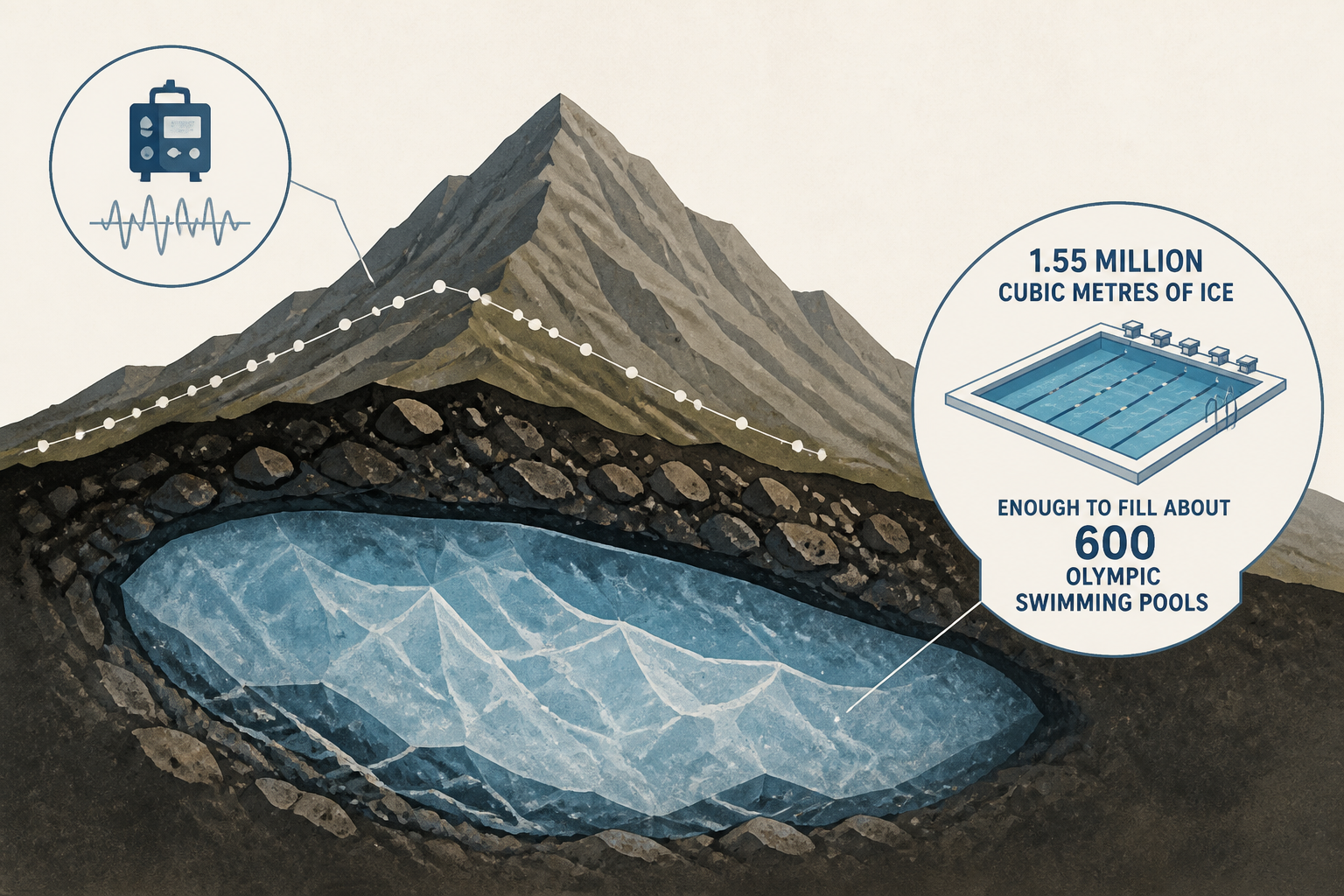
Scientists took 232 gravity readings across a Utah mountain and discovered 1.55 million cubic metres of ice hidden beneath loose rock, enough frozen water to fill about 600 Olympic swimming pools
The Times of India • • science
Key Points:
- Researchers at the University of Utah have discovered that the Timpanogos Rock Glacier in Utah’s Wasatch Range contains about 1.55 million cubic meters of ice beneath a thick layer of rocks, equivalent to roughly 600 Olympic-sized swimming pools.
- Using 232 gravity measurements and Bayesian statistical modeling, scientists mapped the hidden ice, revealing that the glacier is approximately 83% ice and buried up to 150 feet below the surface.
- The ice forms through a combination of snowfall and rockfall, where falling rocks bury persistent snow, protecting it from melting and allowing ice accumulation over time.
- Utah’s rock glaciers, including Timpanogos, could hold significant water reserves, with an estimated one gigaton of water statewide and about 48 gigatons globally, offering crucial water storage in warming, dry climates.
- Rock glaciers are dynamic systems that may continue to gain ice and serve as important hidden water reservoirs, challenging previous views of them as merely ancient glacial remnants.


