AI Image
Scientists Transplanted a Wild Salt Marsh Into The World's Largest Wave Machine And Let an 'Extreme Storm' Rip
ScienceAlert • • world
Key Points:
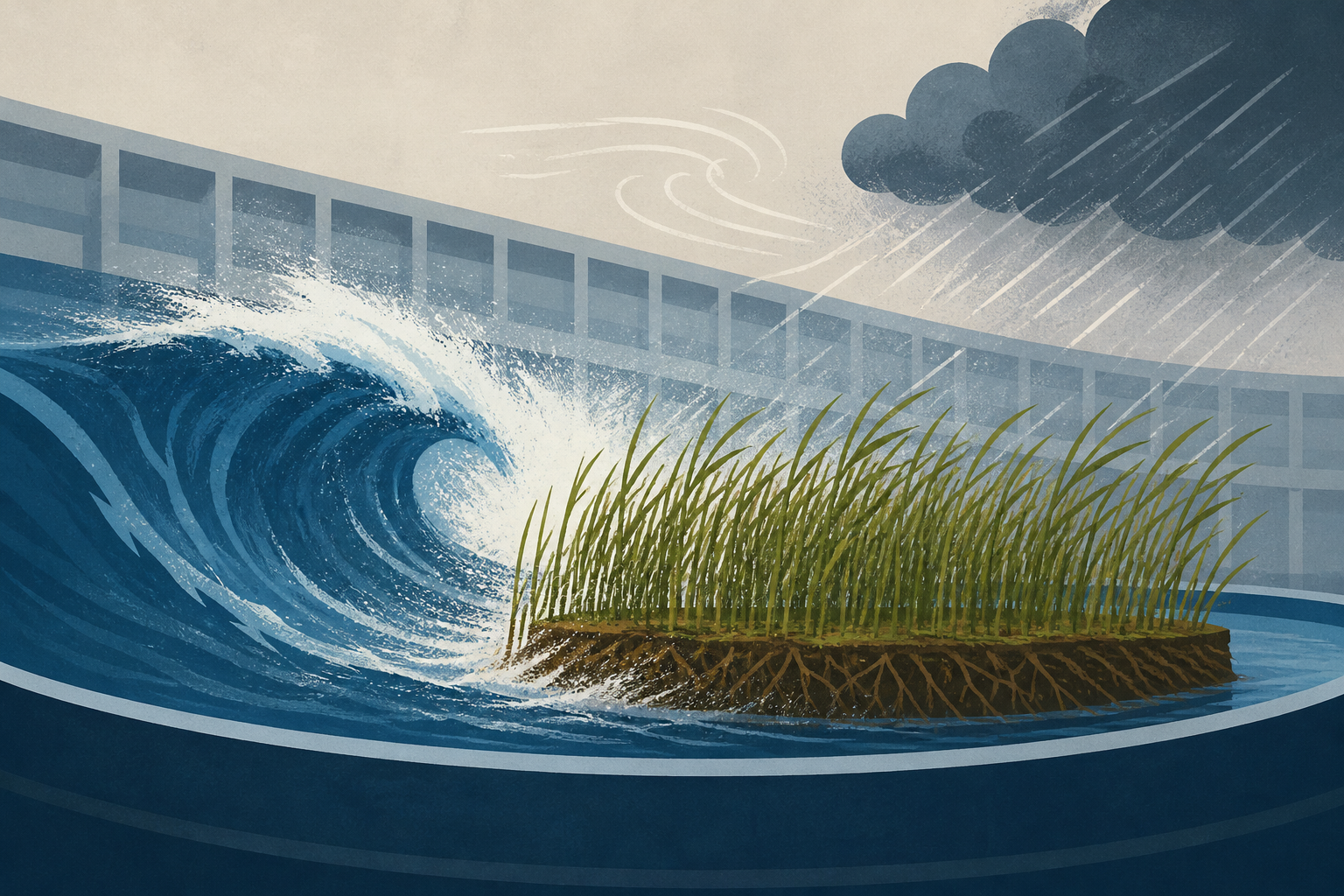
- Dutch scientists conducted an unprecedented experiment by transplanting a 306-square-meter salt marsh into the Delta Flume wave generator to test its resilience against extreme storm surges.
- Over 21 hours of continuous wave exposure, the salt marsh lost only 7 millimeters of sediment, demonstrating significant wave energy dissipation and resilience despite substantial vegetation damage.
- Salt marshes effectively attenuate wave power by up to 50% in low-energy conditions (waves up to 1 meter), but their effectiveness drops to around 10% in higher-energy scenarios with waves over 1 meter.
- Unlike static flood defenses like dikes, salt marsh vegetation can recover post-storm, offering a dynamic and adaptable form of coastal protection amid increasing storm severity due to climate change.
- The study suggests integrating salt marsh restoration with traditional flood infrastructure could enhance coastal defense, reduce maintenance costs, and provide a hybrid approach to managing rising sea levels and storm surges.


