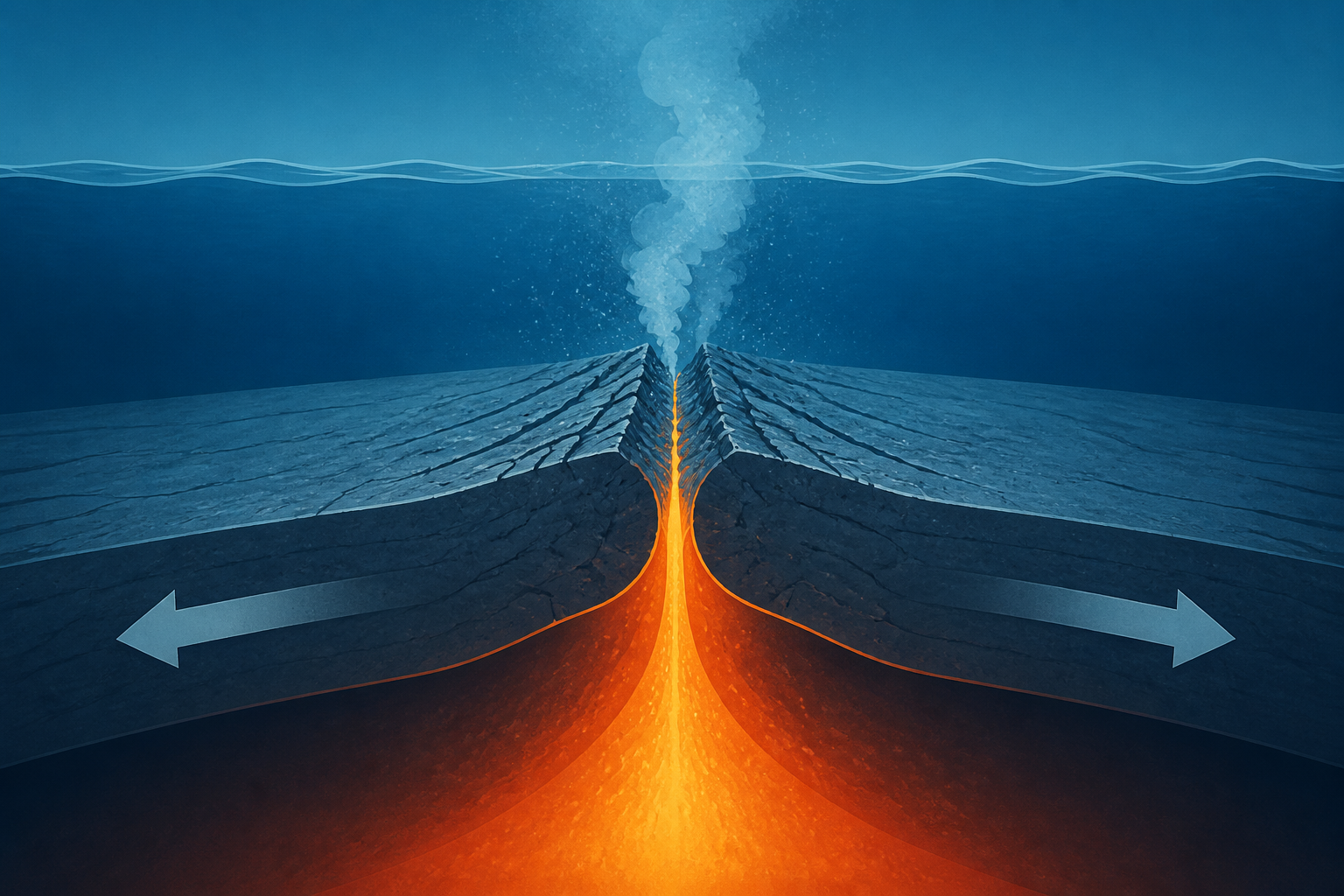
AI Generated Image
Scientists witnessed the birth of new ocean floor for the first time
Earth.com • • science
Key Points:
- A French-led team directly observed a large seafloor spreading event in the southern Indian Ocean for the first time, capturing the birth of new oceanic crust along a mid-ocean ridge.
- The underwater observatory OHA-GEODAMS, installed in February 2024 near the Amsterdam and St. Paul islands, recorded a swarm of earthquakes and seafloor shifts in April 2024, providing detailed data on the spreading process.
- Measurements revealed that much of the tectonic plate movement occurred aseismically, slipping quietly without producing strong earthquakes, which explains why mid-ocean ridges have fewer recorded quakes than expected.
- The study sheds light on how magma forces tectonic plates apart, creating new crust that later cools and spreads, and highlights the importance of direct observations for understanding Earth's crust renewal beneath the ocean.
- The observatory will continue collecting data until 2027, with hopes that similar efforts will expand knowledge of seafloor spreading and its impact on geological and ecological systems.


