AI Generated Image
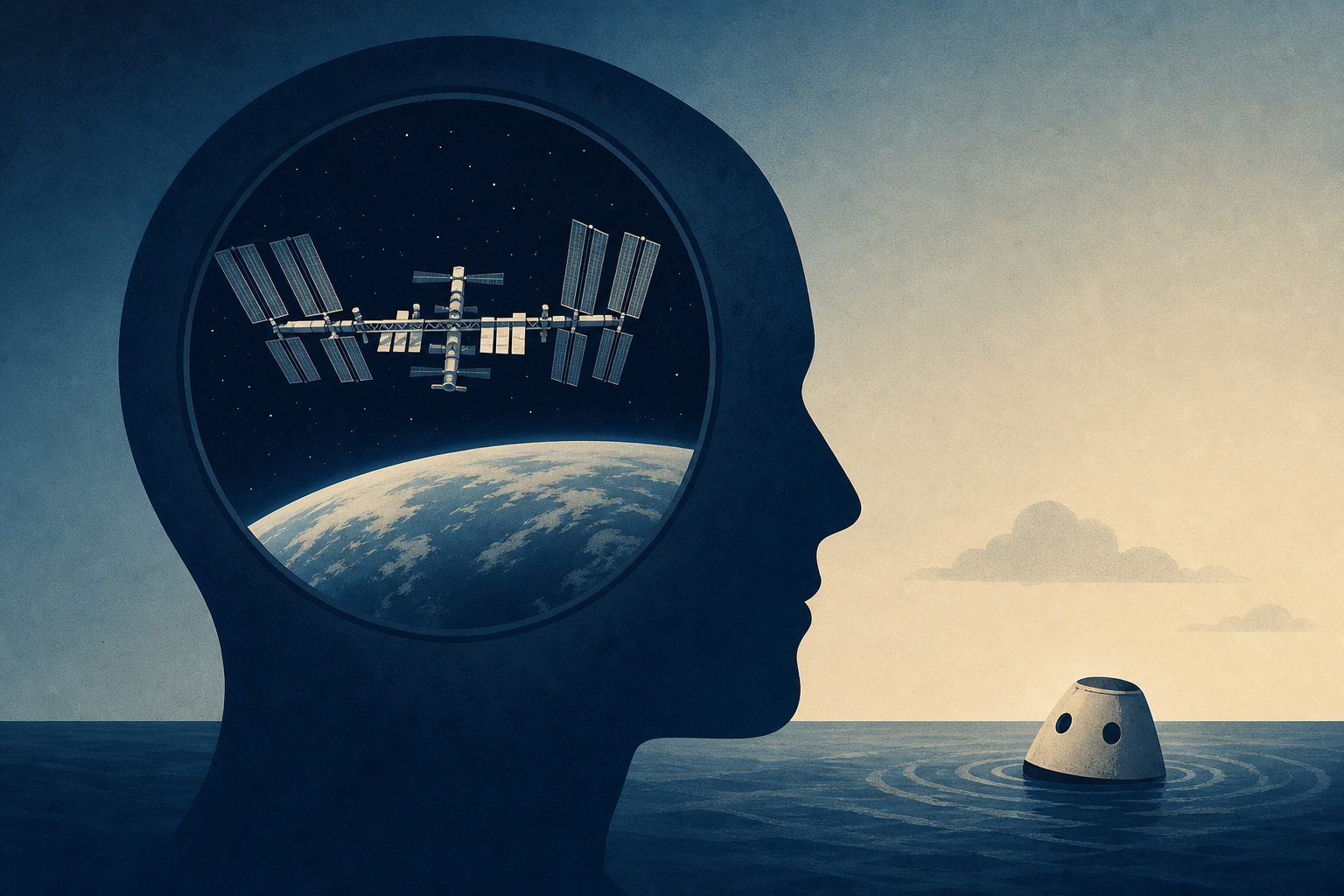
Scott Kelly spent 340 days aboard the ISS, and he has said the leaving was never the hard part - it was the coming back, when the balance and the strange detachment lingered for weeks after splashdown
Space Daily • • science
Key Points:
- Scott Kelly spent 340 days aboard the International Space Station to study the effects of long-term microgravity on the human body, returning with notable physical changes such as fluid shifts, vision alterations, and genetic expression differences compared to his Earth-bound twin.
- Upon returning, Kelly experienced unexpected challenges including skin sensitivity, swollen ankles, balance issues, and a psychological detachment described as watching his own life from a distance, a phenomenon now recognized by clinicians as a mild form of depersonalization.
- This post-flight psychological adjustment, distinct from physical readaptation, can last weeks and reflects a delayed reintegration into Earth life, akin to a reverse overview effect where the brain struggles to reconcile the vastness of space with ordinary surroundings.
- Russian cosmonauts have long acknowledged this reentry phase, with missions like Valeri Polyakov’s 437-day flight documenting similar post-mission adjustment periods, highlighting the need for extended psychological support after long-duration spaceflights.
- As missions to Mars and beyond will involve even longer durations away from Earth, Kelly’s experience underscores the importance of planning for both physical and psychological recovery during reentry and post-flight phases to ensure astronaut well-being.


