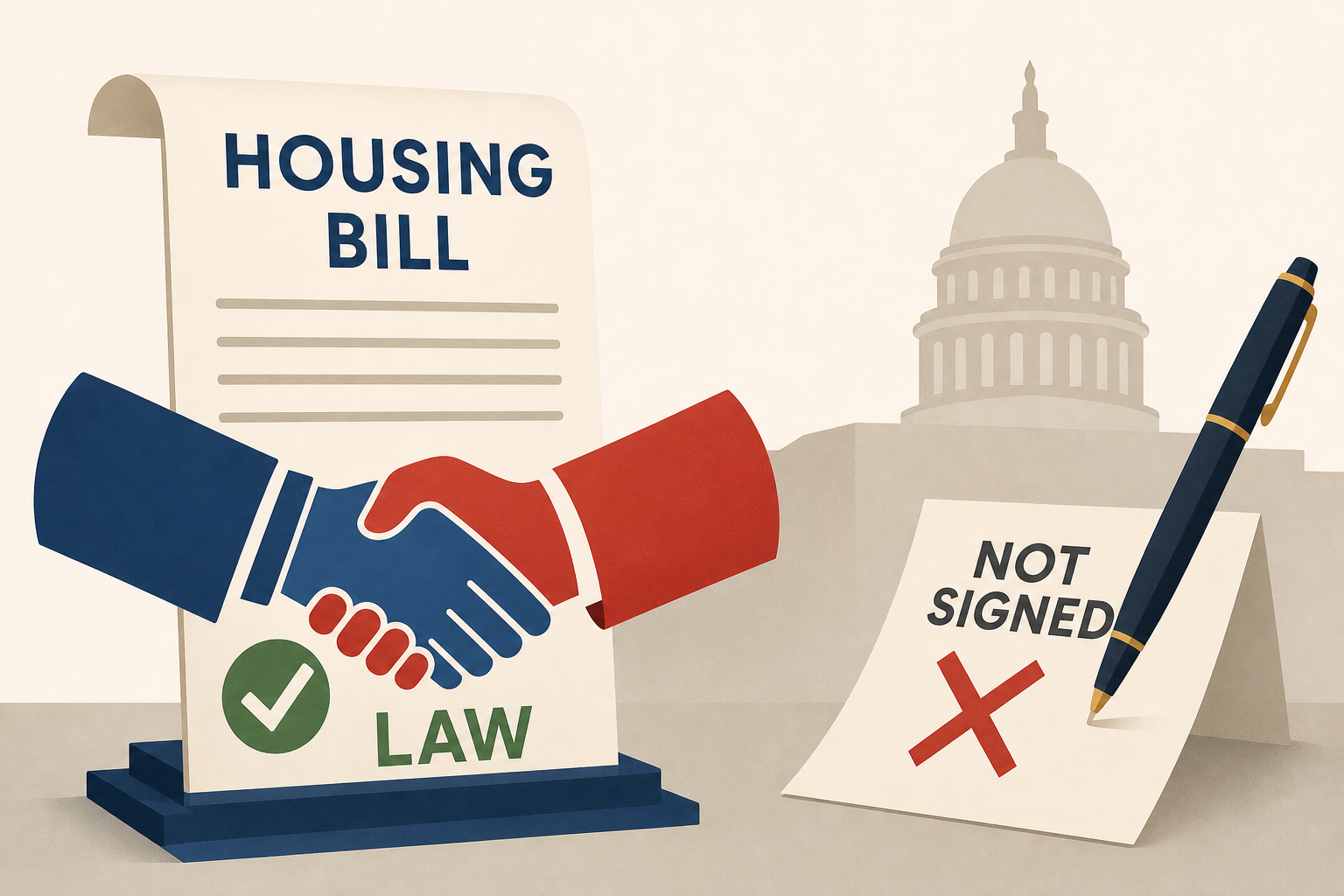
AI Generated Image
Senators celebrate bipartisan housing bill becoming law despite Trump's refusal to sign
ABC News - Breaking News, Latest News and Videos • • nation
Key Points:
- The bipartisan 21st Century Road to Housing Act became law on Saturday without President Trump's signature after he chose not to sign or veto it within the 10-day window, allowing it to automatically take effect.
- The legislation aims to alleviate the housing shortage by increasing home supply, easing construction regulations, and restricting Wall Street investors from buying homes intended for families.
- Trump refused to sign the bill in protest over the Senate's failure to advance the unrelated Save America Act, which includes election reforms such as photo ID requirements and proof of citizenship for voter registration.
- Lawmakers from both parties praised the housing bill's passage, highlighting its potential to help Americans achieve homeownership and reduce housing costs, while some Democrats criticized Trump's delay as obstructive.
- Senate Banking Committee Chairman Tim Scott and other Republicans emphasized the bill as a bipartisan success, whereas Democrats like Sen. Elizabeth Warren and Sen. Catherine Cortez Masto condemned Trump's refusal to sign as detrimental to families in need.


