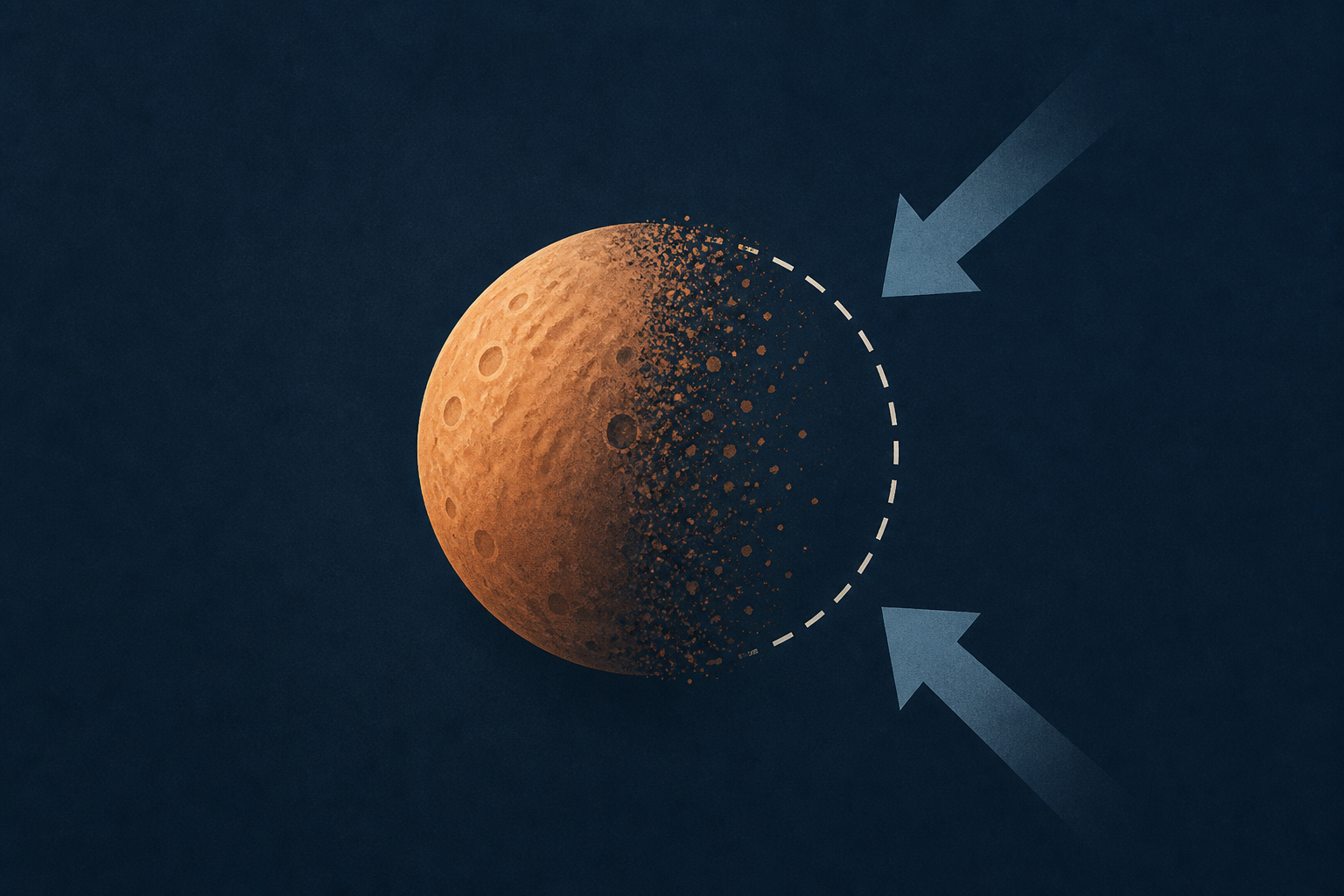
AI Generated Image
Smallest Planet Continues to Shrink
Newser • • science
Key Points:
- A new study from the German Aerospace Center's Institute of Space Research reveals that Mercury is shrinking about 30% more than previously estimated, with a diameter loss of up to 14 miles.
- Mercury's rough, impact-scarred surface may have concealed the full extent of its shrinkage until now, according to the researchers publishing in Geophysical Research Letters.
- The shrinkage is caused by the cooling and contraction of Mercury's oversized iron core, mantle, and crust, a process ongoing since the planet's formation 4.5 billion years ago.
- The BepiColombo mission, a joint European and Japanese spacecraft currently en route to Mercury, is expected to confirm these findings with its laser instruments upon entering orbit later this year.
- BepiColombo will provide a more detailed survey of Mercury after splitting into two parts following orbital insertion in November.


