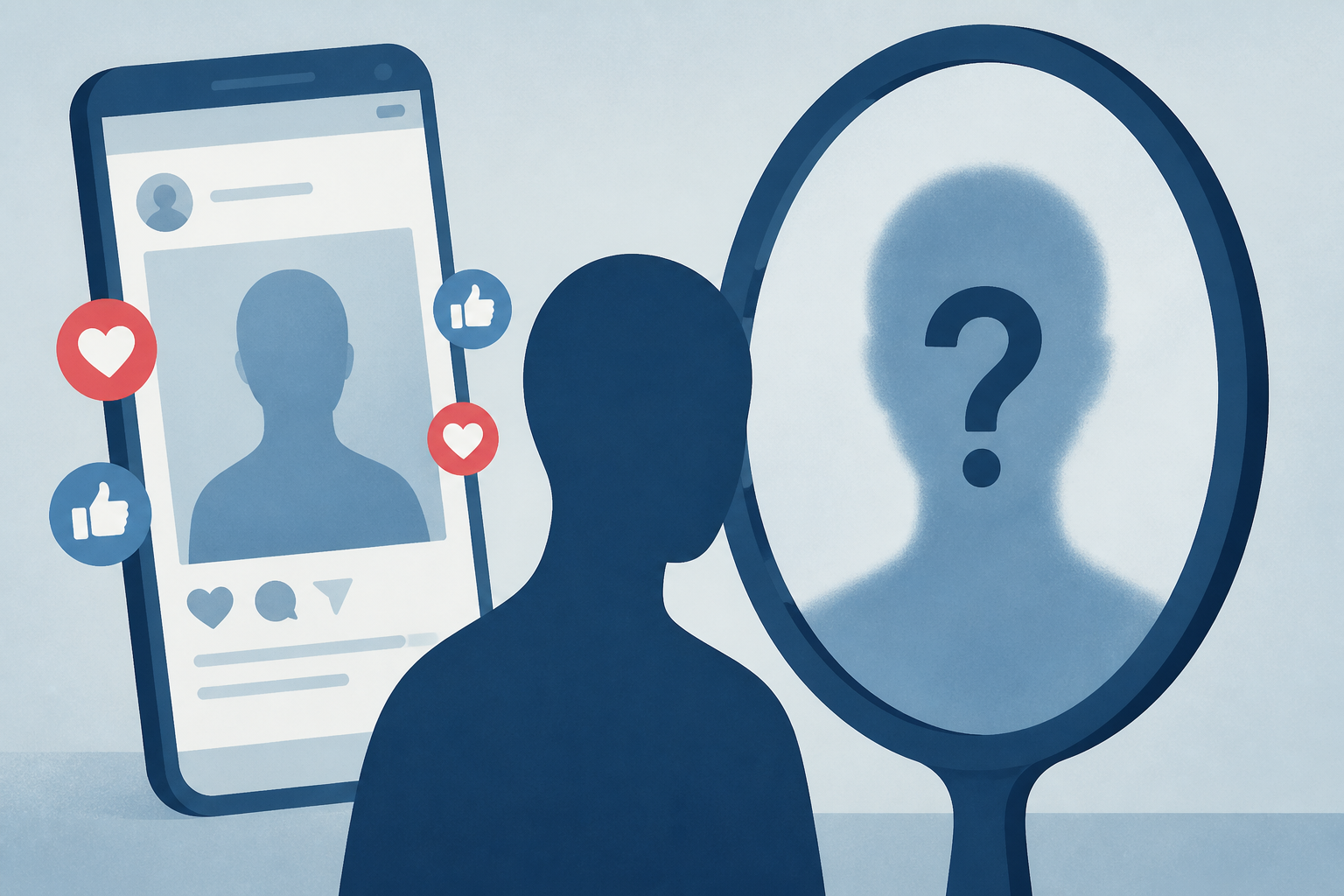
AI Generated Image
Social Media Is Making it Harder to Remember What We Look Like
Yahoo Health • • health
Key Points:
- A new study published in Computers in Human Behavior found that prolonged Instagram use, especially exposure to idealized appearance-focused content, can impair individuals' ability to recognize their own faces, causing them to confuse their face with that of a stranger's in virtual reality experiments.
- The study suggests that years of exposure to uniform beauty standards on social media, including frequent use of beauty filters, may weaken the brain's memory and perception of unique facial features, contributing to a blurred sense of identity and increased body dysmorphia.
- Psychotherapists highlight that social media promotes a psychological pattern where repeated exposure to similar facial features sets unrealistic beauty ideals, leading to feelings of inadequacy and the belief that not matching these standards means something is wrong with oneself.
- Experts recommend reducing time spent on social media, increasing social connections, and reconnecting with one's physical body through mindful activities as protective strategies against negative body image and identity confusion caused by social media.
- The study's lead author and mental health professionals call for tech companies to adjust algorithms to promote diverse and realistic representations of faces and bodies, encouraging individuality and reducing the harmful effects of homogenized beauty standards online.


