AI Image
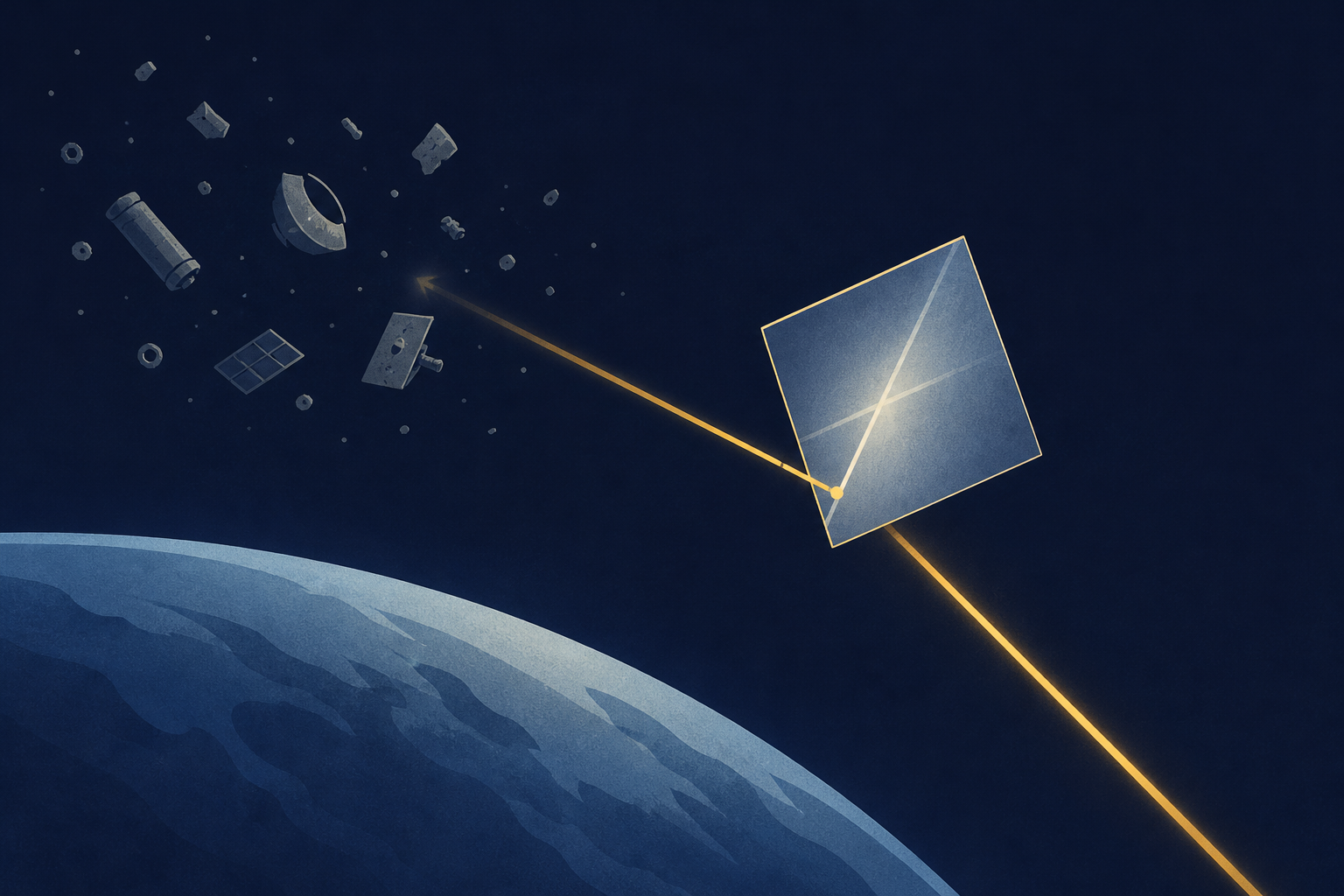
Space is filling up with junk. Could laser-reflecting mirrors help humanity clean things up?
Space • • science
Key Points:
- British startup Foundational has developed and successfully tested a retroreflector system, Retro-2, designed to help track space debris and satellites in orbit without requiring power or commands from the host spacecraft.
- The Retro-2 device, weighing just 50 grams, can return laser-ranging signals with millimeter-level precision from altitudes between 600 and 870 kilometers, enabling ground stations to monitor spacecraft even after they become inactive.
- The technology was demonstrated in an orbital test launched in July 2025 aboard SpaceX's Transporter-17 rideshare flight, where Retro-2 returned over 6,000 laser shots during five passes in low Earth orbit.
- Foundational aims to enhance space traffic management and reduce collision risks amid the growing problem of space debris, complementing other debris mitigation strategies like deorbiting and refueling satellites.
- Founded in 2025 and recently emerging from stealth, Foundational has already secured £8.2 million ($10.9 million) in pre-seed funding to further develop its space tracking technology.


