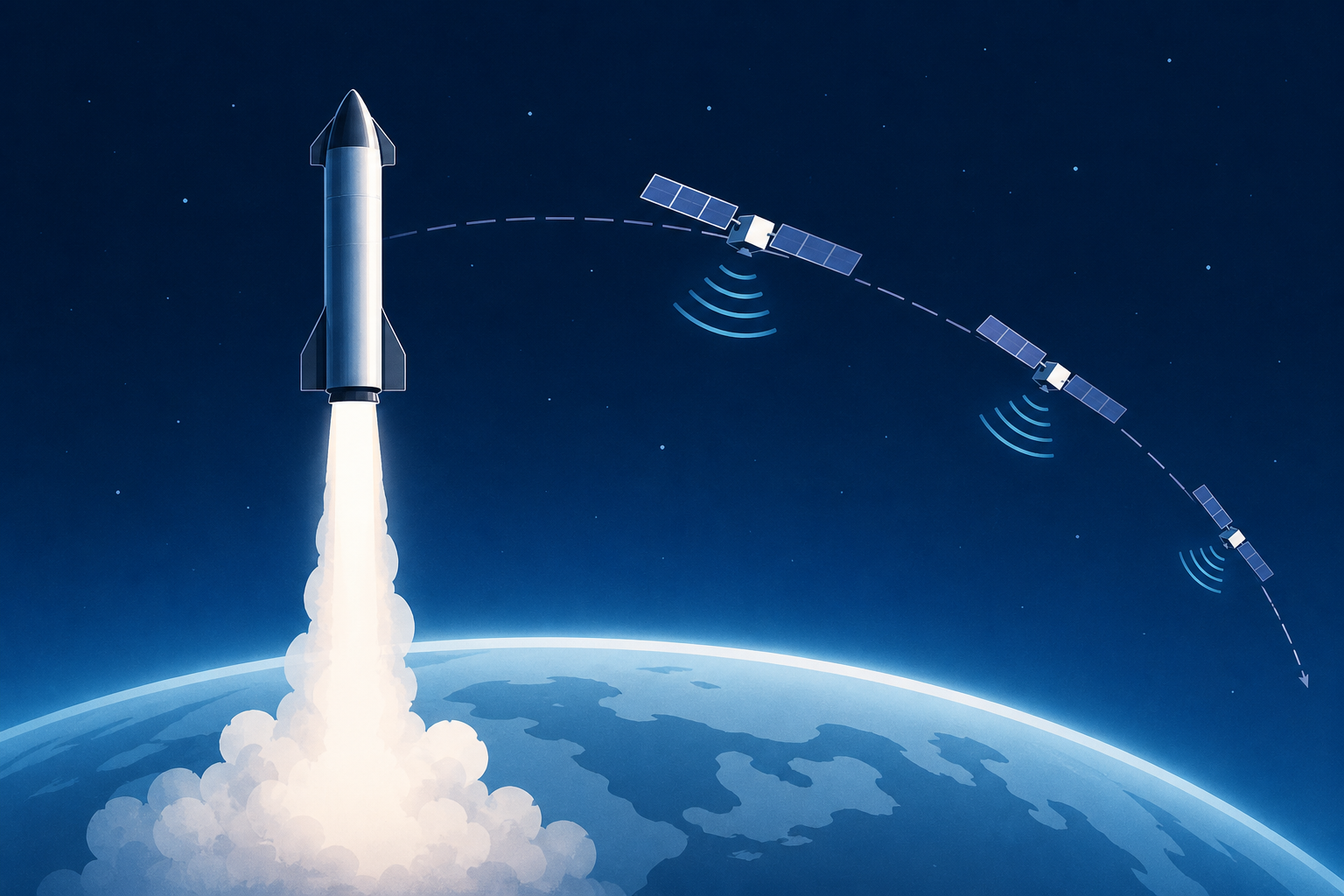
AI Image
SpaceX's Starship goes orbital, deploying first next-gen Starlinks
arstechnica.com • • business
Key Points:
- SpaceX successfully completed the 14th test flight of its Starship rocket, achieving orbital velocity for the first time by reigniting a Raptor engine to reach low-Earth orbit and deploying 26 next-generation Starlink V3 satellites.
- The Starlink V3 satellites are larger and more capable than previous versions, offering up to 1 Tbps of capacity each, and can only be launched on Starship due to their size; this launch marked their first deployment into orbit.
- Despite some engine malfunctions during ascent, SpaceX proceeded with the orbital insertion burn and later opted for an earlier-than-planned deorbit and splashdown in the Pacific Ocean, where Starship broke apart on impact as expected.
- SpaceX continues to refine the Raptor 3 engine, which has experienced issues on recent flights, but these have not delayed the program; the FAA cleared the flight without requiring a mishap investigation.
- Looking ahead, SpaceX plans to increase Starship flight cadence, develop new launch facilities in Florida, attempt controlled landings near Starbase, and conduct longer orbital missions including in-orbit refueling to support future lunar missions and expanded Starlink deployments.


