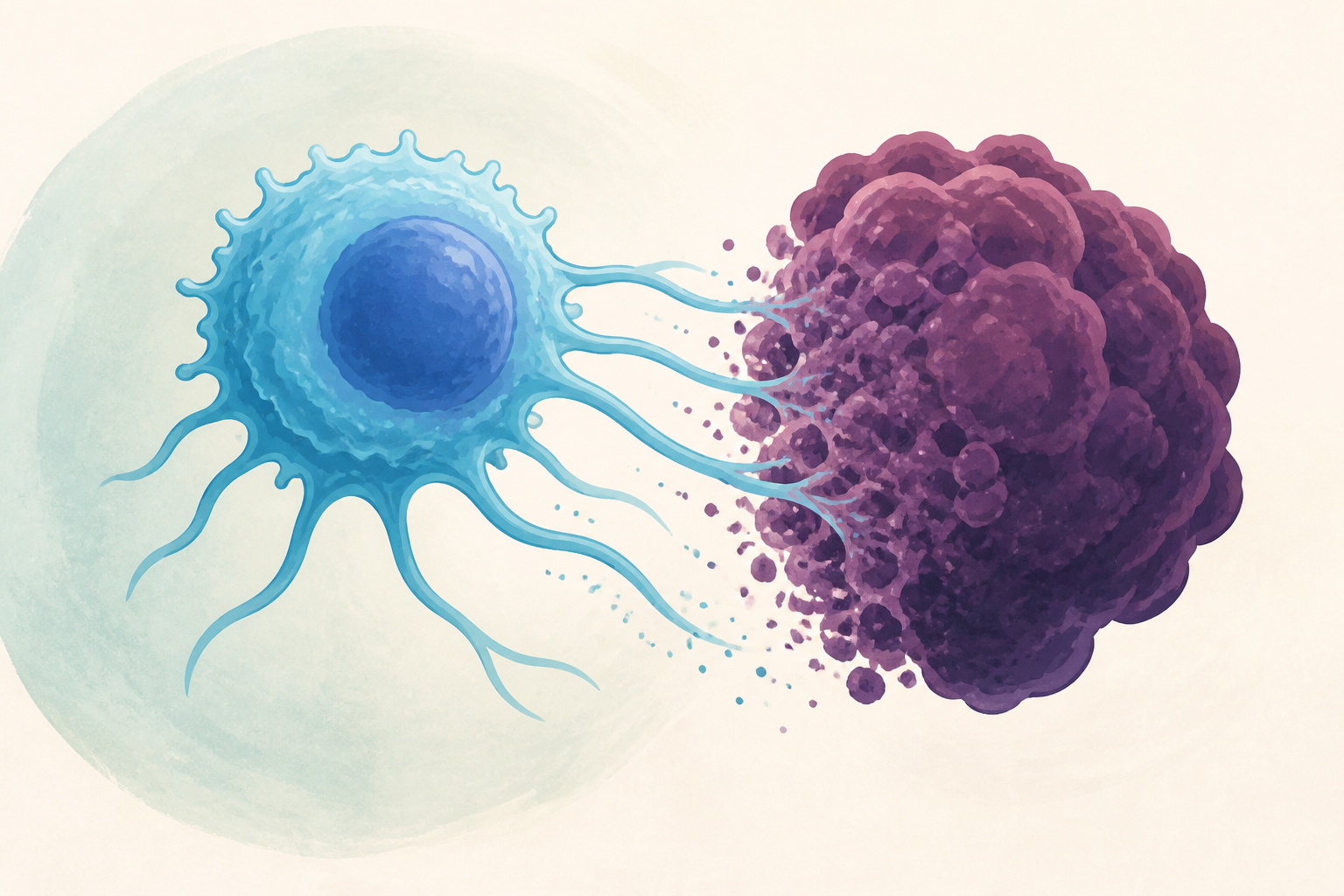
AI Generated Image
Stanford scientists discover cells that could hopefully destroy tumors
SFGATE • • science
Key Points:
- Stanford researchers discovered a unique explosive cell death called "ruptosis" in flatworms, where specialized cells called ruptoblasts self-destruct to release cytotoxic agents that kill nearby cells, including bacteria, within minutes.
- The flatworm Schmidtea mediterranea, known for its regenerative abilities, contains ruptoblasts that detonate in response to high levels of the hormone activin, releasing toxins potent enough to kill dozens of cells rapidly.
- This form of cell death is the most explosive known to date and could inspire new medical treatments by potentially programming human immune cells to perform ruptosis to target tumors and resistant bacterial infections.
- The discovery was unexpected due to the speed and potency of the cell explosions, with researchers expressing optimism about understanding the mechanisms to harness ruptosis for therapeutic purposes.


