AI Image
Stonehenge’s six-ton stone isn’t from where scientists thought
Yahoo • • science
Key Points:
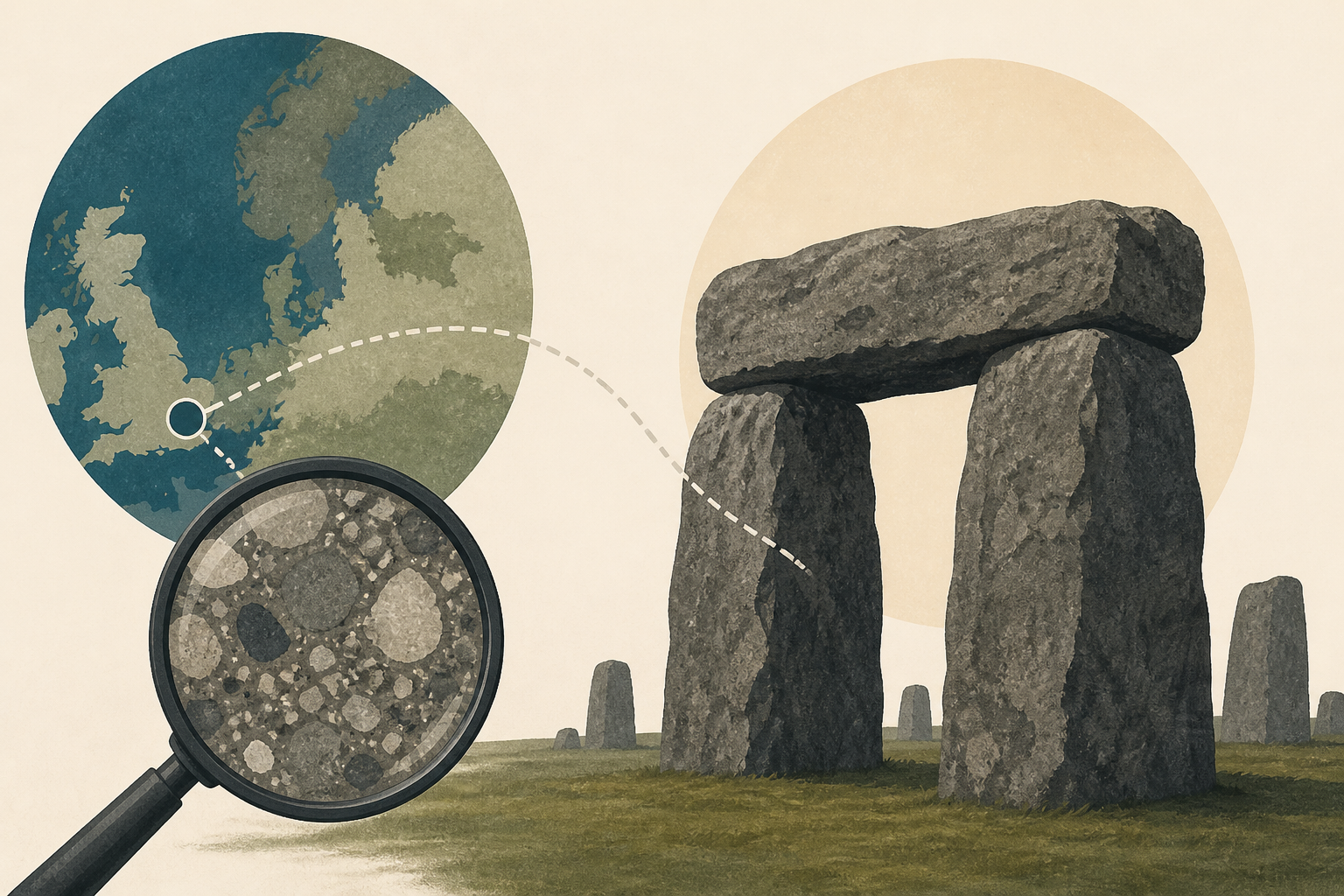
- Recent tests revealed that Stonehenge's six-ton Altar Stone originated from northeastern Scotland, overturning the century-old belief that it came from western Wales alongside the smaller bluestones.
- A comprehensive geological investigation led by Professor Duncan Pirrie compared the Altar Stone's composition with rocks from the Orcadian Basin in northeastern Scotland but found no exact match, indicating the source remains unidentified.
- The study, published in the Journal of the Geological Society, refines the criteria for matching the stone's unique mineral fingerprint, helping to narrow down future search areas and eliminate unlikely locations.
- Determining the stone's origin is significant as it sheds light on the advanced transportation capabilities of Stonehenge's builders, who would have had to move the Altar Stone over 460 miles, likely by sea, if it indeed came from northeastern Scotland.
- Researchers remain optimistic, with each new test bringing them closer to solving the mystery of the Altar Stone's provenance, enhancing understanding of prehistoric monument construction.


