AI Generated Image
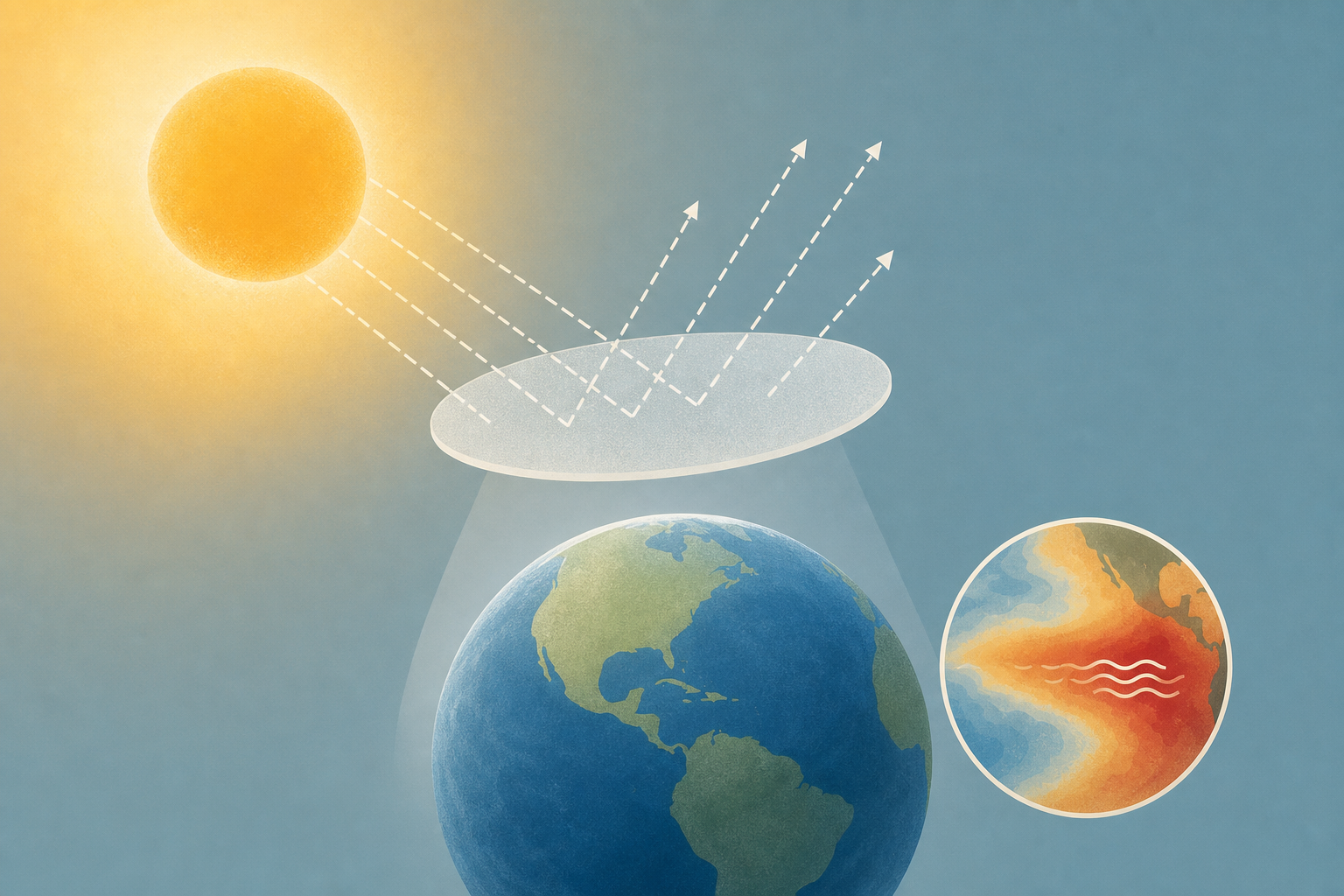
Study propses dimming the sun to protect Earth from El Niño
New York Post • • science
Key Points:
- Researchers at UC San Diego have proposed a controversial solar geoengineering method called "marine cloud brightening," which involves injecting aerosols into clouds to reflect sunlight and cool the Earth's surface, aiming to mitigate the severe weather impacts of a potential super El Niño.
- The National Oceanic and Atmospheric Administration (NOAA) predicts an 81% chance of a very strong El Niño by December, which could trigger extreme weather events such as droughts, floods, and heatwaves, potentially causing trillions of dollars in global economic damage.
- The proposed geoengineering technique would need to be deployed continuously over an indefinite period to curb long-term climate risks, raising concerns about unknown side effects and the ethical implications of manipulating natural climate systems.
- While some scientists warn that geoengineering might distract from reducing greenhouse gas emissions, the UC San Diego team argues that targeted interventions during extreme seasonal events like El Niño could complement existing climate risk reduction strategies.
- No immediate plans exist to test this solar dimming approach on the current El Niño, but researchers emphasize the importance of exploring all potential tools to address escalating climate threats.


