AI Generated Image
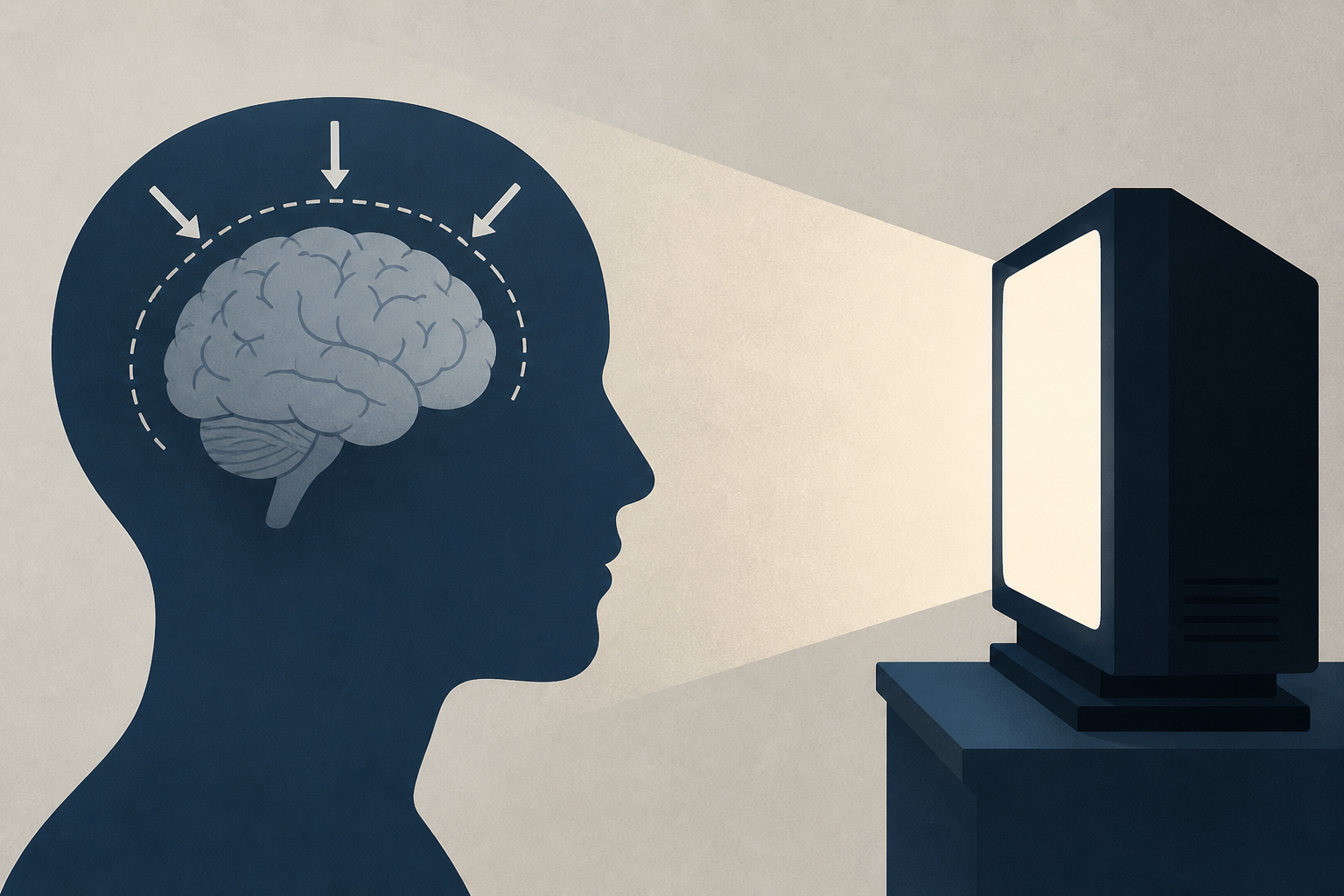
Study: Too Much TV May Shrink The Brain
studyfinds.com • • health
Key Points:
- A study published in Alzheimer’s & Dementia tracked over 1,700 middle-aged adults for about 22 years and found that frequent TV watching in the late 1980s was linked to smaller brain volumes in regions vulnerable to early Alzheimer’s disease and more brain pathway damage decades later.
- In contrast, people who spent similar amounts of sedentary time sitting at a desk job showed larger brain volumes and less internal brain damage, suggesting that the type of sedentary activity, not just total sitting time, may impact brain health.
- The study observed sex differences, with men showing stronger negative associations between TV watching and brain volume, while women exhibited weaker or no significant links, potentially due to differences in viewing habits or leisure activities.
- These brain effects persisted even after controlling for physical activity, cardiovascular risk factors, and genetic risk for Alzheimer’s, indicating that the impact of TV watching on brain health may be independent of exercise levels.
- The findings highlight the importance of considering the nature of sedentary behaviors in dementia prevention, suggesting that cognitive engagement during sitting (such as work-related tasks) may help maintain brain structure, while passive activities like TV watching could contribute to brain shrinkage.


