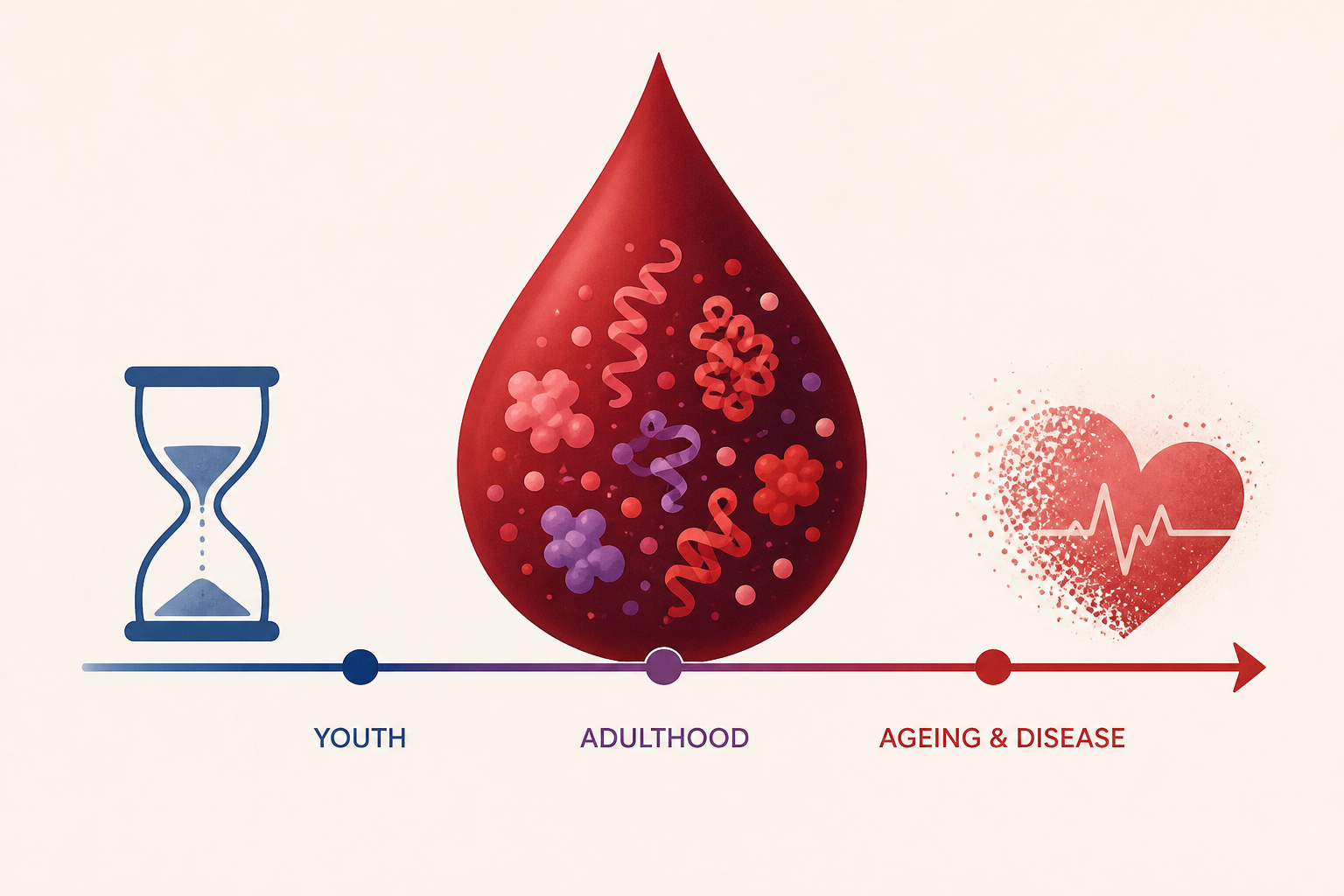
AI Generated Image
Temporal dynamics of the human blood proteome in ageing and disease
Nature • • health
Key Points:
- A 20-year longitudinal study of 1,298 individuals profiled 10,776 blood protein markers at four time points, revealing significant variability in proteome stability unlike the uniform stability seen in routine biomarkers.
- Protein stability was generally consistent across sexes and life stages, with certain shifts marking life-stage transitions, and highly stable proteins were influenced strongly by genetics and involved in key physiological functions like immune regulation.
- The study identified a reliable panel of stable proteins that improved biological age prediction and distinguished stable versus volatile risk biomarkers for cardiovascular disease and dementia.
- Researchers defined 21 proteins as personalized homeostatic baselines, with deviations from these baselines independently predicting mortality through early signs of disrupted metabolic, immune, and tissue-remodeling processes.
- This comprehensive map of long-term proteomic stability offers a new foundation for systemic homeostasis research and advances blood-based precision medicine applications.


