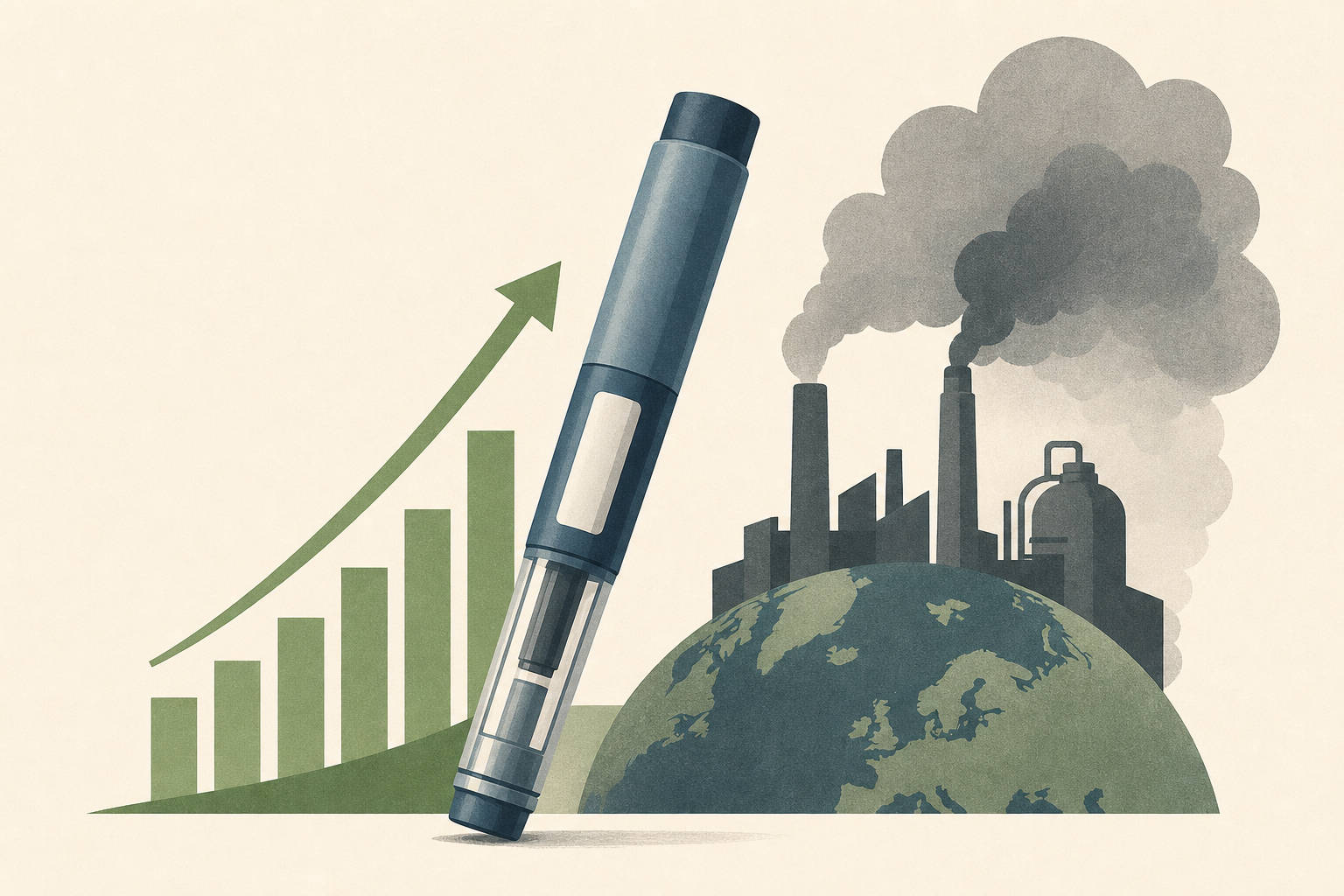
AI Image
Tenzin Seldon: The GLP-1 boom is the biggest climate story no one is pricing in
Fortune • • business
Key Points:
- GLP-1 drugs like semaglutide and tirzepatide reduce appetite and calorie intake by about 21%, leading to roughly 15% average body weight loss and a 5–6% decrease in grocery spending, according to research from Cornell University and Numerator.
- Wall Street forecasts significant impacts on the food industry, with JPMorgan estimating a potential $30–$55 billion annual loss in U.S. food and beverage sales by 2030 due to around 25 million GLP-1 users, while Goldman Sachs projects nearly 70 million users by 2035.
- The shift in food demand driven by GLP-1 users favors lower-emission foods, particularly reducing consumption of red meat and sugary products, which could cut U.S. food-system greenhouse gas emissions by 22–32%, aligning with federal dietary recommendations.
- Food companies are responding by reformulating products with smaller portions, more protein, and less sugar, while agricultural indicators show declining corn, soybean planting, and cattle herd sizes, reflecting a broader systemic change in food production and waste.
- Risks to this trend include potential plateauing of GLP-1 adoption, reformulation of ultra-processed foods to maintain calorie intake, and slow agricultural adjustments, but the overall demand contraction and its climate impact are expected to persist, signaling a durable market shift.


