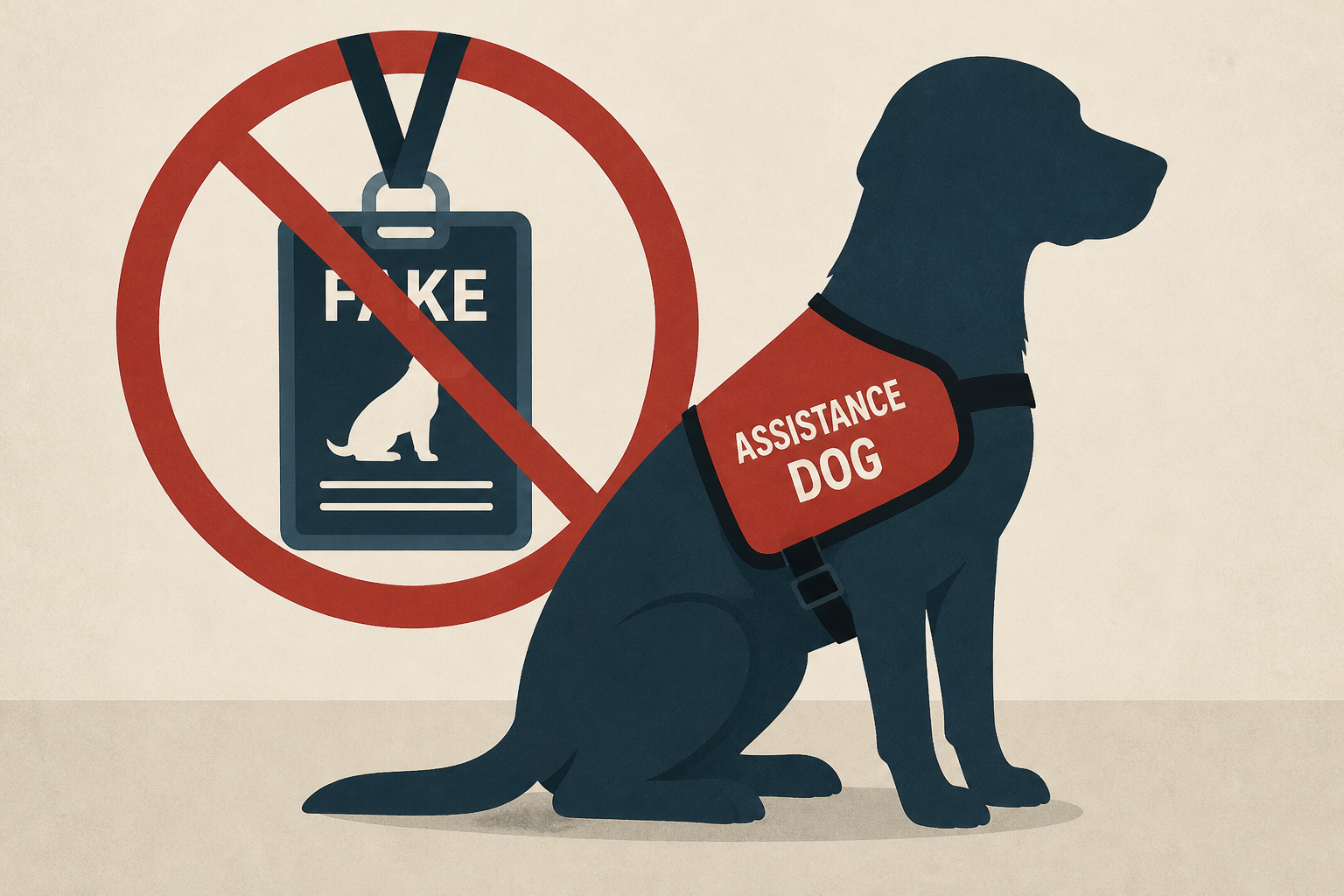
AI Image
The backlash over 'fake' assistance dogs
BBC • • world
Key Points:
- Lauren Ruggles, a visually impaired woman, experienced her guide dog Kilko being attacked by a poorly trained "emotional support dog" at a hospital, highlighting growing tensions around assistance dogs in the UK.
- The rise in owner-trained assistance dogs, often without formal training or accreditation, has led to conflicts in public spaces, with businesses facing challenges distinguishing legitimate assistance dogs from poorly behaved or fake ones.
- UK law lacks clear standards or official accreditation for assistance dogs, creating a legal grey area that complicates access rights and enforcement, while some businesses have introduced ID checks that disabled users find discriminatory.
- Experts and charities suggest that clearer legislation defining assistance dogs and mandatory training and certification systems, similar to models in countries like Germany, could help resolve disputes and build trust.
- However, concerns remain about the cost, capacity for training, and potential exclusion of individuals who rely on less formally trained dogs, making the issue complex and requiring balanced solutions.


