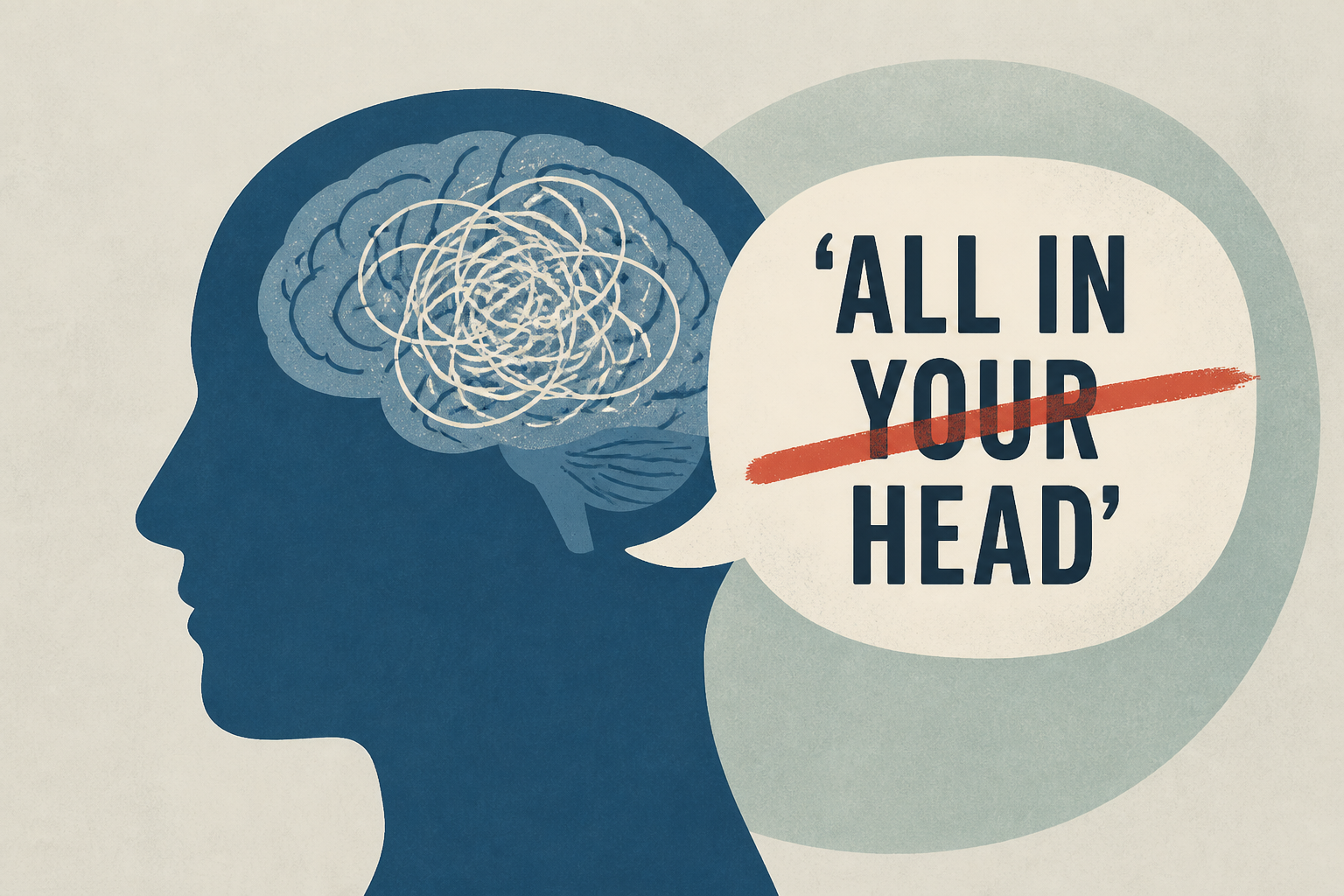
AI Generated Image
The common brain disorder often dismissed as being ‘all in your head’
The Independent • • health
Key Points:
- Functional neurological disorder (FND) causes real, disabling symptoms such as tremors, seizures, and mobility issues, despite normal brain scans and tests, leading many patients to feel dismissed or misunderstood.
- Emerging neuroscience explains FND as a disruption in brain network communication and predictive processing, where the brain’s expectations and sensory input fail to align, causing involuntary symptoms without structural brain damage.
- Historically mischaracterized as psychological or "hysteria," FND reflects biases in medicine, particularly regarding women's health, but modern research recognizes it as a brain-based disorder involving complex biological, psychological, and social factors.
- FND affects millions, with high healthcare utilization and mortality rates, yet access to specialized care is limited due to insufficient training and funding, resulting in delayed diagnosis and inappropriate treatments.
- Advances in multidisciplinary care and therapies aimed at retraining brain networks offer hope for recovery, with the crucial first step being validation and belief from healthcare providers that patients’ symptoms are real and neurological.


