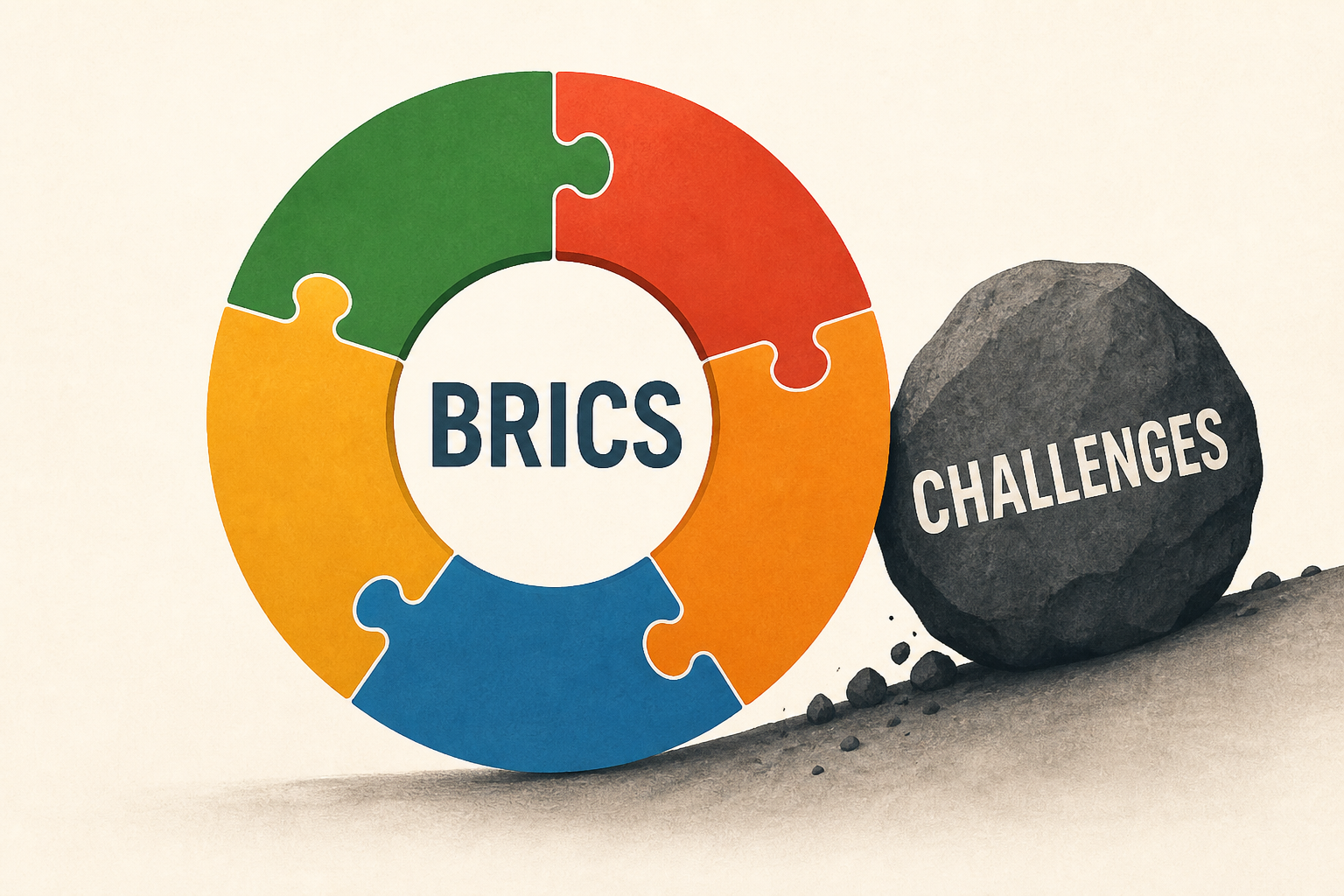
AI Generated Image
The evolution of BRICS and its challenges today
Reuters • • world
Key Points:
- The BRICS summit is set to take place in New Delhi amid global geopolitical tensions and disruptions in energy, shipping, and trade, with the bloc now including Brazil, Russia, India, China, South Africa, Egypt, Ethiopia, Iran, UAE, and Indonesia.
- Originally formed to challenge Western-dominated world order, BRICS represents over 40% of the global population and nearly a quarter of the world economy, focusing on political, economic, and security cooperation.
- Key achievements include the New Development Bank financing infrastructure projects worth nearly $43 billion and efforts to create a BRICS Pay System and explore central bank digital currency linkages to reduce reliance on the US dollar.
- The bloc faces internal challenges due to differing member priorities, with Russia and China viewing it as a geopolitical counterweight, while India and Brazil emphasize economic cooperation and reform, complicated further by the 2024 expansion and conflicting foreign policy interests.
- Western countries remain cautious of BRICS, viewing it as a potential shift in geopolitical power; former US President Donald Trump labeled it "anti-American" and opposed moves toward a BRICS currency to replace the US dollar.


