AI Image
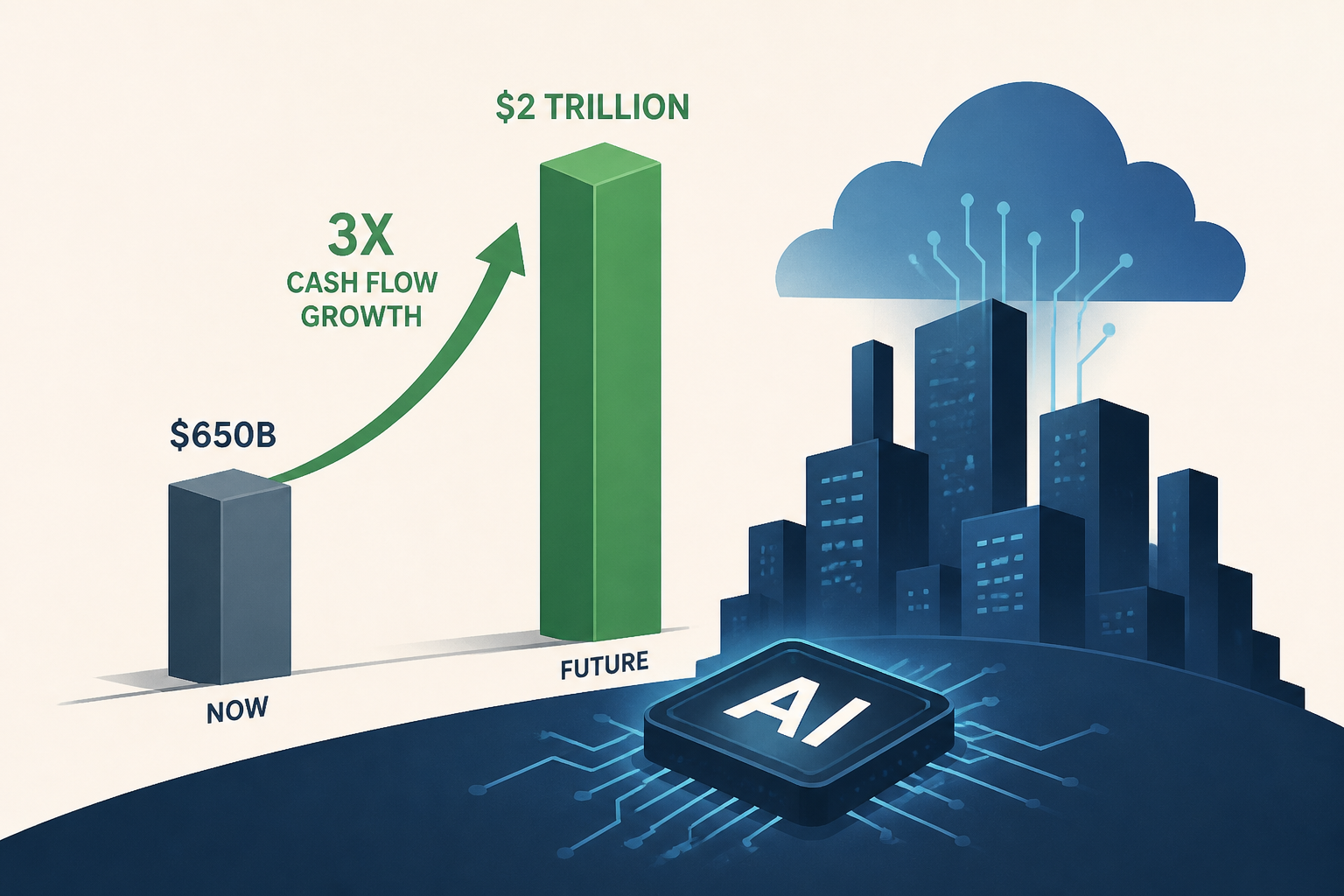
The future of AI growth rests on Big Tech's cash flow tripling to $2 trillion: Chart of the Day
Yahoo Finance • • business
Key Points:
- In 2026, AI-related investments by major Big Tech companies—Alphabet, Amazon, Meta, and Microsoft—account for about 20% of US economic growth, with these hyperscalers expected to spend around $800 billion on capital expenditures, a tenfold increase since 2019.
- To finance this surge in AI spending, these companies are increasingly turning to the debt market, planning to issue $250 billion in global investment-grade debt by the end of 2026 due to tightening cash flows, exemplified by Alphabet’s first negative free cash flow quarter since 2004.
- Wall Street consensus projects operating cash flow from these companies to more than triple from $600 billion in 2025 to roughly $2 trillion by 2030, but if this growth fails to materialize, it could lead to reduced AI investment, wider credit spreads, and slower US GDP growth.
- Despite strong gains in AI-driven stocks pushing the Nasdaq and S&P 500 indices to new highs, market breadth is narrow, with many S&P 500 stocks hitting 52-week lows, highlighting concentrated strength in a few key players.
- Morgan Stanley analysts remain optimistic about AI capital expenditure growth, citing strong demand for computing power, visible benefits for AI adopters, rising computer lease rates, and potential significant improvements in human welfare.


