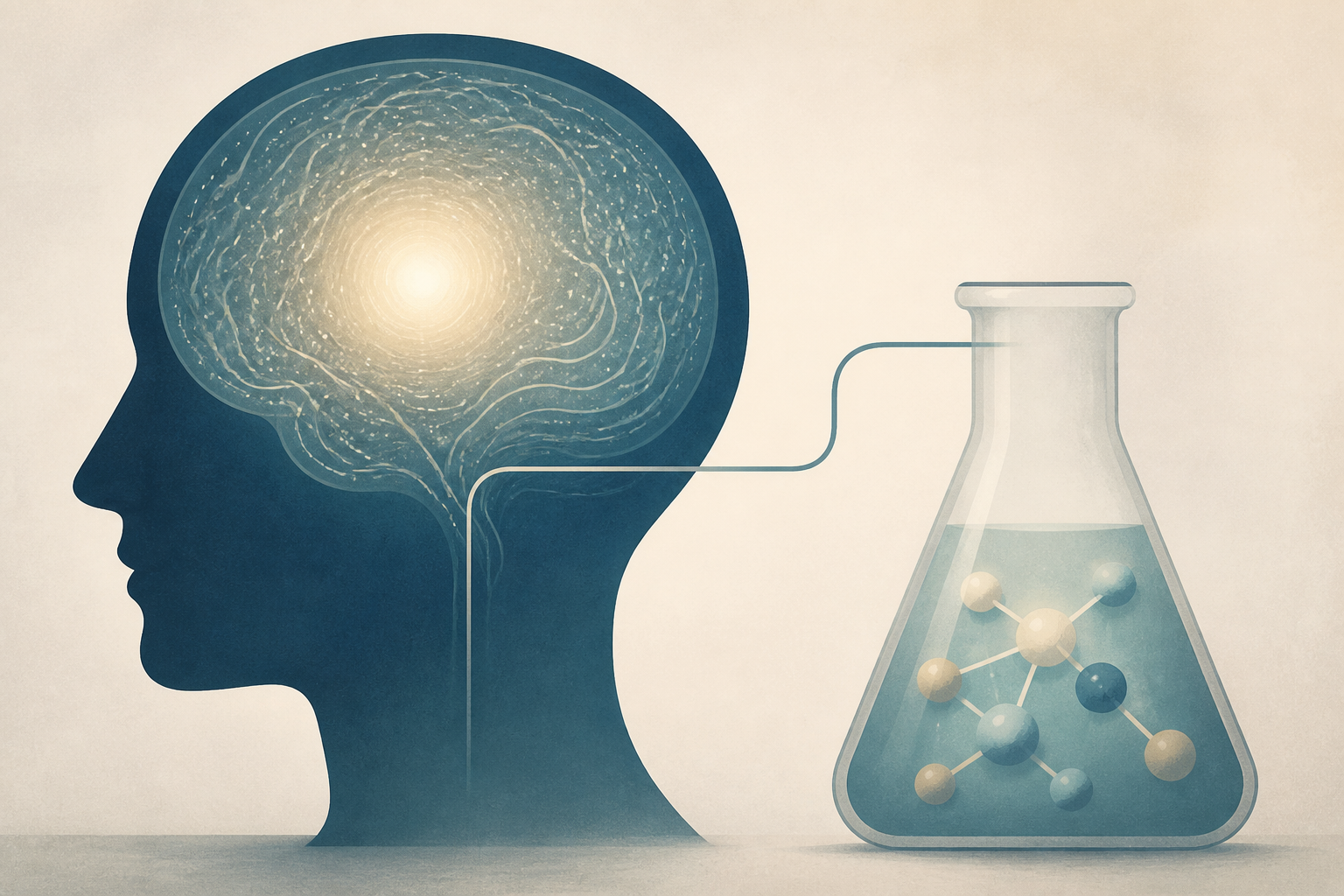
AI Generated Image
The Hard Problem of Consciousness Is a Soluble One
Skeptic • • science
Key Points:
- Australian philosopher David Chalmers's "Hard Problem of Consciousness" asks what consciousness is, how the brain produces it, and why it exists; this article proposes answers aligned with current philosophical and neuroscientific views.
- Consciousness is defined as a subjective mental state involving awareness and a first-person point of view, emerging when the brain reaches sufficient complexity, around 24 weeks after conception.
- The brain produces consciousness through specific neural circuits or networks, though the exact neuronal events remain unknown; future technology like a "brainscope" combined with AI may identify these patterns.
- Consciousness likely evolved as an emergent property of brain processes without direct survival value itself, acting as an epiphenomenon that reflects brain activity without causal influence on physical actions.
- The proposed "Brain Dependent Dualism" model suggests consciousness is dependent on the brain, does not survive death, and represents a natural, non-supernatural phenomenon bridging physical and mental realities, requiring further scientific research for validation.


