AI Image
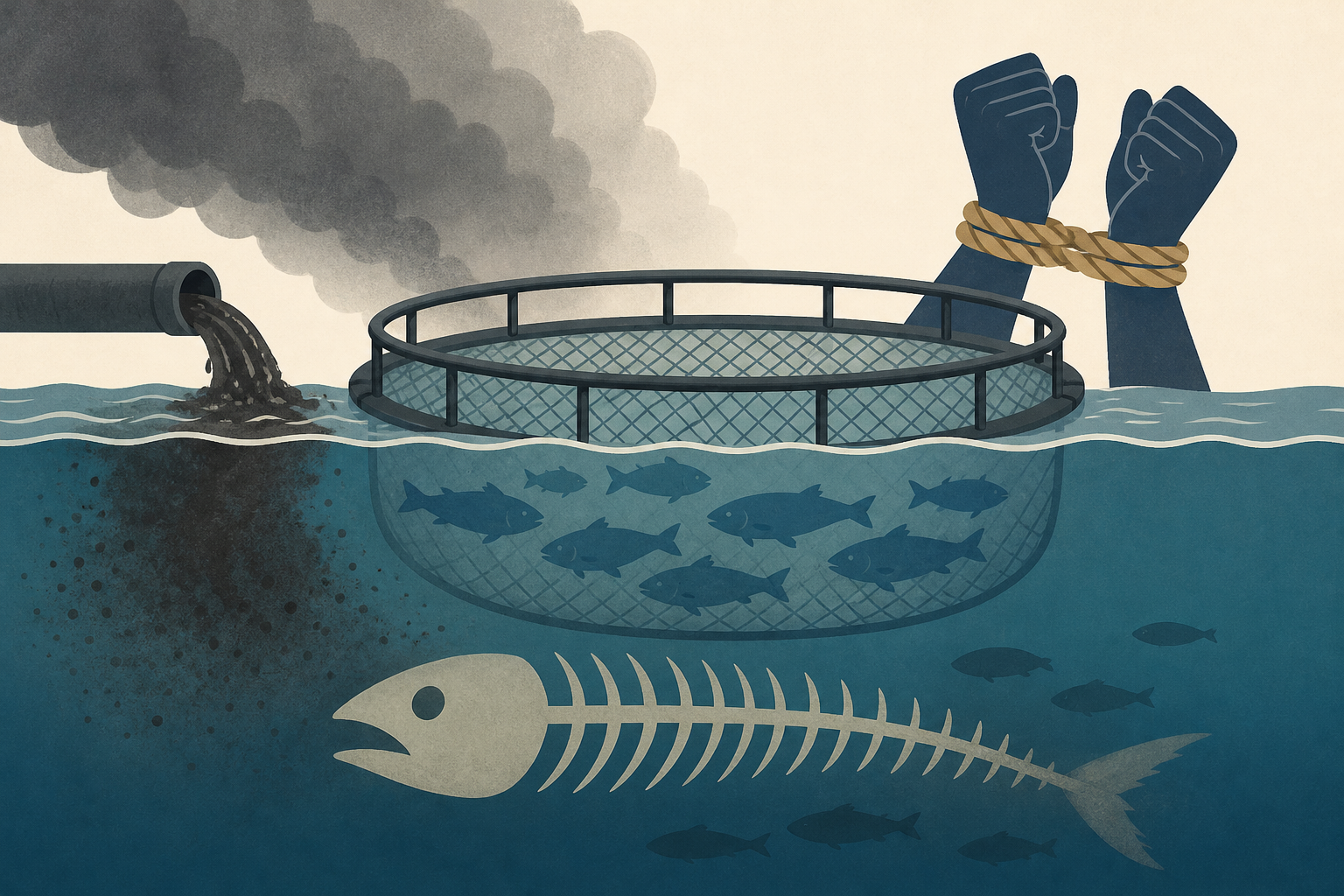
The hidden cost of farmed fish: Pollution, forced labor and the depletion of wild fish
Los Angeles Times • • world
Key Points:
- As of 2022, over half of the world's seafood consumed is farm-raised, but the industry's heavy reliance on fishmeal—made from wild-caught fish—raises sustainability concerns, as farmed fish often consume more wild fish than their market weight.
- An extensive investigation by The Outlaw Ocean Project uncovered that fishmeal production involves forced labor, environmental pollution, overfishing, and social unrest, disproportionately impacting poorer countries where fishmeal is produced.
- Many fishmeal vessels engage in illegal or unsustainable fishing practices, with less than 30% transparency regarding their operations, contributing to ecosystem damage and conflicts such as violent protests and transnational tensions.
- Despite efforts to find alternatives to fishmeal, none are yet affordable or nutritionally adequate at scale, leading to increased fishmeal use even among major salmon producers; meanwhile, labor abuses persist in fishmeal factories and farms, especially in regions like Xinjiang and Russia.
- Supply chain opacity hampers consumer and retailer ability to ensure seafood sustainability, with certification programs often failing to address labor abuses; recent lawsuits have challenged misleading sustainability claims by seafood companies linked to fishmeal-related environmental and human rights issues.


