AI Generated Image
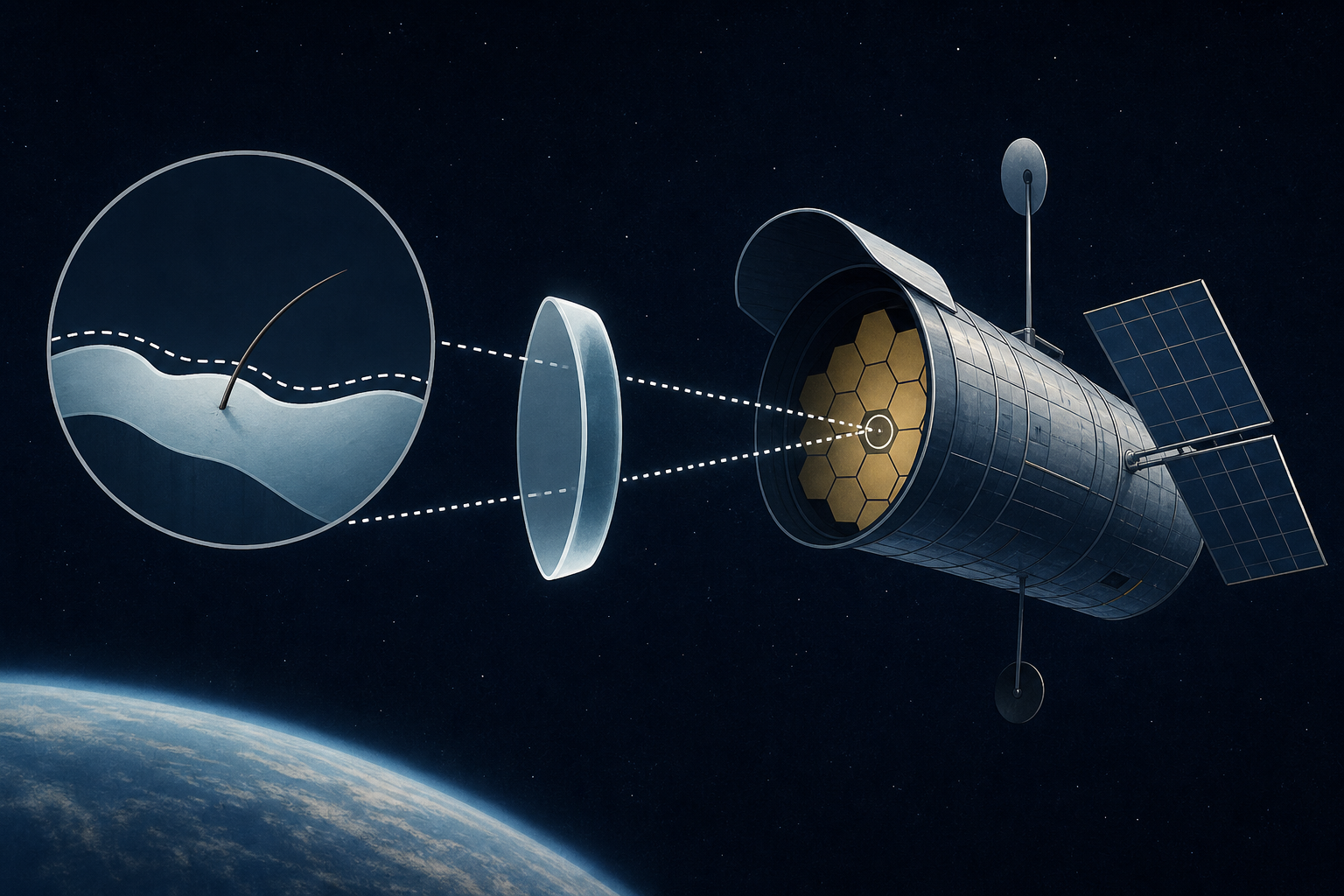
The Hubble Space Telescope reached orbit with a mirror ground to the wrong shape by a fraction of a human hair, and astronauts repaired the billion-dollar mistake by effectively giving it glasses
Space Daily • • science
Key Points:
- Hubble Space Telescope’s initial images were blurry due to a tiny but critical error in its 2.4-meter primary mirror, which was polished to the wrong shape by about 2.2 micrometers, causing spherical aberration.
- The flaw stemmed from a misassembled testing device called a reflective null corrector, leading engineers to polish the mirror to an incorrect prescription, a mistake that went undetected due to failures in communication and quality assurance.
- NASA corrected the problem in 1993 by installing corrective optics—essentially "glasses" for the telescope—during a complex servicing mission involving five spacewalks, which restored Hubble’s intended optical performance without replacing the flawed mirror.
- The correction involved adding new instruments with built-in optics to counteract the aberration, including the Wide Field and Planetary Camera 2 and the COSTAR system, which served multiple instruments and was later removed as newer instruments incorporated their own corrections.
- Despite the successful repair, the incident highlighted significant pre-launch testing and oversight failures, emphasizing that Hubble’s restored vision depended on compensating for the original defect rather than eliminating it.


