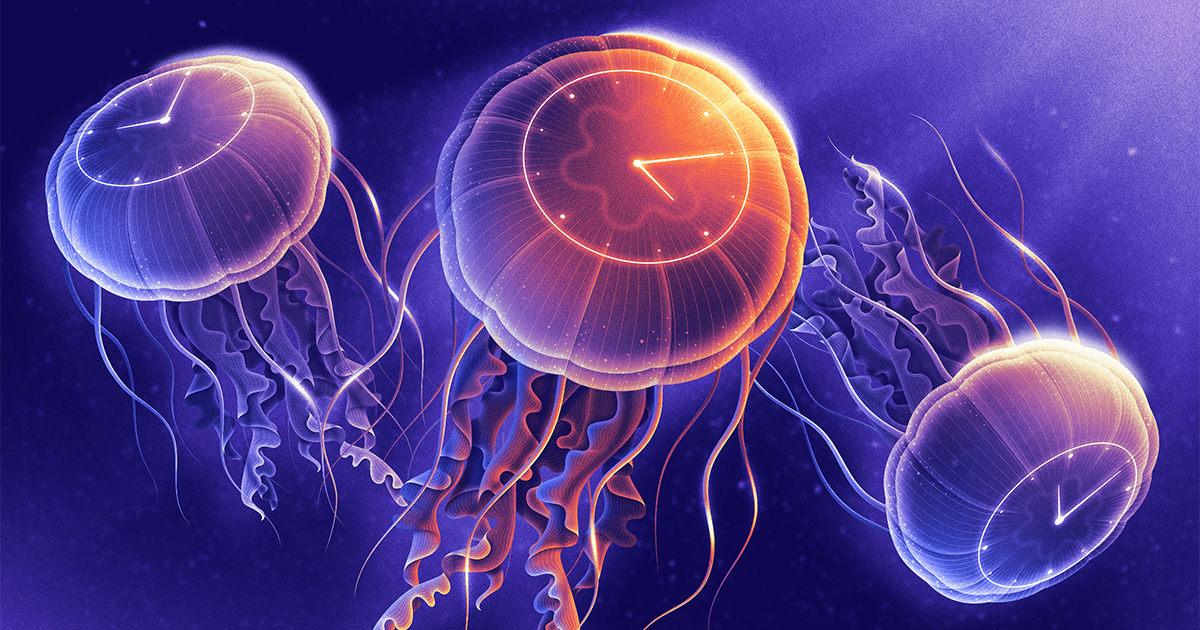
The Jellies That Evolved a Different Way To Keep Time
Quanta Magazine • • science
Key Points:
- Circadian rhythms are 24-hour biological cycles that regulate vital functions such as hormones, metabolism, and DNA repair, and are typically governed by an internal genetic clock calibrated by sunlight.
- Most animals share a common circadian clock mechanism involving genes like CLOCK, BMAL1, and CRY, which is ancient and found even in simple organisms like sponges and jellyfish.
- A newly discovered hydrozoan jellyfish species off Japan lacks these typical circadian genes but has a unique 20-hour biological clock paired with a molecular timer for spawning, indicating an independently evolved timekeeping system.
- This discovery challenges the traditional view of circadian clocks and suggests that diverse, unconventional molecular mechanisms for biological timing may exist across different species.
- Researchers continue


