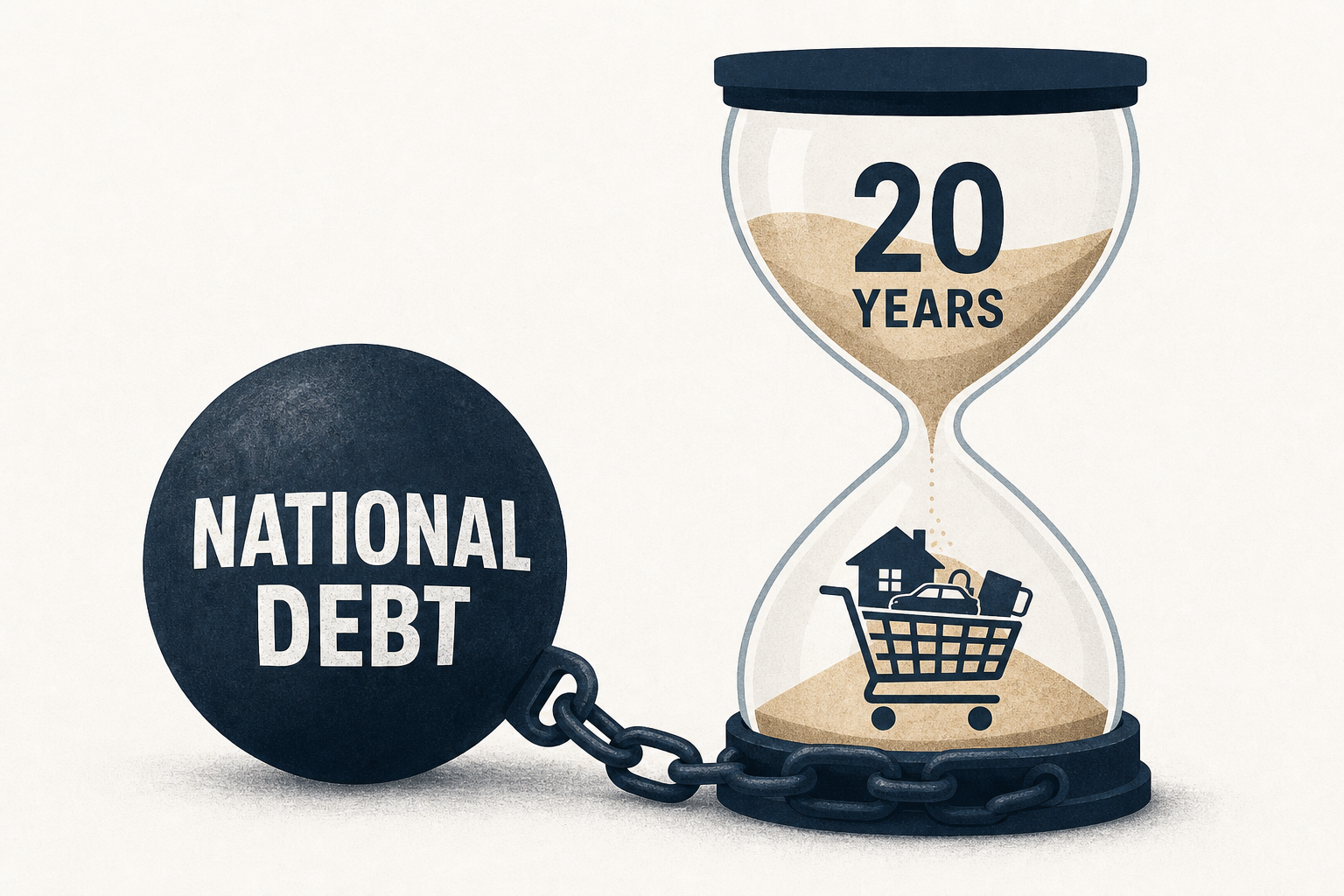
AI Generated Image
The national debt's 20-year deadline and baby boomers' spending problem
Fortune • • general
Key Points:
- The Penn Wharton Budget Model (PWBM) highlights a significant disparity in U.S. federal spending, with older Americans receiving about 10 times more per person than younger individuals, totaling roughly six times more in aggregate due to population differences.
- PWBM estimates that U.S. federal debt cannot sustainably exceed 210% of GDP, a threshold likely to be reached within 20 years if current health care cost growth continues, posing a major fiscal challenge around the mid-21st century.
- The analysis links the looming debt ceiling with the decline of baby boomer influence in politics and economics, noting that entitlement programs like Social Security face imminent funding shortfalls, yet timely policy responses have historically been delayed.
- Proposed solutions such as AI-driven economic growth or new funding mechanisms face skepticism, with PWBM advocating for more structural reforms like eliminating costly tax deductions for retirement contributions and redirecting funds to support low-income workers’ savings.
- The study warns of potential financial market crises akin to the UK’s Liz Truss episode, emphasizing that debt crises can trigger broader societal disruptions beyond economics, especially given limited fiscal flexibility and entrenched political resistance to benefit changes.


