AI Image
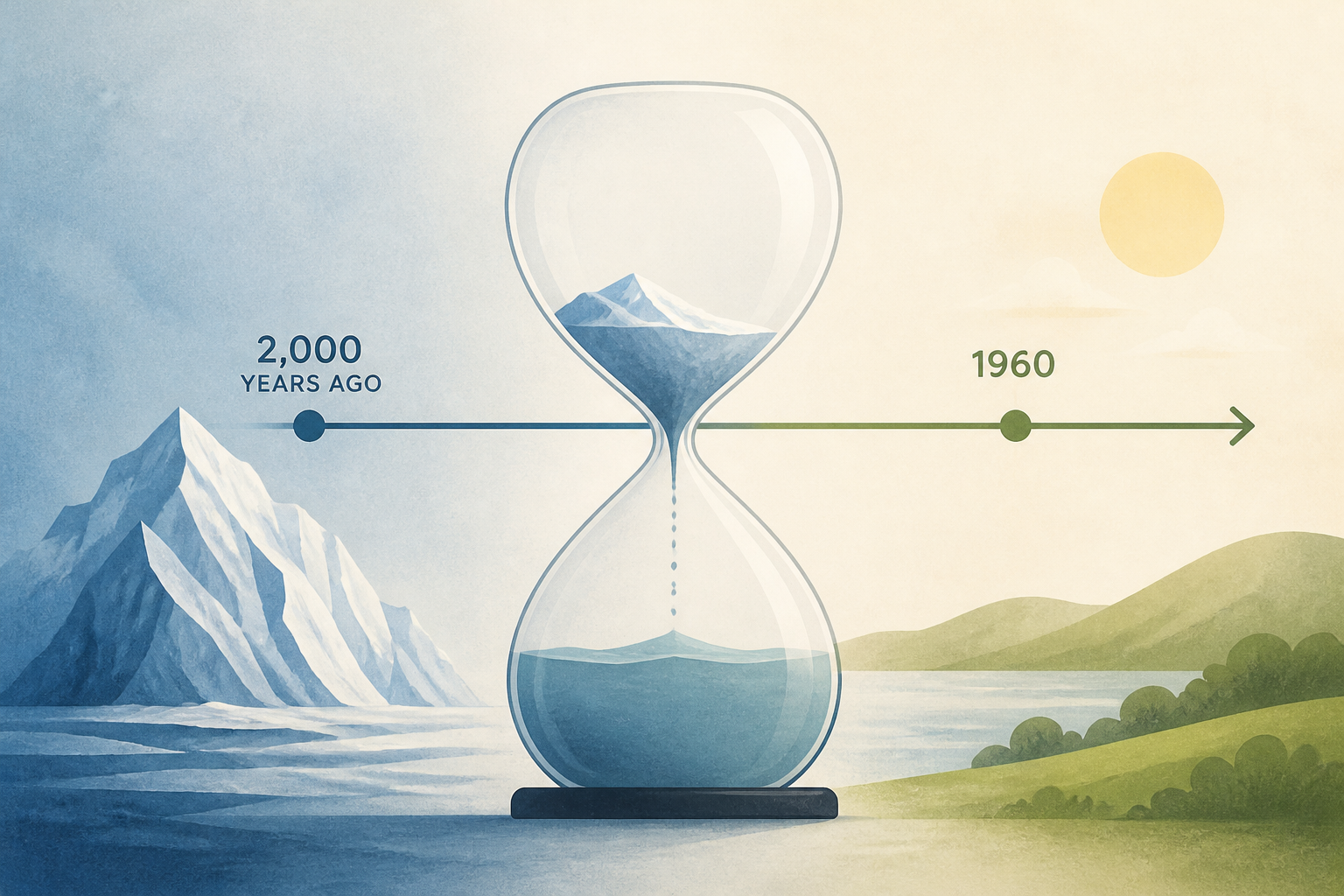
The Next Ice Age Began 2,000 Years Ago. Then, in 1960, Humans Abruptly Ended It.
Yahoo • • science
Key Points:
- Researchers at Columbia University identified the summer of 1960 as the point when a new glacial period, which had begun 2,000 years ago, started melting due to human-driven greenhouse gas emissions.
- The study, published in Science, focused on the Laurentide Ice Sheet's remnants, particularly the Barnes Ice Cap in Nunavut, which preserves plant material used to track ice margin changes through radiocarbon dating.
- The findings challenge conventional understanding by marking the renewed growth of an ice sheet as the start of a glacial period, which was abruptly ended by warming in 1960 causing ice loss to exceed accumulation.
- The researchers warn that the Barnes Ice Cap is expected to disappear within centuries, making it harder for new ice to form and complicating predictions about future glaciations amid ongoing high greenhouse gas levels.
- This study highlights the significant human impact on Earth's natural climate cycles, effectively halting a glacial period that would have otherwise continued its natural course.


