The Oil Crisis is About to Get Physical
Paul Krugman | Substack • • world
Key Points:
- The Strait of Hormuz, a critical chokepoint for about 20% of global oil production, is currently closed to most oil shipments except for Iranian oil and a few vessels allowed passage, causing a speculative spike in oil futures prices.
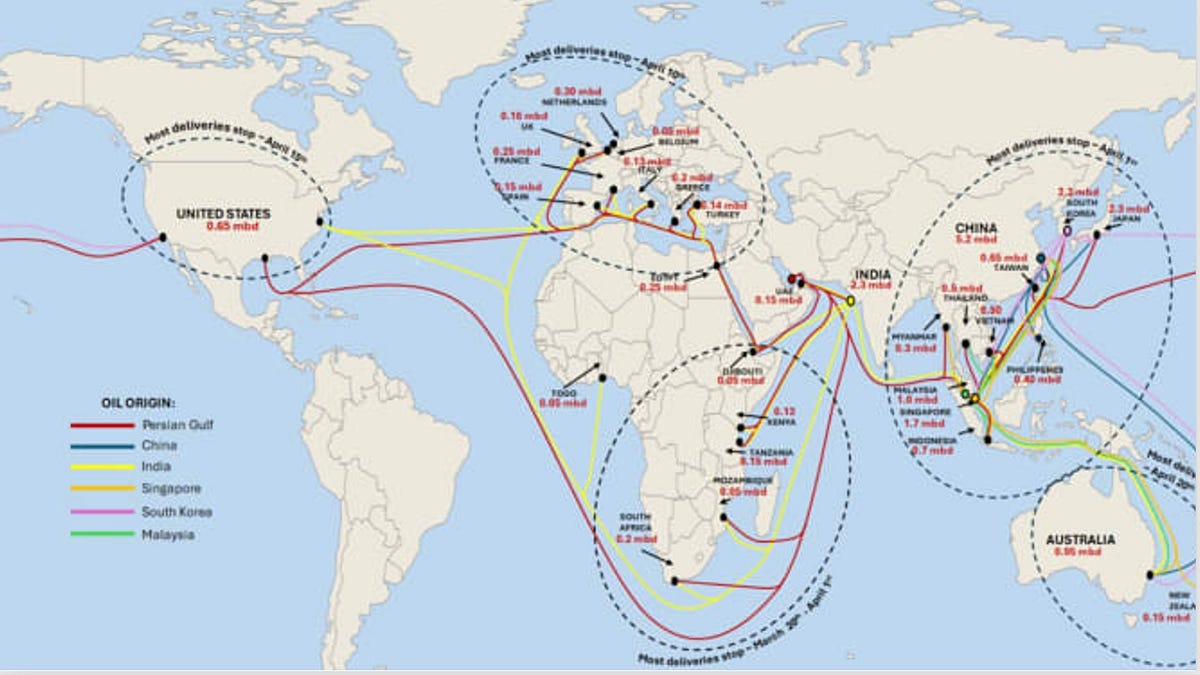
- Despite the price surge, actual global oil deliveries have not yet declined due to a 4-6 week shipping lag and existing oil already at sea, but this grace period is ending with deliveries to Asia stopping this week and Europe next week.
- The extent of the oil supply disruption remains uncertain, influenced by whether alternative pipelines and Iranian oil exports continue amid the conflict, and the price elasticity of oil demand, which is historically low and difficult to estimate precisely.
- Depending on the severity of supply cuts (8-16%) and demand elasticity (0.1-0.2), oil prices could rise dramatically, potentially exceeding $200 per barrel in a worst-case scenario involving further escalation and attacks on Gulf oil infrastructure.
- Such extreme price increases risk triggering a global economic crisis marked by inflation and recession, with energy experts expressing serious concern, contrasting with more optimistic views from some macroeconomic analysts.


