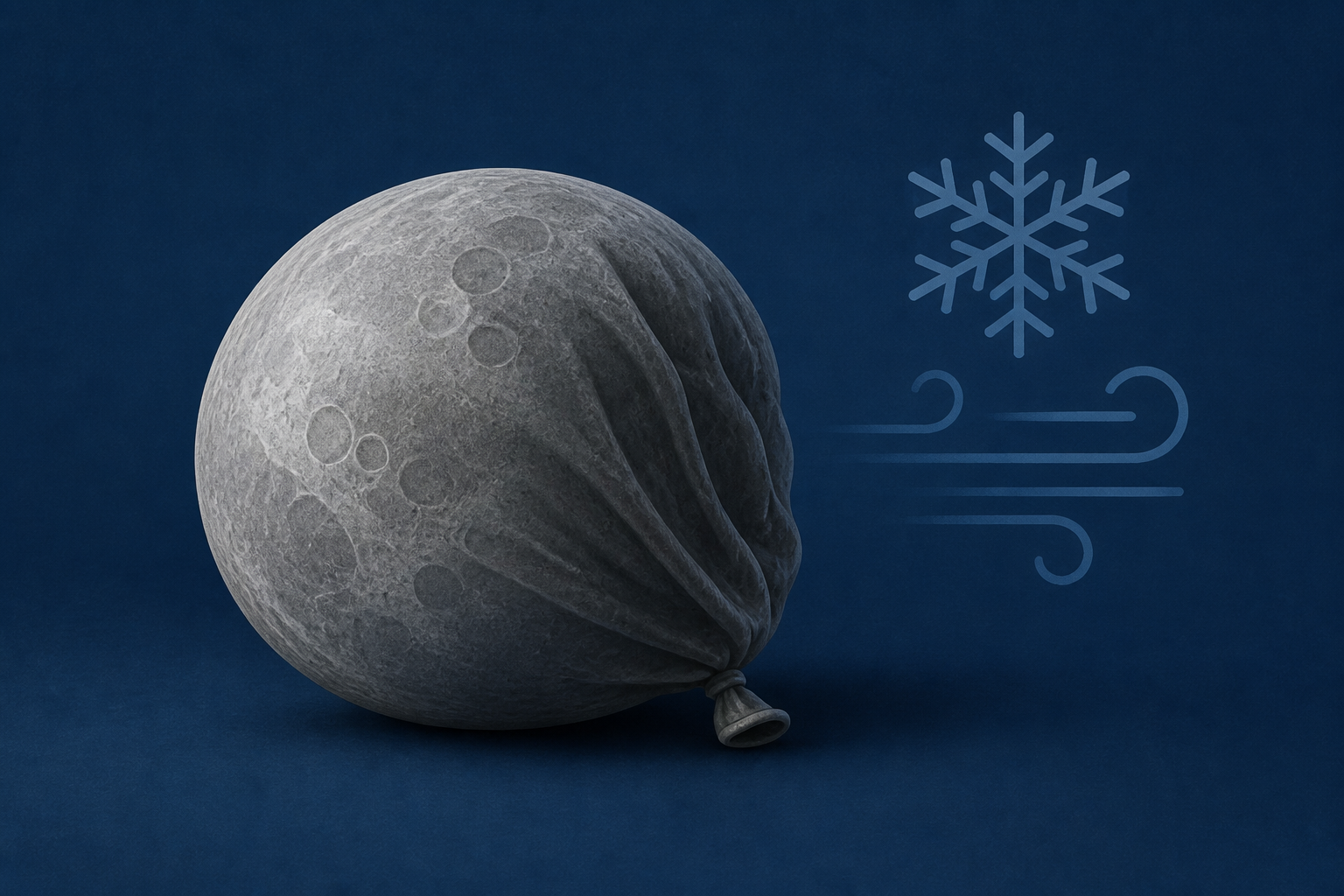
AI Generated Image
The Planet Mercury Appears to Have Shrunken Drastically, "Like a Balloon Left Out in the Cold"
Futurism • • general
Key Points:
- Mercury has been actively shrinking over billions of years, losing up to 14.5 miles in diameter, which is 10 to 30 percent more than previously estimated, according to new research from the German Aerospace Center’s Institute of Space Research.
- The shrinking is likely caused by Mercury cooling and contracting internally, similar to a balloon deflating in the cold, and impact crater debris may have hidden the true extent of this process.
- This accelerated shrinkage suggests Mercury might have a larger metal core, fewer light elements like silicon in the core, or a higher initial temperature than previously thought.
- The planet’s surface shows cracked and wrinkled features, including steep cliffs and ridges, which complicate measuring the total shrinkage, but new analysis indicates impact debris obscures some of these features.
- The upcoming BepiColombo mission, set to enter Mercury’s orbit in November, will provide closer observations to improve understanding of the planet’s internal structure and evolutionary history.


