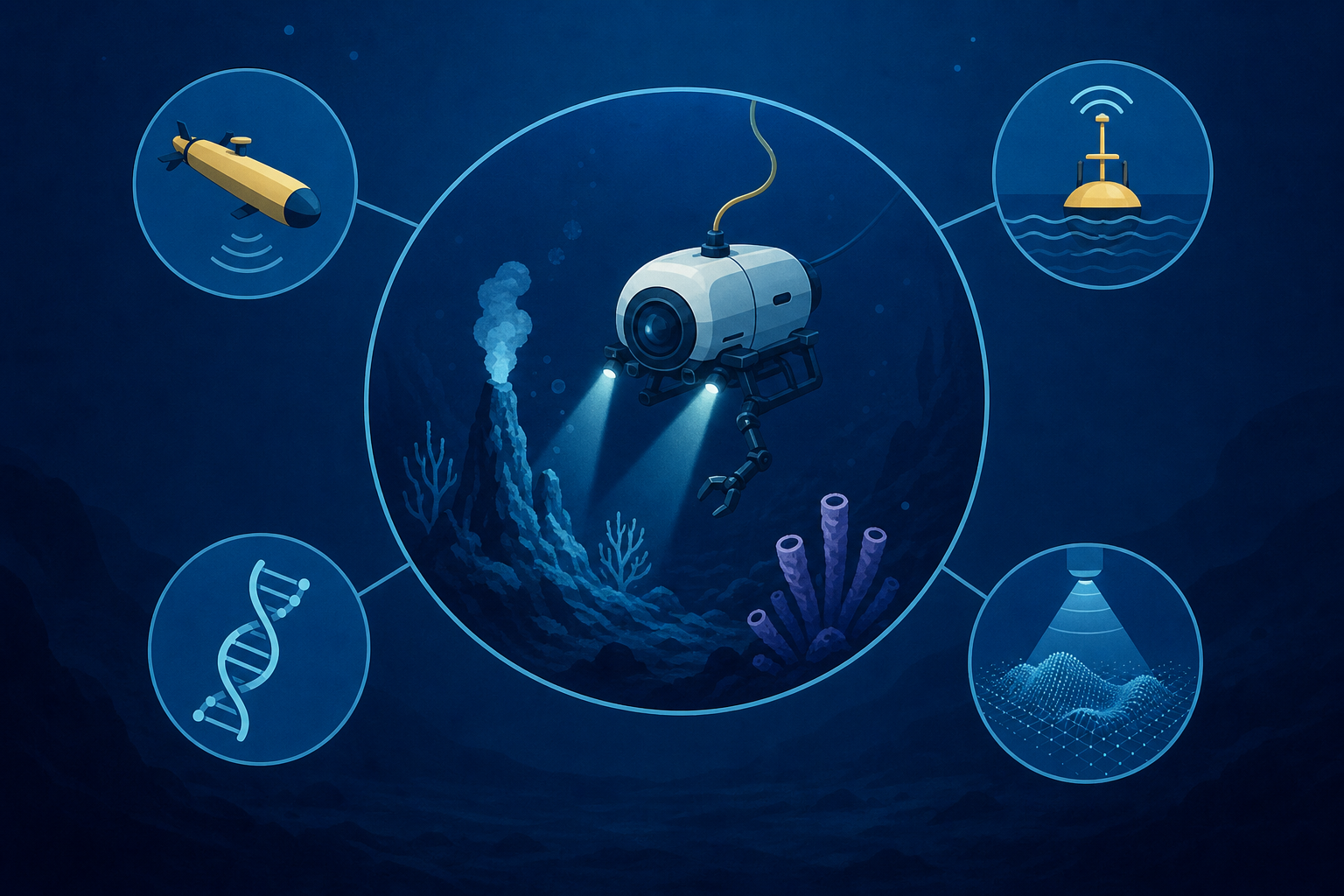
AI Generated Image
The race to explore the deep ocean: four technologies transforming research
Nature • • science
Key Points:
- Scientists have visually surveyed less than 0.001% of the ocean floor, but new technologies like advanced drilling, seismic sensors, and deep-sea cable networks are enabling deeper exploration of oceanic and geological processes.
- Ocean-bottom seismometers (OBSs) are helping researchers map mantle convection by measuring seismic wave propagation affected by rock densities, revealing mantle dynamics similar to a "lava lamp" and explaining volcanic activity in mid-ocean chains.
- The Chinese research vessel Meng Xiang, launching in late 2024, aims to drill as deep as 11,000 meters below the sea surface to collect the first pristine mantle samples, marking a major advancement in deep Earth exploration.
- A new tsunami prediction method uses hydrophones to detect low-frequency sounds generated at tsunami origins, allowing simulations of wave propagation and providing up to several hours' advance warning for coastal evacuations.


