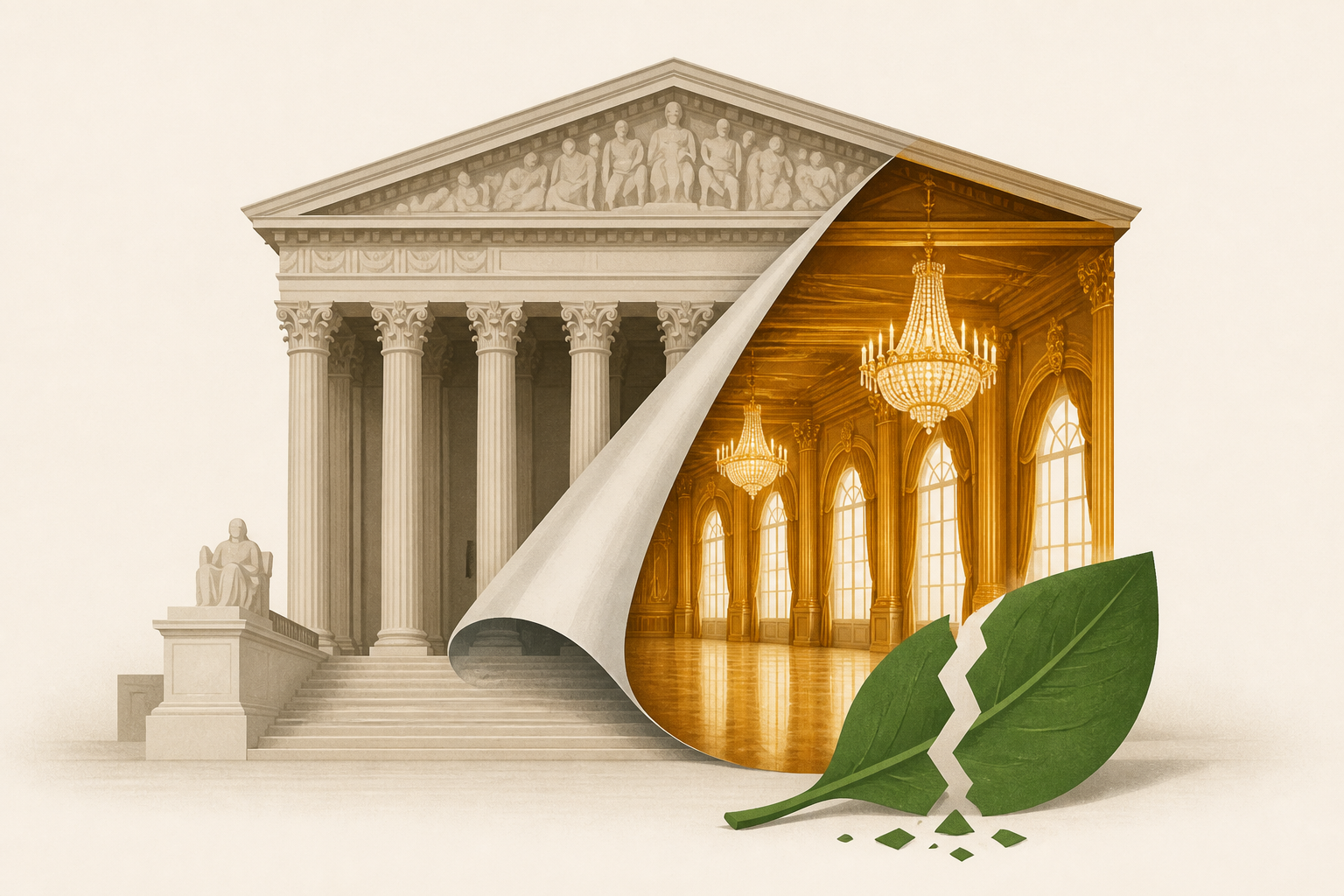
AI Generated Image
The Supreme Court could use Trump’s ballroom to gut environmental law
vox.com • • nation
Key Points:
- The Supreme Court is reviewing whether President Trump can demolish much of the White House, specifically the East Wing, and replace it with a new ballroom without congressional approval, following a lawsuit by the National Trust for Historic Preservation.
- Federal law prohibits new construction on federal lands in D.C. without Congress's express authority, and lower courts have ruled Trump's ballroom project illegal, rejecting his claims that existing statutes authorize the construction or funding through private donations.
- Trump’s legal team argues the ballroom is part of a larger underground military complex, potentially invoking national security considerations that courts traditionally defer to, which could influence the Supreme Court’s decision.
- A central legal issue is whether plaintiffs have "standing" to sue over aesthetic injuries; current law allows lawsuits if plaintiffs can show that alterations reduce their enjoyment of protected sites, but Trump seeks to overturn this precedent, which would severely limit enforcement of environmental and historic preservation laws.
- The case has broader implications beyond the White House, as a ruling against standing could undermine numerous environmental and conservation statutes by preventing private lawsuits aimed at protecting scenic, historic, and sacred sites.


