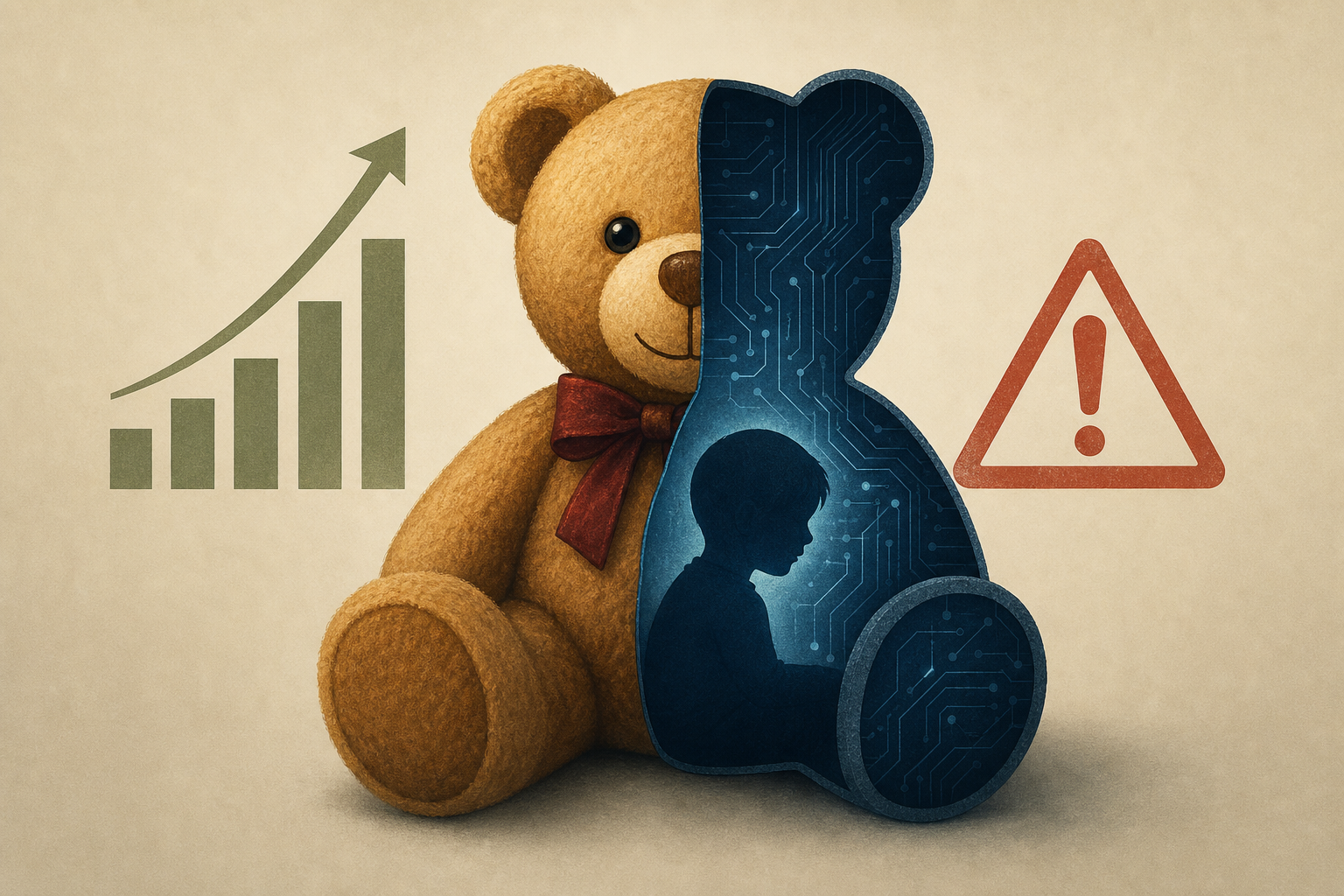
AI Generated Image
'The Trojan Teddy Bear': The promise and peril of childhood in the age of AI
NPR • • business
Key Points:
- Steven Spielberg's 2001 film A.I. Artificial Intelligence envisioned AI companions like Teddy, an animatronic bear that can interact emotionally and socially, a concept now becoming plausible with emerging AI-enabled toys and robots for children.
- Dana Suskind, author of Human Raised, warns that while AI offers educational benefits and parental support, AI companions risk replacing critical human interactions essential for healthy brain development and social skills in young children.
- Suskind emphasizes that early childhood brain development relies on rich, reciprocal human interactions that AI cannot fully replicate, cautioning that AI relationships may create synthetic social experiences lacking the emotional complexity needed to build resilience and empathy.
- Comparing AI companionship to "junk food" for the developing mind, Suskind argues for cautious integration of AI in children's lives, especially during early years, to avoid potential long-term harm and preserve what she calls "the Human Edge"—skills like creativity, critical thinking, and interpersonal connection.
- Suskind raises concerns that reliance on AI for child-rearing may deepen social inequalities, making a fully human-raised childhood a luxury, while also potentially leaving children less equipped for future economies that value uniquely human relational skills in an AI-driven world.


