AI Generated Image
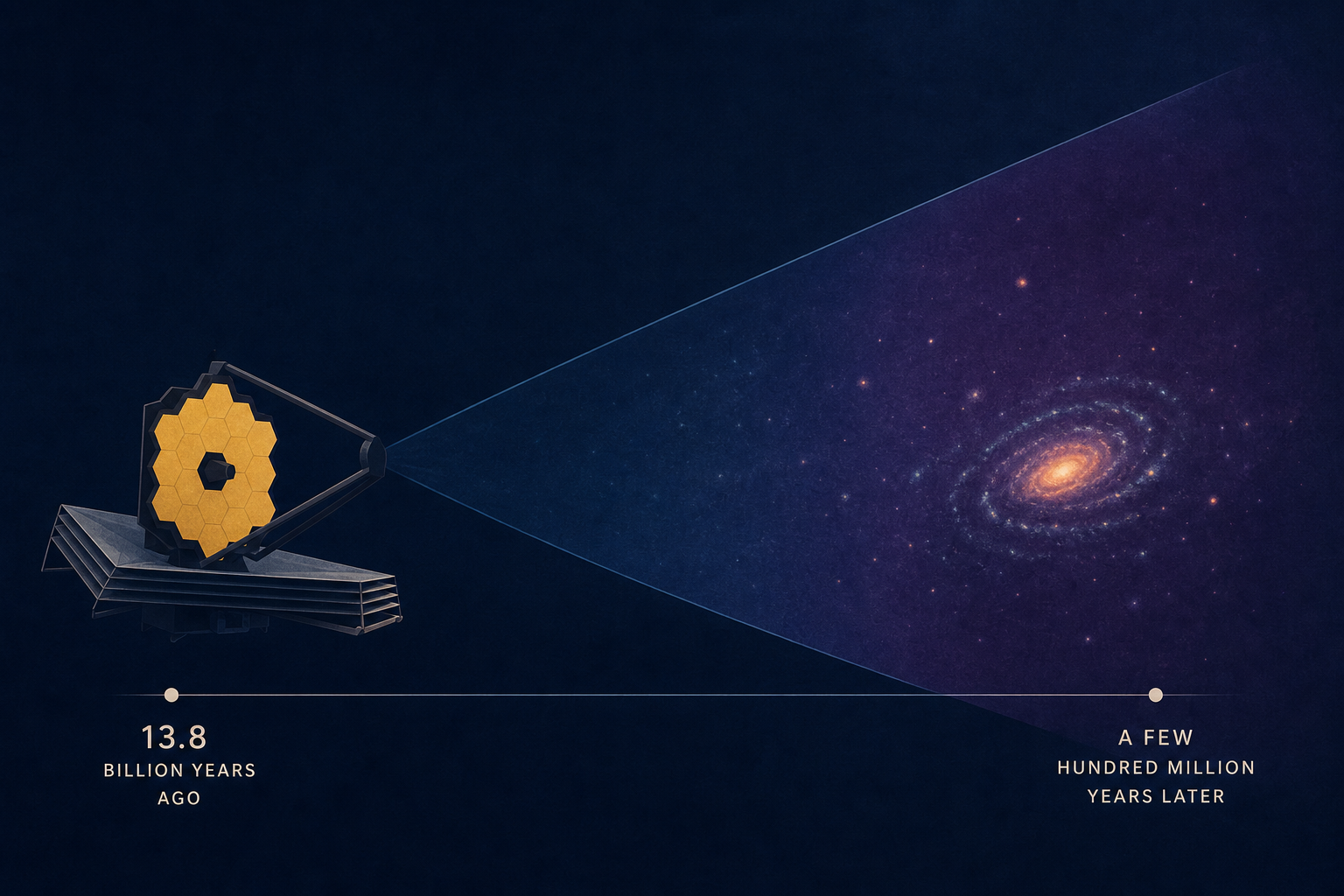
The universe is 13.8 billion years old. Webb is finding galaxies that look like they've been quietly forming stars for billions of years inside a cosmos that was, at the time of observation, only a fe
Space Daily • • science
Key Points:
- The James Webb Space Telescope (JWST) has observed unexpectedly bright, compact, and chemically developed galaxies very early in the universe, but none have been found to contain stars billions of years old at epochs only a few hundred million years after the Big Bang.
- Measurements of stellar ages in distant galaxies rely on complex modeling of light spectra and star formation histories, which can produce ambiguous results; galaxies appearing "old" or "red" may instead be experiencing recent bursts of star formation or quenching, not billions of years of gradual aging.
- JWST's discoveries challenge existing models of early galaxy formation by revealing more abundant and efficient star formation in the first few hundred million years, but these findings do not contradict the established 13.8-billion-year age of the universe derived from cosmological evidence.
- Some massive, quiescent galaxies with older stellar populations have been observed at later times (e.g., around 2 billion years after the Big Bang), consistent with hierarchical galaxy formation and allowing sufficient time for stars to age without creating paradoxes.
- The current scientific focus is on understanding how early galaxies formed stars so quickly and efficiently, with future progress expected from more detailed spectral data and observations of dust and gas, rather than revising the fundamental cosmic timeline.


