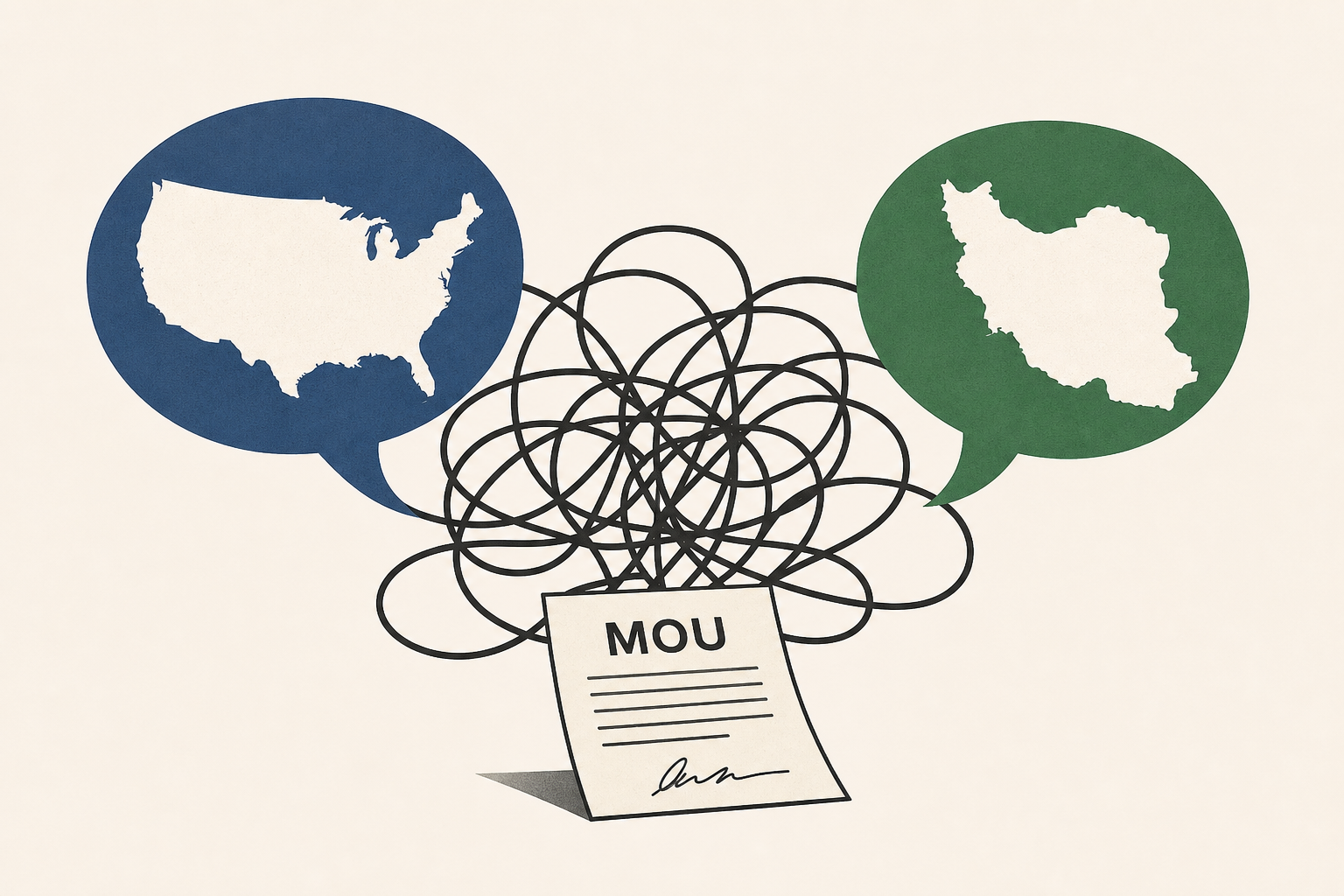
AI Generated Image
The U.S.-Iran negotiations have been chaotic. But the confusion has only grown since the MOU was signed.
NBC News • • general
Key Points:
- The U.S. and Iran's efforts to negotiate an end to the war have been marked by confusion and conflicting statements, with multiple signings and unclear timelines for the memorandum of understanding (MOU) reached last weekend.
- President Trump and Iranian President Masoud Pezeshkian re-signed the agreement amid uncertainty about further ceremonies or talks, while key provisions like reopening the Strait of Hormuz and sanction waivers remain inconsistently communicated.
- The MOU faces skepticism from U.S. lawmakers, including some Republicans who criticize it as a major foreign policy mistake, though others believe it could help reduce hostilities and reopen critical waterways.
- Scheduled negotiations in Switzerland were postponed following new Israeli strikes in Lebanon, raising concerns that ongoing regional conflicts and Israeli actions against Hezbollah could undermine the tentative peace deal.
- Despite these challenges, President Trump has expressed optimism about the deal’s progress and the potential ease of moving to a long-term agreement.


