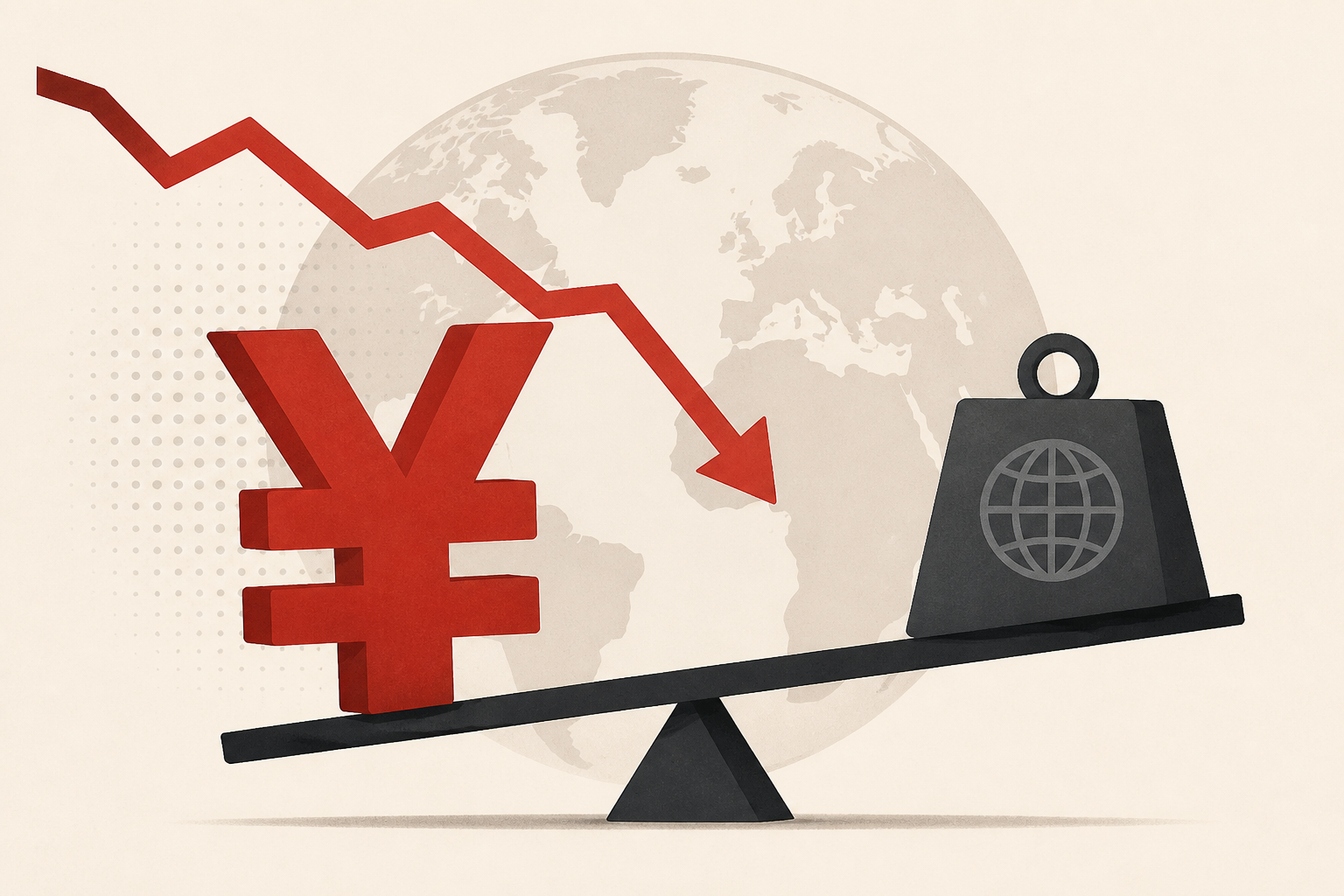
AI Generated Image
The World Should Not Ignore China’s Undervalued Currency
Council on Foreign Relations • • business
Key Points:
- China’s current account surplus is significantly larger than officially reported, potentially around 6% of GDP after accounting for gold imports and misreported investment income, indicating a yuan undervaluation of 30-35%.
- The People’s Bank of China (PBOC) actively manages the yuan’s exchange rate through setting daily midpoints and intervening in foreign exchange markets to prevent excessive appreciation, maintaining a controlled and largely closed financial account.
- Despite arguments that exchange rate adjustments have limited impact on China’s economy, evidence suggests a stronger yuan could help rebalance trade by reducing the surplus and supporting domestic demand growth.
- Current IMF recommendations for China’s economic policy are considered too cautious, advocating only modest fiscal expansion, whereas a more aggressive fiscal stimulus is seen as necessary to address both internal and external imbalances.
- Structural factors, including China’s industrial policies, closed financial system, and preference for maintaining a weak real exchange rate to support growth and technological upgrading, make significant policy shifts challenging without external pressure, particularly from Europe.


