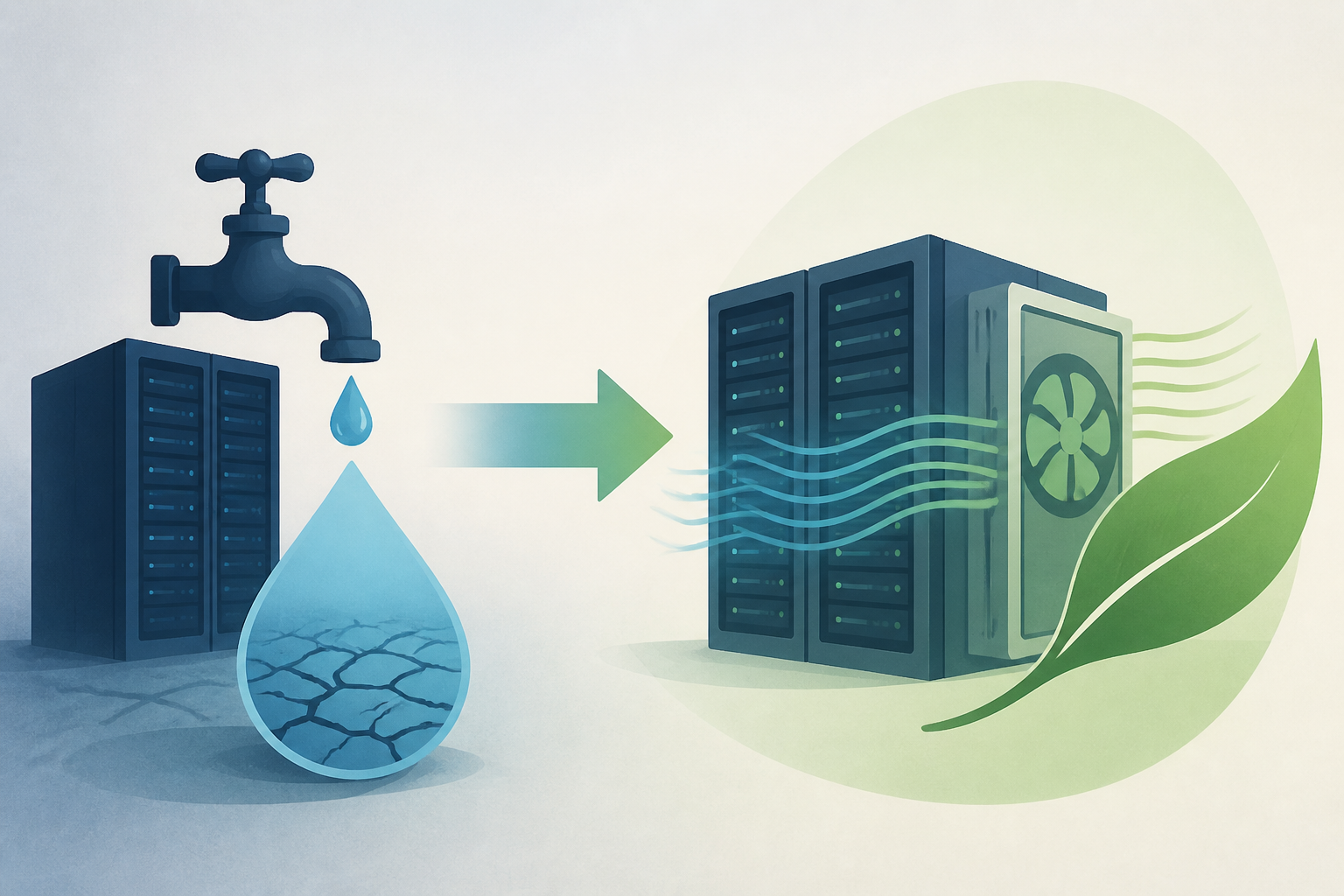
AI Generated Image
There’s a better way to cool data centres that cuts their huge thirst for water
The Conversation • • business
Key Points:
- The rapid growth of AI data centres is significantly increasing water consumption, with UN projections estimating that water used by these centres will match the daily needs of 1.3 billion people by 2030.
- Water is currently used in data centres primarily for cooling through evaporative systems, which leverage water's high thermal properties but consume large quantities of water.
- Although evaporative cooling demands substantial water, it reduces overall electrical energy consumption, which itself requires water for electricity generation, making it a "least bad" option in terms of combined resource use.
- Direct-to-chip liquid cooling, where water cools electronic components directly, offers more efficient heat removal and potential cost savings but faces adoption barriers due to retrofitting challenges and partial reliance on air cooling for some equipment.
- Transitioning to direct liquid cooling could reduce infrastructure size and water use, but widespread implementation is gradual due to equipment replacement cycles and the costs of switching from traditional air cooling systems.


