AI Generated Image
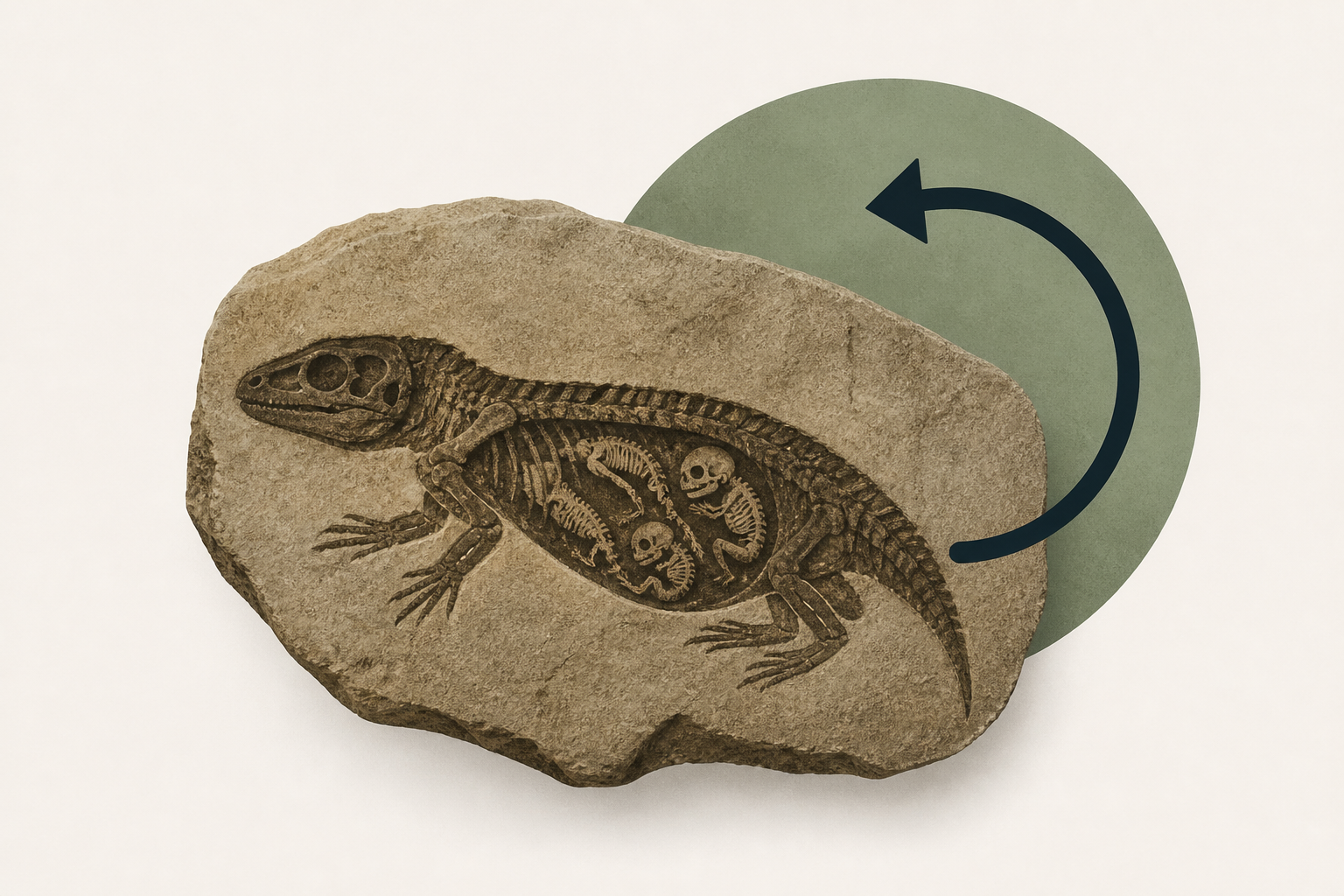
This 236-Million-Year-Old Fossil Just Rewrote the Story of Live Birth
Gizmodo • • general
Key Points:
- A recent study published in Frontiers in Mammal Science presents the first fossil evidence suggesting that the cynodont species Chiniquodon theotonicus, which lived around 236 million years ago, gave birth to live young rather than laying eggs.
- Researchers identified a neonatal line in the bone microstructure of a C. theotonicus specimen, indicating growth acceleration after birth, and estimated the newborn's body mass to be about 14% of the adult's weight, a ratio similar to that of modern placental mammals.
- This finding challenges the long-held belief that cynodonts, ancestors of modern mammals, laid eggs and pushes back the timeline for live birth evolution by up to 95 million years.
- The study suggests that traits linked to live birth and evolutionary success, such as lactation, body hair, and brain size, were emerging in cynodont relatives before true mammals appeared, indicating a probable shift from egg-laying to live birth in this group.
- The researchers plan to examine other cynodont specimens for embryonic tissues to validate their findings and further understand the origins of mammalian reproductive strategies.


