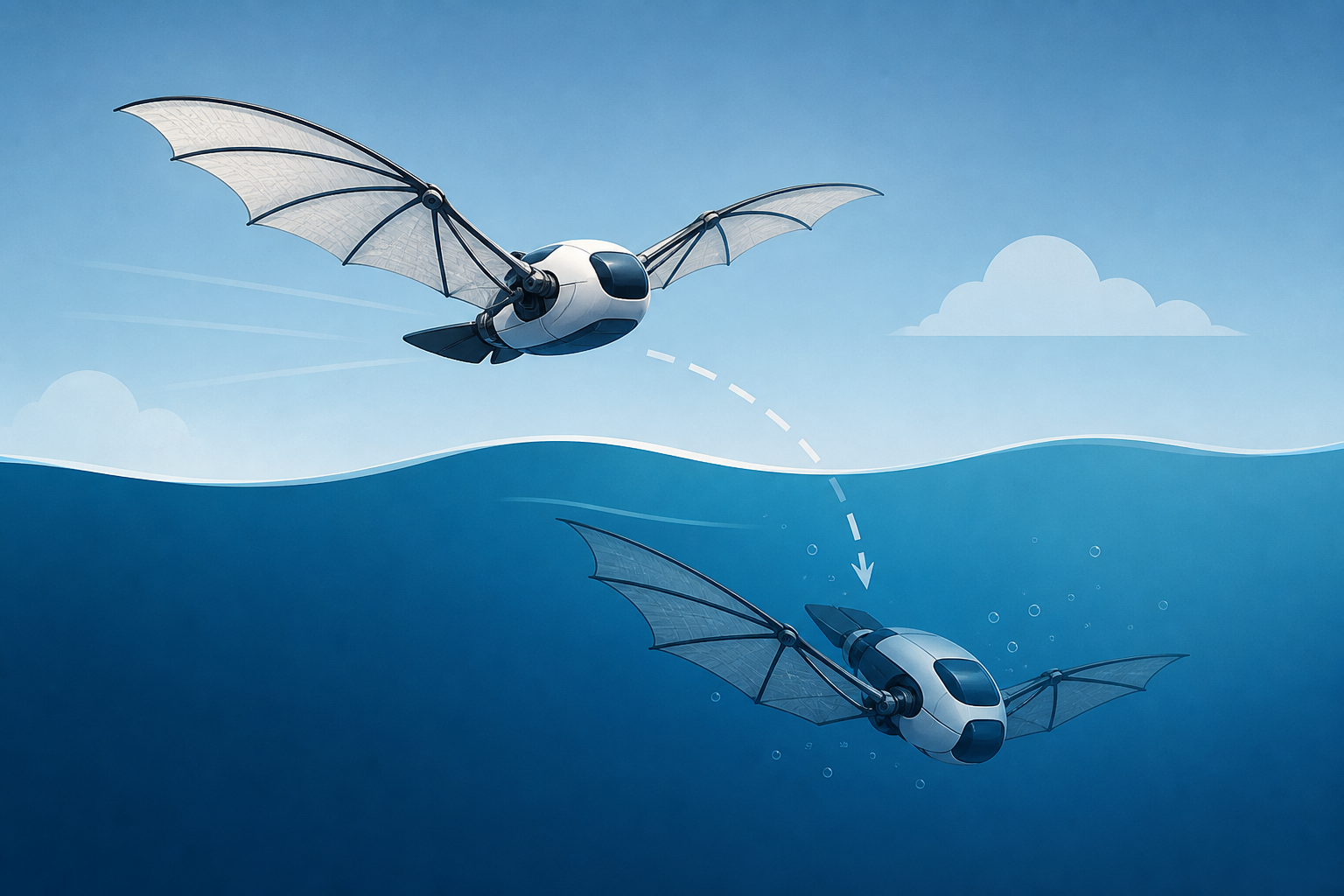
AI Generated Image
This MIT robot flies through the air then dives underwater using the same wings
TechSpot • • science
Key Points:
- MIT researchers have developed a small robot capable of seamlessly transitioning and moving through both air and water using the same flexible wings, inspired by diving seabirds like puffins.
- The robot weighs about half a pound, has a nearly three-foot wingspan, and uses wing flexibility rather than additional joints or motors to operate efficiently in both environments.
- Its open-body design allows water to flood the system while keeping components individually waterproofed, achieving neutral buoyancy underwater without adding weight that would hinder flight.
- In tests, the robot can transition from water to air in under a second, and its estimated range is nearly four miles flying and over a mile swimming on a single charge.
- The team envisions practical applications in environmental monitoring, such as tracking algal blooms and marine life, and plans to enhance the robot with sensors and improved mobility in future versions.


